At least 20 people were killed after heavy rain and strong winds triggered landslides in southern Tanzania’s Mbeya region, local authorities said. The disaster struck Rungwe district as a broader period of destructive rain and flooding caused mounting deaths across East Africa.
Jaffar Haniu, the Rungwe district administrator, said landslides destroyed homes early Wednesday. By the time officials gave their update, the toll had reached 20. One of those killed was a child aged about 18 months. The supplied evidence did not provide the identities of other victims or a count of people still missing.
Authorities warned that the danger had not passed. Meteorologists expected additional rainfall in the following days, and Haniu urged residents in locations vulnerable to landslides to evacuate. That advice placed the immediate emphasis on moving people away from unstable slopes before saturated ground and further rain could cause more collapses.
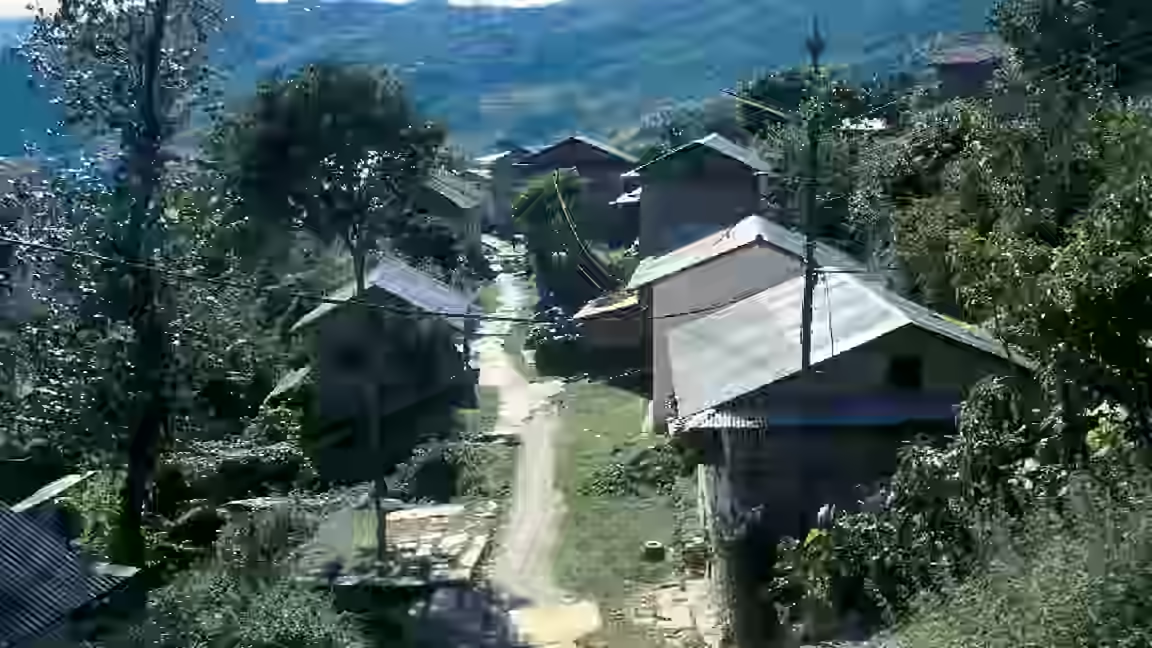
Images from the affected area showed residents near makeshift shelter after the landslides. The loss of homes added displacement to the death toll, although the supplied report did not quantify how many structures were destroyed or how many residents needed temporary accommodation.
The Mbeya deaths formed one part of an increasingly severe regional emergency. In neighboring Kenya, seasonal flooding had killed at least 88 people after heavy rains began earlier in the month. Flooding affected 21 counties, and at least two rivers burst their banks. Kenya deployed the military to support emergency rescue operations.
Southern Ethiopia had also recorded at least 80 deaths in landslides earlier in March. Taken together, the incidents showed the reach of the rainy-season hazards across several countries, from slope failures in highland areas to rivers overflowing in populated flood zones. The separate national totals describe distinct events, not a single combined disaster, but they underline the scale of exposure across the region.
The rains renewed questions about preparedness and about communities located close to rivers, unstable slopes and other high-risk terrain. In Rungwe, the official evacuation warning was particularly important because the forecast pointed to continuing rain rather than an immediate return to dry conditions. Rescue and shelter needs could therefore coincide with efforts to prevent another round of casualties.
A regional climate outlook had already indicated elevated rainfall risk. In February, the Climate Prediction and Applications Centre of the Intergovernmental Authority on Development said there was a 45% chance of above-average rainfall across most of the region during the March-to-May season. The affected outlook area extended from Uganda to Djibouti. That forecast did not predict any individual landslide, but it provided context for authorities managing a wet season capable of producing repeated emergencies.
For southern Tanzania, the priority after the Rungwe landslides was both immediate and preventive: account for the damage, support people whose homes were destroyed and persuade those in exposed areas to relocate while further rainfall remained likely. The confirmed toll of 20 made Mbeya the latest focus of an East African rainy season already marked by heavy loss of life.\n\nOfficials’ warning converted the regional forecast into a direct local instruction. Residents in known hazard zones were asked to move before another storm, because the destruction already recorded in Rungwe showed that remaining in place could carry an immediate risk.