# Tourist bus plunge in La Gomera kills one and injures 27
A tourist bus crash on the island of La Gomera in Spain’s Canary Islands has left one person dead and 27 others injured, turning a routine holiday journey into a rescue operation on one of the archipelago’s steepest islands.
According to local emergency services, the bus went down a ravine on Friday, April 10, killing one person and injuring 27. Most of the passengers were British nationals. The injured were taken to a local hospital on the island and were being treated for their injuries.
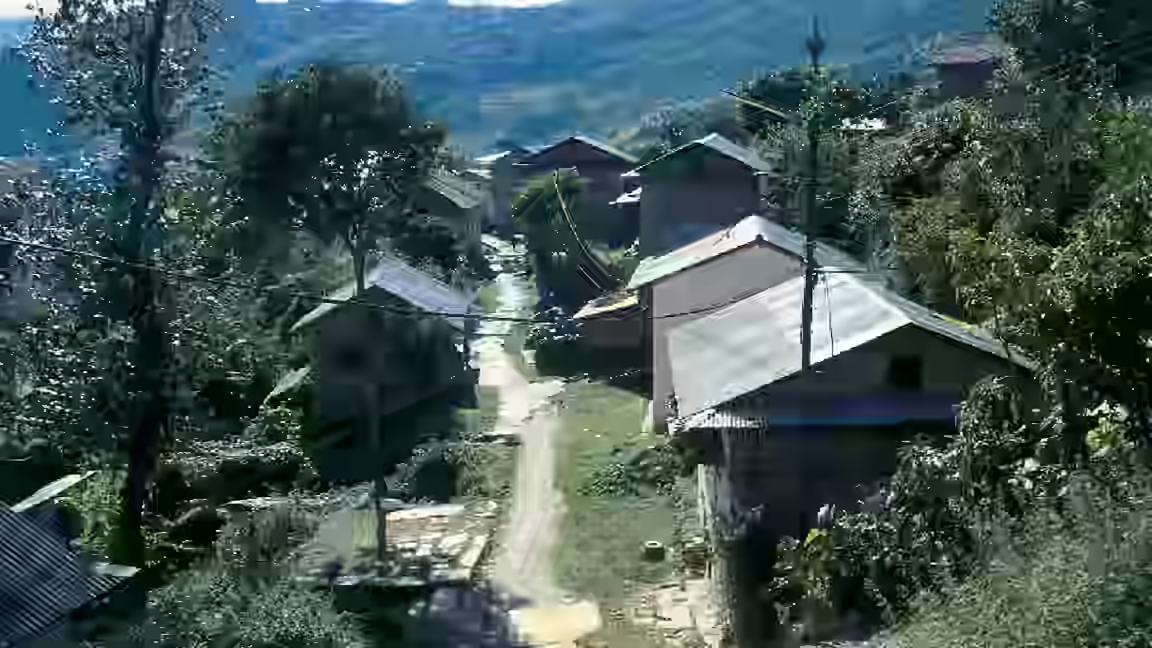
La Gomera is one of the smallest of the Canary Islands, but its terrain can be difficult even by the standards of the archipelago. The island is marked by volcanic mountains, dense forest and cliffside villages, features that make road travel more challenging than in flatter tourist destinations. The islands are also a major holiday destination for travelers from Britain and elsewhere in Europe, thanks in part to their year-round warm climate.
The AP report did not give the identity of the person who died or provide a detailed account of the sequence that led to the crash. What it does establish is that the bus was carrying tourists and that the emergency response had to deal with a serious injury count in a difficult landscape. Rescuers from local services responded at the scene, and the injured were transferred for hospital treatment on the island rather than being moved immediately elsewhere.
The fact that most passengers were British nationals is significant not because it changes the facts of the crash, but because it reflects the profile of visitors who regularly use the Canary Islands as a winter and spring destination. The route from holiday travel to emergency response can be abrupt in places with narrow roads and abrupt changes in elevation, and that risk is amplified in island terrain where a vehicle leaving the roadway can quickly become a major rescue incident.
For La Gomera, the crash is likely to raise fresh attention on road safety for tour operators and local authorities. The island’s scenic appeal is tied closely to its geography, but the same geography can complicate transport, especially for large vehicles carrying visitors unfamiliar with the terrain.
The immediate facts are stark enough without embellishment: one death, 27 injuries, a bus in a ravine, and a holiday island now associated with an accident rather than its usual appeal. Emergency services have not publicly described the crash as anything other than a serious road incident, and the available reporting does not support speculation about cause.
La Gomera and the wider Canary Islands remain popular precisely because they offer dramatic scenery, mild weather and relatively easy access from Europe. The challenge after this crash will be to absorb the loss, care for the injured and determine how such a steep, narrow-route environment can be made safer for tour travel.
For those on board, the crash transformed a normal trip into a traumatic emergency. For the island, it is a reminder that even well-traveled tourist routes can become dangerous in a matter of seconds when terrain, speed and a heavy vehicle meet.