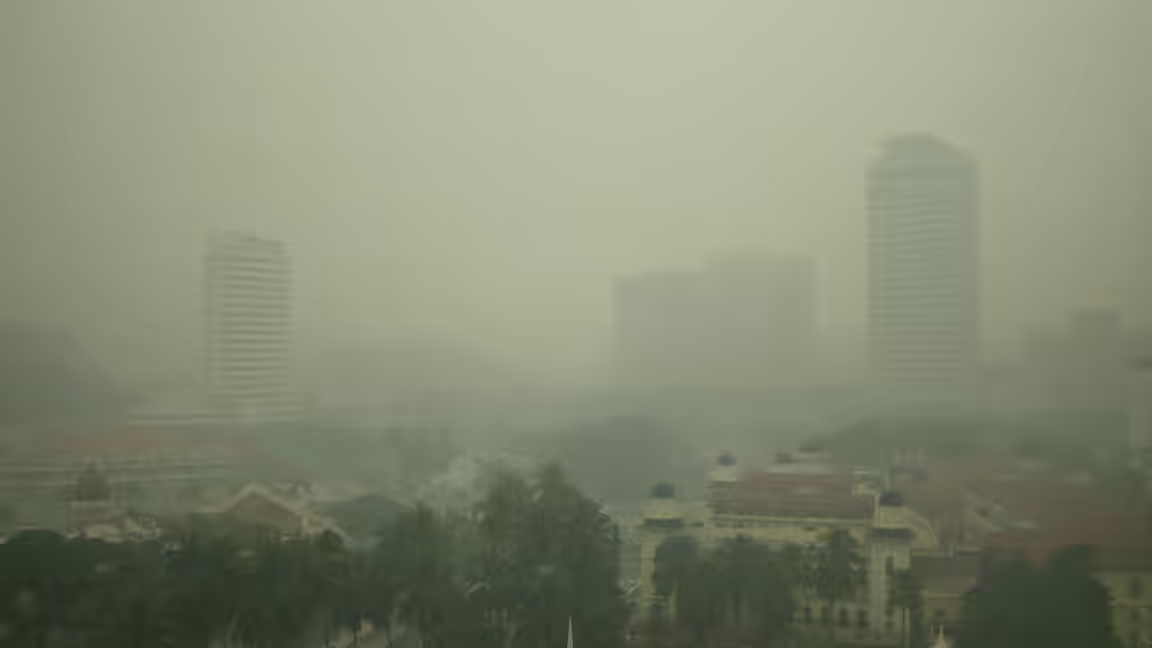
Japan's net greenhouse gas emissions fell to a record low in fiscal 2024, according to the AFP report carried by Daily Sabah, which says the total dropped 1.9% to 994 million tonnes.
The packet attributes the decline to lower energy use and a greater reliance on nuclear and renewable power. That combination is important because it ties the emissions figure to the country's energy mix rather than to a single policy change or one-off industrial slowdown. The report does not break out every source of the decline in the excerpt, but it does make clear that the power system played a central role.
A record-low figure is not just a statistic for annual reporting. It becomes a benchmark for how Japan is balancing demand, energy supply and climate pressure. The source says the fiscal year ended in March 2025, so the total reflects a full year's worth of conditions rather than a brief seasonal dip. That makes the 1.9% fall more meaningful than an isolated monthly fluctuation.
The report also implies that cleaner electricity generation helped, but it stops short of providing a detailed percentage breakdown of nuclear or renewable contributions. That means the safest account is to state the direction of travel: energy use went down and the mix of supply shifted enough to push net emissions to the lowest level on record.
The significance is partly historical. A new low gives Japan a fresh reference point for future climate reporting, especially because the country is one of the world's largest industrial economies and thus a major emissions benchmark for other states. The AFP report does not lay out Japan's formal climate targets, so this article should not guess at compliance or missed goals. What it can say is that the country has moved its net emissions to a lower point than ever before recorded.
The source also frames the result as evidence of broader energy-system change. A shift toward nuclear and renewable power generally reduces reliance on fossil fuels, and the packet links that shift directly to the emissions decline. It is therefore reasonable to read the figure as evidence that Japan's electricity system is contributing to the country's lower emissions profile.
At the same time, the report does not suggest the problem is solved. A record low can still be a very large number in absolute terms, and the article should avoid implying that a 1.9% decline is enough on its own to alter the long-term climate picture. The useful point is narrower: Japan has achieved a new low in net emissions, and the source ties that outcome to its energy mix and reduced consumption.
For policymakers and investors, those facts matter because they point to a measurable shift in the structure of Japan's economy. Lower energy use and more nuclear and renewable generation are concrete signals that the mix is moving. The report does not tell us how durable that move will be, but it does show that fiscal 2024 closed with the best emissions number on record so far.