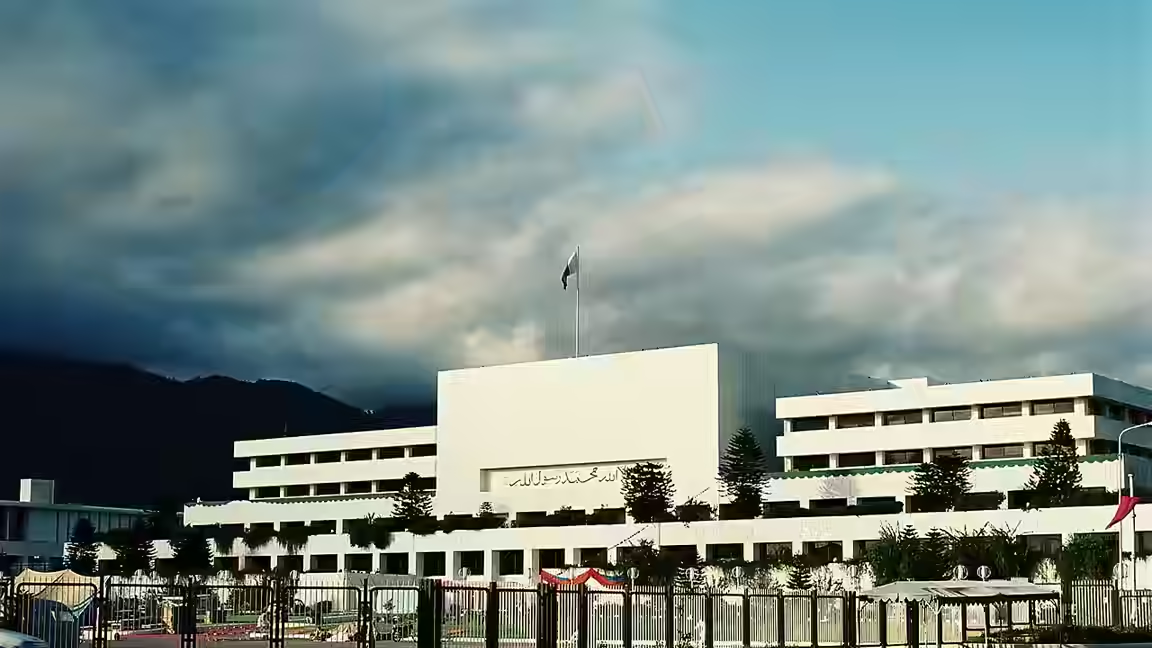
Pakistan tightened security in Islamabad on the event date of 2026-04-18 as authorities prepared for a possible second round of talks between Iran and the United States, according to Khyber News TV.
The report says civil and security agencies stepped up coordination while roads leading from Nur Khan Airbase to the Prime Minister’s House were being upgraded. Lane marking, patchwork, curb painting and decorative planting were under way, and the city was being dressed up for visiting delegations. The same report says Punjab Police were expected to assist local law enforcement and that all offices in Islamabad’s Red Zone would remain closed during the talks.
The scale of the preparations suggests officials were treating the meeting as more than an ordinary diplomatic event. The report says flags of participating countries were being prepared and that special instructions had been issued by the Prime Minister’s Office and Foreign Office to coordinate with the Capital Development Authority and Islamabad Police. In other words, the state apparatus was moving in advance of a still-unsettled diplomatic schedule.
The evidence does not confirm a final date for the talks, and it does not verify the headline’s suggestion that the second round was fully set. Instead, it shows that preparations were being fast-tracked because of the talks’ perceived importance. That is a meaningful distinction: a government can mobilize for a meeting before the meeting itself is fixed.
The report also says there were suggestions that high-profile leaders might attend a potential signing ceremony if an agreement were reached. Those names should be treated carefully, because the evidence frames them as reports and possibilities rather than confirmed attendance. The same caution applies to claims that a deal was imminent.
What is solidly supported is the security response. When a capital begins closing offices, diverting traffic and polishing key routes for a possible diplomatic event, it signals both sensitivity and anticipation. Islamabad was being prepared to absorb a surge of movement, attention and protocol if the talks went ahead.
The article should avoid exaggerating the diplomatic outcome. The packet does not say the talks were guaranteed, does not confirm the participant list, and does not prove that a breakthrough was close. It does, however, verify that the city was being readied at speed for a major international meeting involving Iran and the United States.
In practical terms, this meant controlled access, traffic management and visible security. In political terms, it suggested that Pakistan expected to host a high-stakes event with implications well beyond its borders. For now, the fact pattern is limited but clear: Islamabad was locked into advance preparations because of possible U.S.-Iran talks, and the capital’s security posture reflected that expectation.


