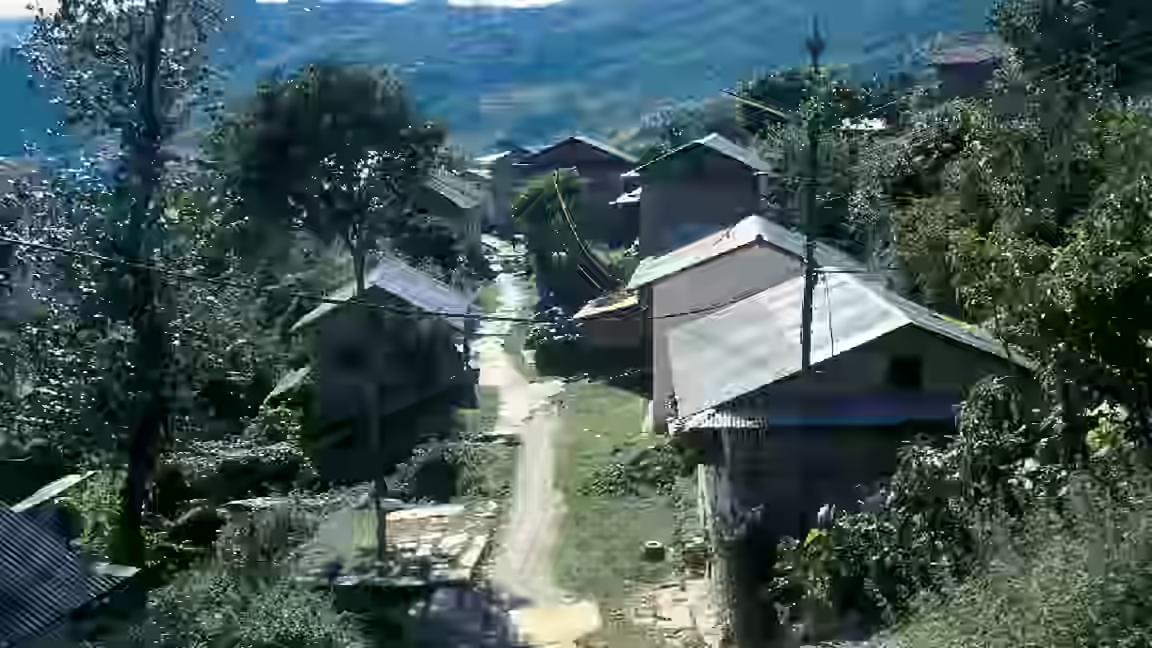
On Apr. 23, 2026, Somalia's hunger emergency was measured in the millions. More than 6.5 million people were being forced to skip meals and go hungry as drought, failed rains and conflict battered the country, according to the evidence packet. In southern areas near Kismayo, where livestock-dependent families once built their lives around cattle and pasture, the land has turned into a graveyard of dead animals and ruined livelihoods. For many households, food insecurity is no longer a seasonal setback but a daily reality.
The scale of the crisis is severe even by Somalia's recent standards. The packet says more than a third of the population is facing severe food insecurity, classified as IPC Phase 3 and above, while more than 2 million people are in IPC Phase 4 or emergency conditions. The UN also estimates that 1.8 million children under five are at risk of acute malnutrition. Aid workers quoted in the story said failed rainy seasons have left communities without the water and pasture they need to recover, and that even when rain arrives it comes too late or too unevenly to restore lost livelihoods.
The human cost is visible in the displacement camps that continue to spread across the country. Doctors Without Borders says more than 3.3 million people have been displaced, with some households forced to move repeatedly as services and commodities shrink. Near Kismayo, families from across Jubbaland are arriving at crowded settlements with little more than what they can carry. One mother, Barwaqo Aden, said her eight-month-old daughter was already in hospital with severe malnutrition. Another displaced resident, Hodhan Mohamed, walked for days and crossed the River Juba by boat before reaching a settlement where aid is limited and uncertain.
The crisis is also eroding access to health and education. Francesca Sangiorgi of Save the Children said children are facing spreading illness, rising dropout rates and fewer chances to get nutrition and medical support. The packet says more than 200 health and nutrition facilities have closed since early 2025 because of sharp funding cuts, and MSF reports that transport costs have risen by up to 50% in parts of the country. That makes it harder for patients to reach care and more expensive to deliver it.
At the center of the emergency is a funding collapse. The UN response plan for Somalia is only about 20% funded, with $1.42 billion needed and just $288 million received. That gap has forced aid agencies to cut the number of people targeted for assistance from 6 million to 1.3 million and has reduced the overall response by 75%, according to the packet. For a country that relies heavily on imported food and external help, the result is a tightening loop of hunger, displacement and shrinking support.