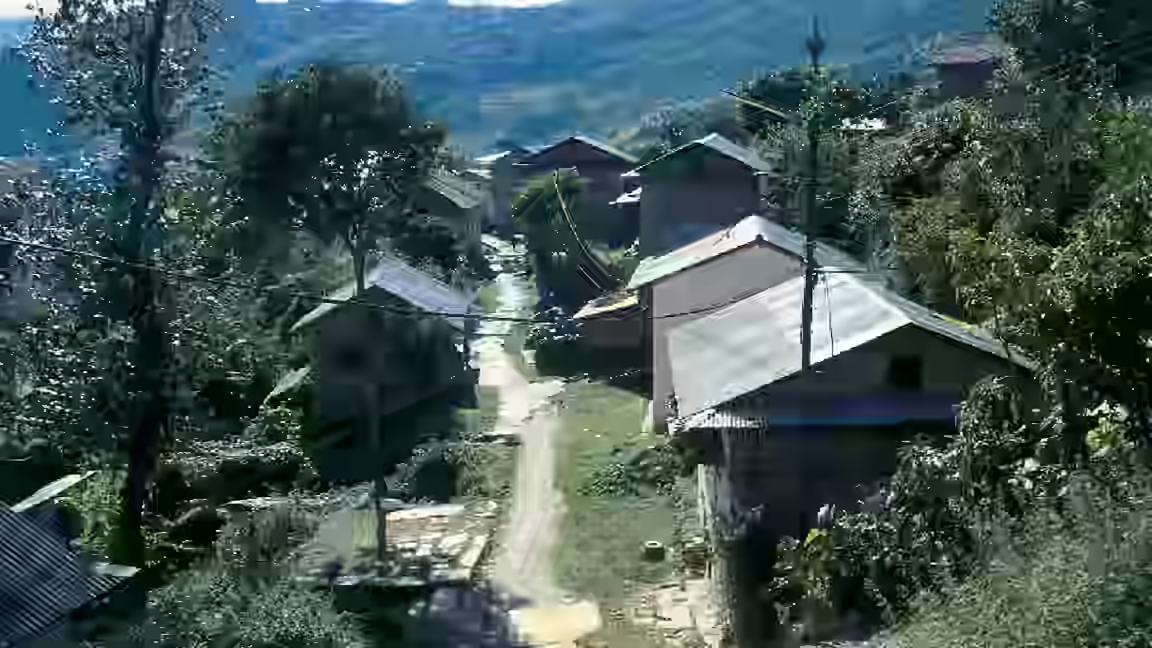
A jeep carrying pilgrims plunged off a ridge road in Rolpa district, Nepal, killing 20 people on event date 2026-04-30, according to reporting cited by The Tribune.
The report said the accident happened in Thabang Rural Municipality when the vehicle veered off the road and fell nearly 800 metres below. It did not give a full breakdown of the victims, but it identified the crash as one of the deadliest road accidents reported in the area in recent times.
The excerpt available for this story is brief, and it relies on The Kathmandu Post as the underlying source. Even so, the central facts are clear: the vehicle was carrying pilgrims, it left the road in a mountainous area, and the fall was severe enough to kill 20 people. That combination of steep terrain and long-distance drop is consistent with many fatal crashes in Nepal’s hill districts, where narrow roads and limited barriers can turn a single driving error or mechanical failure into mass casualties.
The report does not say whether the victims were all passengers in the jeep or whether anyone survived. It also does not identify the driver or explain what caused the vehicle to go off the ridge road. Those details will matter if investigators later determine whether speed, road conditions, weather, overloading or mechanical trouble played a role.
What can be confirmed from the available source is the scale of the disaster and its location. Thabang Rural Municipality is a remote part of Rolpa district, and the vehicle’s fall of nearly 800 metres indicates both the danger of the route and the difficulty of rescue in such terrain. In incidents like this, response times are often slowed by road access, steep slopes and the need to recover victims from below the road line.
The small amount of verified reporting leaves room for later official detail, but not for doubt about the outcome. Twenty people died in the crash, and the vehicle was on a pilgrim journey when it went off the ridge. That makes the accident both a transport tragedy and a reminder of the risks facing road users in Nepal’s mountain districts.
The terrain described in the report is as important as the casualty count. A plunge of nearly 800 metres leaves little room for survivors and makes recovery operations slow and dangerous. In mountain districts like Rolpa, even a vehicle that leaves the road at modest speed can become unrecoverable once it passes the edge of a ridge.
The report does not identify the pilgrims or say where they were headed, which limits what can be said about the trip itself. Still, pilgrim travel often involves mixed ages and family groups, and that makes crashes like this particularly devastating. If more official details emerge, the key questions will be whether the road conditions were known to be hazardous and whether the vehicle’s load or brakes contributed to the fall.
The fact that the vehicle was carrying pilgrims gives the accident a communal dimension as well as a transport one. Pilgrimage travel is often arranged around fixed dates and shared expectations, so one vehicle going off a ridge can affect many families at once. That is why the casualty count matters so much in this case.