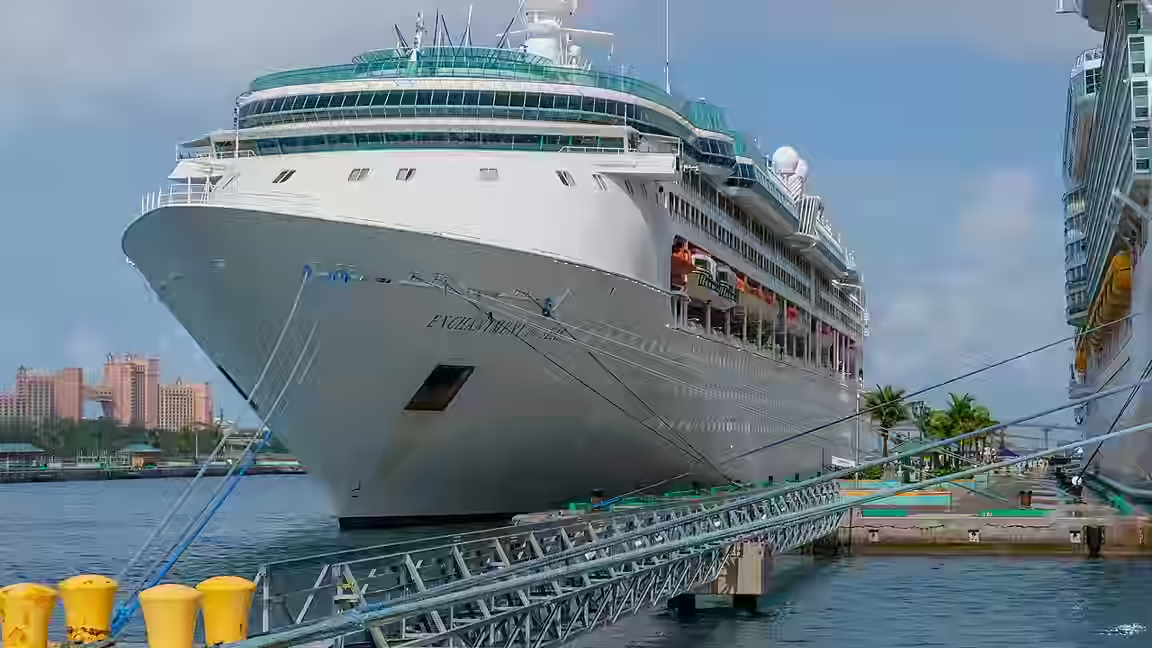
The World Health Organization says six hantavirus infections have been confirmed on the Dutch-flagged cruise ship MV Hondius, with three deaths recorded and the risk to the global population assessed as low. The ship had originally reported eight suspected cases, and the agency said the remaining suspected cases had been cleared or isolated as the evacuation began in the Canary Islands.
The WHO said the outbreak involves Andes virus, the hantavirus strain known to be transmissible from person to person, which is why health officials have treated the case with more caution than a typical rodent-borne infection. Even so, the agency said the broader public risk remains low. For passengers and crew still aboard the ship, the risk was judged moderate.
WHO Director-General Tedros Adhanom Ghebreyesus said he had traveled to Spain to help coordinate the safe disembarkation of passengers, crew and health experts from the vessel. The ship was expected to anchor off Tenerife, where passengers would be moved ashore on a smaller vessel and then taken by bus to the airport. The Canary Islands authorities said weather conditions made the evacuation window tight.
The report says three passengers died in the outbreak, including a Dutch couple and a German woman. It also says two Singapore residents were among those undergoing testing. Special flights were arranged to repatriate passengers to their home countries, and health authorities in several countries followed the case closely because of the possibility, however limited, of cross-border spread.
WHO spokesman Christian Lindmeier said the disease is dangerous for infected people but not easily transmitted to the public at large. He said the organization had no additional symptomatic cases on board at the time of reporting. The CDC in the United States also said the risk to the American public remained extremely low as it prepared to receive U.S. passengers through a quarantine facility in Nebraska.
The outbreak is a reminder that shipboard diseases can move quickly from a maritime incident to an international public-health response. Even though the overall risk was low, the combination of confirmed deaths, a person-to-person-transmissible strain and the confined setting of a cruise ship made rapid evacuation and testing the central priority. The WHO’s message was clear: the situation was serious, but it was contained enough that health systems could focus on controlled disembarkation rather than panic.
The central task now is epidemiological tracing. Public-health teams still need to learn where the infections began, whether any crew members or passengers were exposed in shared cabins, and how quickly testing can confirm that the outbreak is not continuing. The WHO’s low-risk assessment depends on that containment work holding.