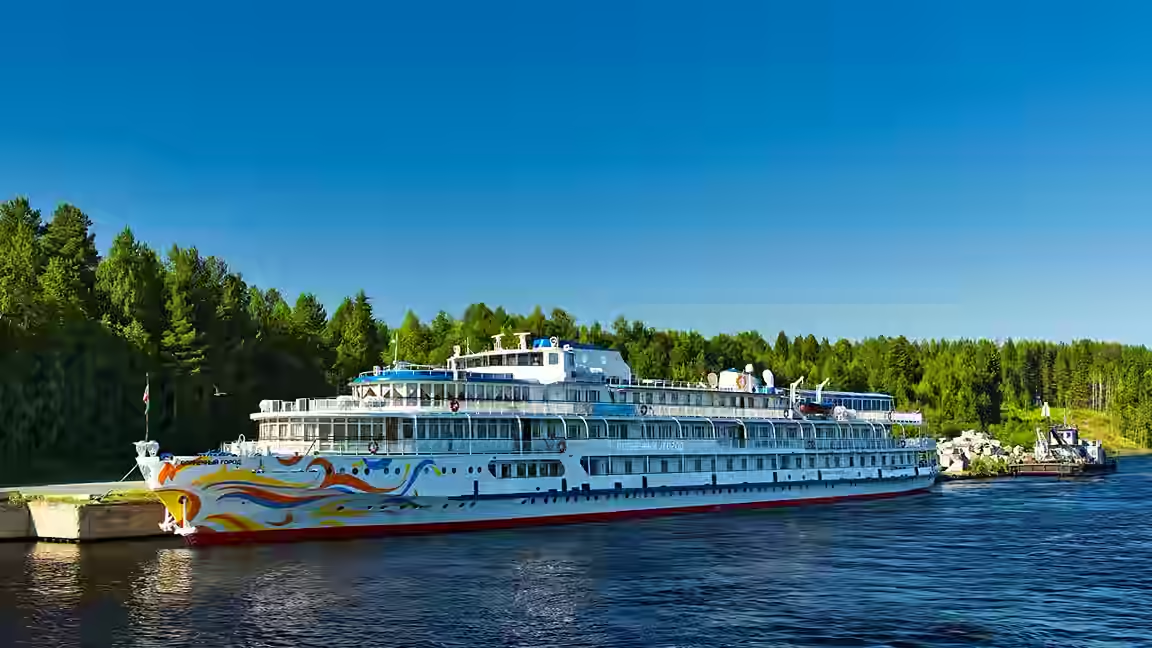
Passengers evacuated from the hantavirus-hit cruise ship MV Hondius began flying home after the vessel anchored in the Canary Islands, and the operation took on added urgency when one American later tested positive and a French traveler developed symptoms during a flight home. The event marked the latest phase of a tightly managed international evacuation effort.
According to the AP report, the first aircraft carrying passengers left Spain’s Canary Islands on Sunday for Madrid, where the travelers were to be taken to a military hospital. Spain’s health minister had said Spanish nationals would leave first. The evacuations were handled under protective conditions, with passengers and port workers wearing gear during disembarkation in Tenerife.
The source says more than 140 people aboard the vessel had initially shown no symptoms, but the situation changed once passengers were in transit. One of the 17 American passengers evacuated from the ship tested positive for hantavirus, though without symptoms, while one of the five French passengers developed symptoms on the flight home and was placed in strict isolation.
The United States was planning to take its passengers to the University of Nebraska Medical Center in Omaha, which has a federally funded quarantine facility and a specialized biocontainment unit. That detail shows how seriously public health authorities were treating the risk, even though the World Health Organization said the public should not panic.
The AP report also notes that three people had died since the outbreak began and that five people who left the ship earlier were infected. Those figures underline why the evacuation was being managed as a public health operation rather than a routine repatriation.
Hantavirus usually spreads through contaminated rodent droppings and is not easily transmitted between people. Still, the evacuation involved full-body protective gear, respirators, disinfectant spray and a strict separation between passengers and the local population. The source says disembarking passengers were to be checked for symptoms and barred from contact with local residents.
The case also extended beyond the cruise ship. British Army medics were sent to Tristan da Cunha, where a resident had a suspected case after being a passenger on the MV Hondius. The report shows how a single outbreak can reach multiple jurisdictions and force health authorities to coordinate across countries, airports and quarantine facilities.
Even with reassuring language from WHO Director-General Tedros Adhanom Ghebreyesus that the risk to the public was low, the evacuation was a reminder of how quickly a suspected pathogen can reshape travel plans, medical protocols and government coordination.
The outbreak response also illustrates how travel, quarantine and public health intersect once a ship has become an infection concern. The use of military hospitals, biocontainment units and monitored flights is a sign that authorities were treating the passengers as a moving exposure risk rather than ordinary travelers. Even with low public risk, the logistics were complicated and international.
The case also shows how quickly uncertainty can move across borders. Passengers left a ship in Spain, were routed through military hospitals or quarantine units, and then triggered follow-up monitoring in the United States, France, Britain and elsewhere. The fact that officials still described the public risk as low did not make the logistics simple; it only meant the response could stay controlled.