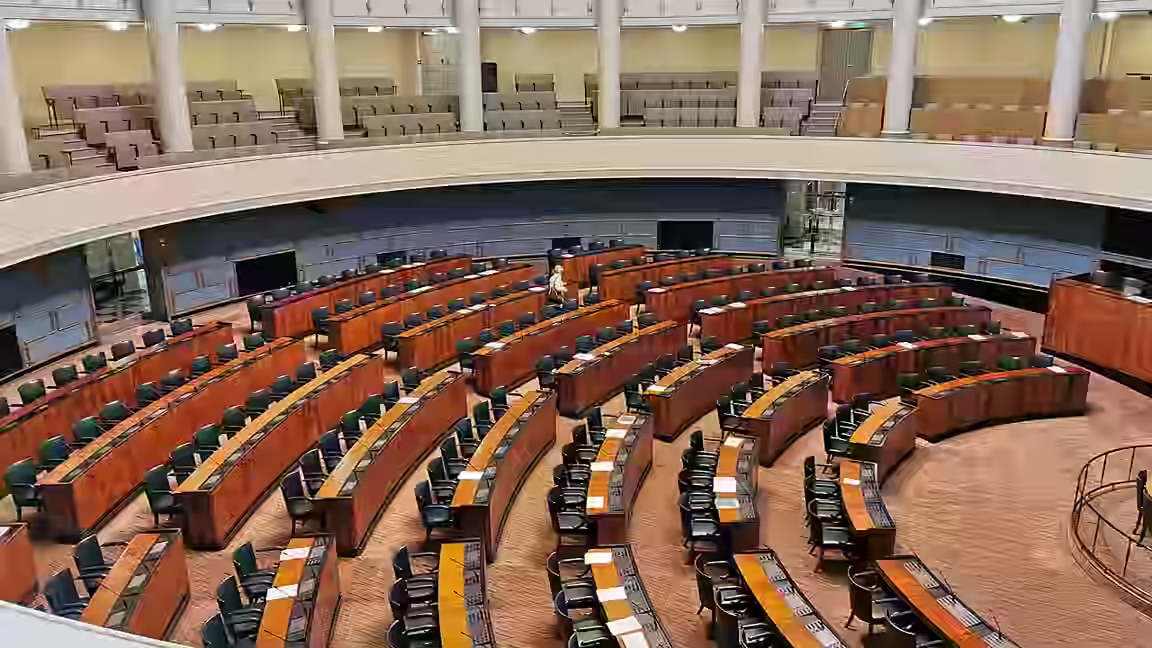
On the event date, King Charles III opened the new UK parliamentary session from the House of Lords and set out the government's legislative agenda for the coming year.
According to the BBC, the speech outlined 37 bills ministers want to pass in the next parliamentary session, including eight measures previously introduced to Parliament. The event was a formal State Opening, but it was also politically charged because it came alongside continuing speculation about Sir Keir Starmer's leadership.
The announced programme was broad and detailed. It included plans to allow ministers to nationalise British Steel through the Steel Industry (Nationalisation) Bill, faster legislation to support EU agreements through a European Partnership Bill, and new pilot powers for innovation under a Regulating for Growth Bill. Other measures would target competition reviews, compliance burdens in financial services, and late payments to small businesses.
The speech also covered housing, transport, public safety and the justice system. The Commonhold and Leasehold Reform Bill would ban leasehold for new flats in England and Wales and cap ground rents. A Social Housing Renewal Bill would protect some newly built social homes from Right to Buy for 35 years and strengthen protections for domestic abuse victims. A Railways and Passenger Benefits Bill would expand the passenger watchdog's powers, while a draft Taxi and Private Hire Vehicle Bill would create a national database of licensed taxis and hire vehicles.
Among the more eye-catching proposals were reforms to the courts and immigration system. The Courts Modernisation Bill would scale back the use of jury trials in England and Wales, while the Immigration and Asylum Bill would make it easier to revoke refugee status and restrict taxpayer support to asylum seekers. The NHS Modernisation Bill would abolish NHS England, move patient records into the NHS App and put mayoral nominees on local health boards.
Other bills touched energy, security and constitutional issues. The package included digital ID, cyber security reporting for data centres, new powers to ban state-linked groups, a bill to remove peerages, and measures linked to Euro 2028. There was also a bill to lower the voting age to 16 and restrict foreign political donations.
The BBC said the speech gave an outline of the government's plans, but it also showed where ministers want to push the public sector and regulated industries over the next year. In that sense, the King's Speech was both a ceremonial event and a detailed policy map, revealing where the government wants to spend political capital in Parliament.


