Cyprus’s centre-right Democratic Rally, known as DISY, finished first in the parliamentary election with 27.2% of the vote and 17 seats. The left-wing Progressive Party of Working People, or AKEL, placed second on 23.9% and secured 16 seats.
The result preserved the two parties’ positions at the head of the system but also confirmed a broader fragmentation of Cypriot politics. The far-right National Popular Front, ELAM, won 10.9% and eight seats, moving into third place. The centrist Democratic Party, DIKO, received 10% and also took eight seats.
Two new anti-establishment formations crossed the electoral threshold. ALMA, a party led by former auditor general Odysseas Michaelides and focused on anti-corruption, gained 5.8% and four seats. Direct Democracy, created by social-media personality and European Parliament member Fidias Panayiotou, received 5.4% and won four seats. The movement promotes technology-assisted public participation and had sought support outside the conventional left-right divide.
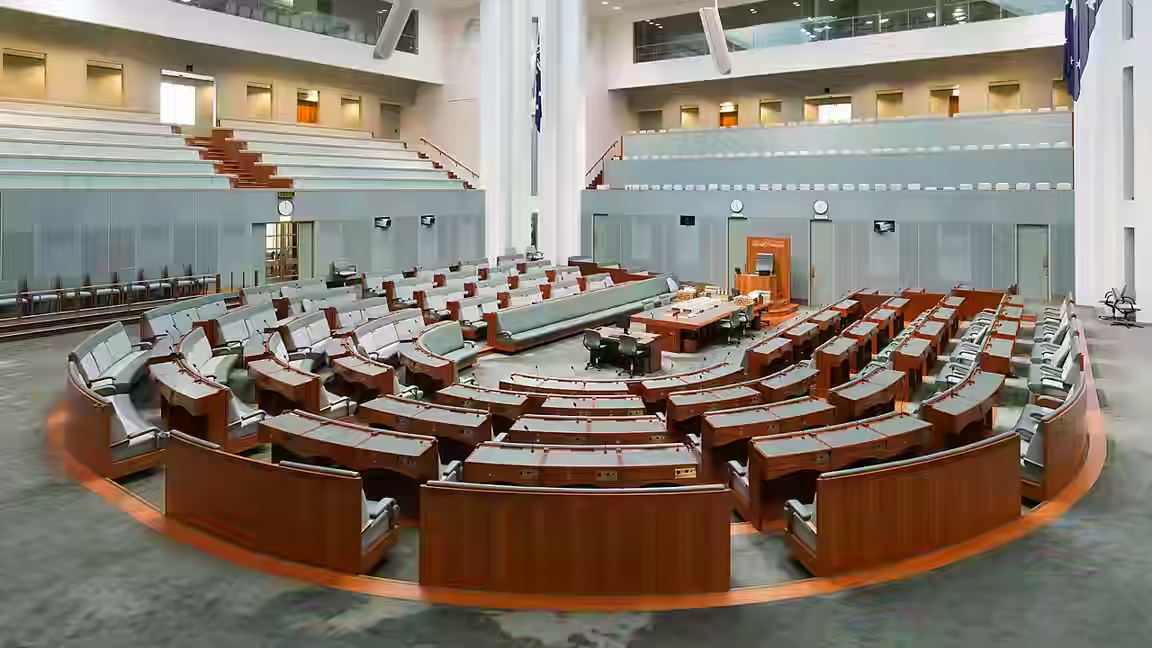
Voters chose 56 members of the 80-seat House of Representatives. The 24 places allocated to Turkish Cypriots have remained vacant since their representatives withdrew from the institutions of the Republic of Cyprus in 1963, leaving the chamber with 56 sitting members in practice. A total of 752 candidates contested the election, including nine independents and 743 people representing more than 18 party groupings.
Pre-election surveys had suggested a close contest between DISY and AKEL, while also pointing to declining trust in established parties. DISY entered the campaign after losing the presidency and experiencing internal strains connected to the 2023 election of President Nikos Christodoulides, a former party member who ran as an independent. AKEL was seeking its first general-election victory since 2006.
Polling had also identified ELAM’s continued growth and weakening support for traditional centrist forces. ELAM first entered parliament in 2016 and campaigned in 2026 with hard-line positions on immigration and socially conservative policies. Its third-place finish gave it a potentially larger role in parliamentary bargaining, including decisions around the speaker.
The result also represented a clear departure from polls that had placed the two largest parties at roughly 20% each. Both exceeded that expectation, but their combined strength still left substantial representation for smaller and newly created groups.
Cyprus has a presidential system, so the parliamentary vote did not directly decide who governs or determine the cabinet. The new chamber nevertheless controls legislation, budgets and reforms, making cooperation among parties important for President Christodoulides’s policy agenda. The distribution of seats may also shape alliances before the next presidential election, scheduled for 2028. The gains by ELAM, ALMA and Direct Democracy showed that voters’ frustration with corruption and established institutions had translated into a more divided legislature.


