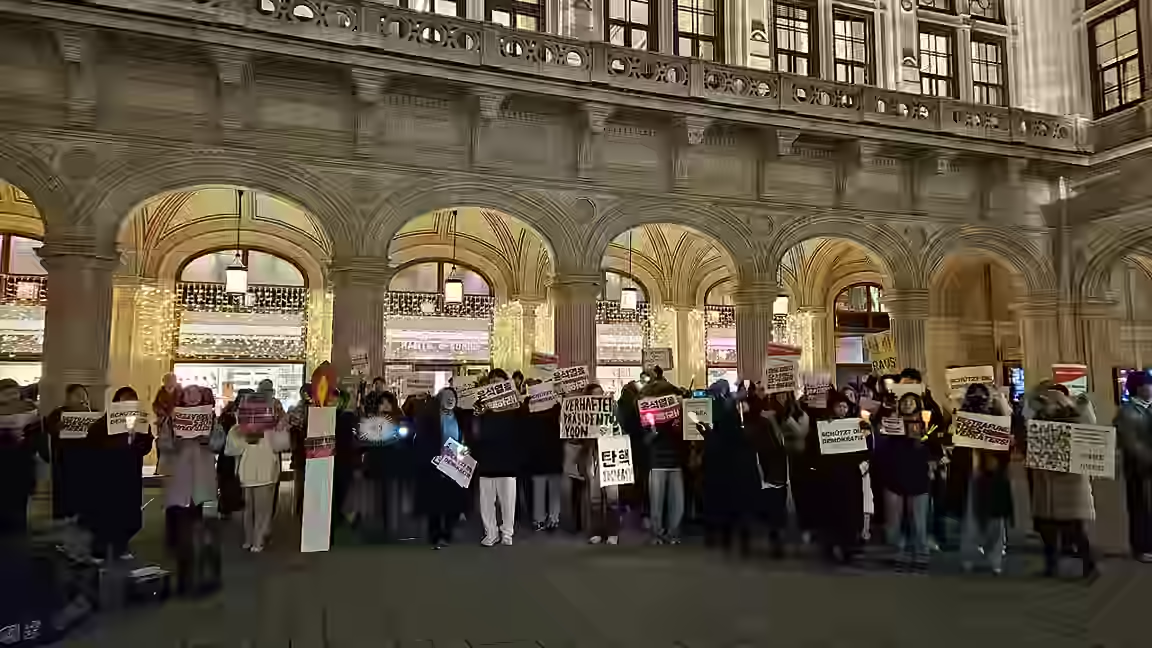
Thousands of people rallied in central Madrid on May 24, 2026, to protest spiraling housing costs that have pushed many Spaniards out of the market, according to the Associated Press.
The demonstration came at a time when housing has become one of the main weaknesses for Prime Minister Pedro Sánchez. Spain's economy has performed well overall, but the benefits have not translated into affordable homes for many residents in cities such as Madrid and Barcelona. Protesters said the gap between wages and rents has left younger people especially squeezed.
AP reported that marchers carried banners and chanted for the right to housing, with one sign reading, "We want neighbors, not tourists." That message reflects a common complaint in Spain's urban housing debate: that short-term tourist demand and speculation have helped push prices higher while long-term residents struggle to stay put.
The paper quoted protester Estrella Baudu, a 28-year-old teacher, saying she was living with her grandmother because renting had become too expensive. Another marcher, university professor Fernando de los Santos, said tenants were being hit with eviction notices and abusive price increases. Those comments show how the crisis is spreading beyond a single demographic and affecting both younger workers and established professionals.
The government has tried to respond. AP said Spain approved a 7 billion-euro housing plan last month to expand public housing over four years and offer assistance to young renters and homebuyers. But a separate decree that would have extended temporary rent freezes failed to pass parliament, leaving Sánchez more exposed to criticism from renters and housing activists.
The scale of the problem is also structural. Spain has a long tradition of homeownership and relatively little public rental housing. With population growth, tourism and demand in the biggest cities all putting pressure on supply, the market has become increasingly difficult for people who rely on renting rather than buying.
AP cited Eurostat data showing housing costs rose nearly 13% year on year at the end of 2025, while the Bank of Spain estimates the country is short of 700,000 homes. Those numbers help explain why street protests have become a recurring feature of Spanish politics rather than a one-off reaction.
The Madrid rally followed another large anti-Sánchez protest the day before, making housing part of a wider climate of political tension. For the government, the issue is no longer a background social complaint. It is a frontline test of whether economic growth can be made to feel real to ordinary households struggling to secure a place to live.


