This account treats the date above as the time of the underlying event, not as a publication date. It is confined to what the cited reporting established at that point. Details that were uncertain, attributed, provisional or still developing remain presented on those terms, and no later result is assumed.
What the reporting established
The revised guidance reflects growing concern over rising colorectal cancer rates among younger adults, as well as persistent screening gaps across the United States. Older evidence indicates that over 20 million eligible Americans remain unscreened for colorectal cancer, which is approximately one-third of adults who should be tested.
Published in CA: A Cancer Journal for Clinicians, the updated recommendations continue to advise that adults at average risk begin screening for colorectal cancer at age 45 and continue through age 75 and up to 85, depending on their preference and overall health. They additionally advise that individuals at higher risk may need to begin screening before age 45 and undergo testing more frequently.
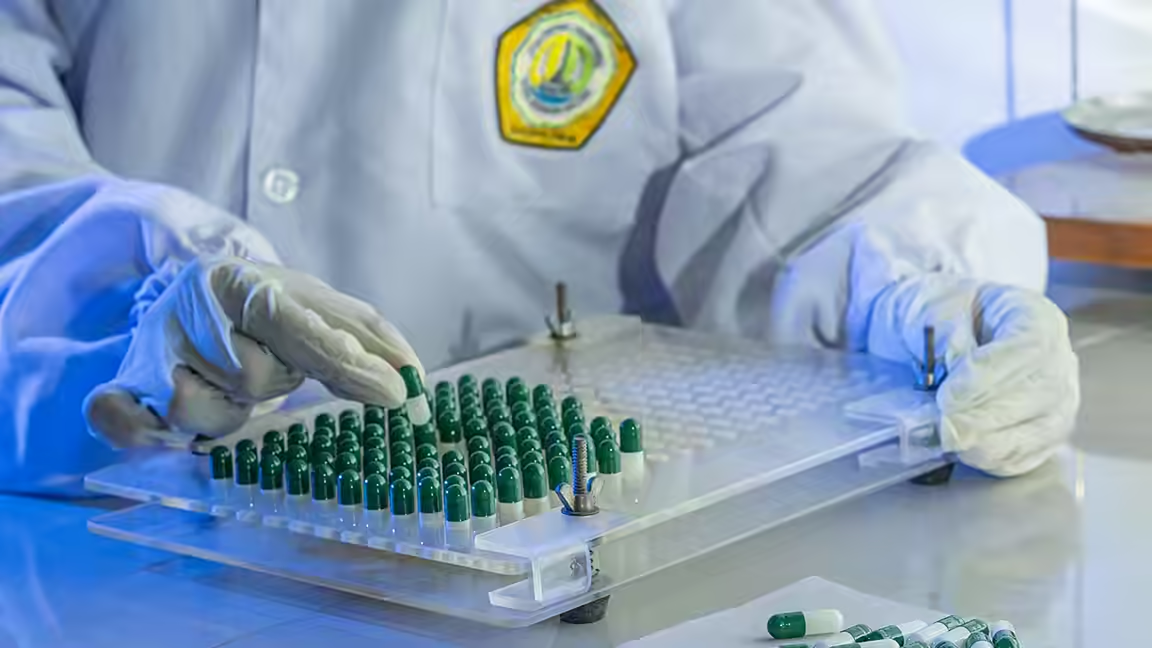
It additionally recommends a timely colonoscopy following all positive results on non-colonoscopy screening tests. Now, the ACS has updated its screening guidelines to expand the range of recommended screening tools, including new blood-based and at-home stool tests designed to improve participation and detect cancer earlier.
Early-onset colorectal cancer, which occurs in adults under 50, is rising globally at an alarming rate in younger adults, with research highlighting that it is the leading cause of cancer-related death among males and females under age 50. Previous colorectal cancer screening guidelines from the ACS advised that average-risk adults aged 45 years and older undergo regular screening with either a stool-based test or a visual exam, based on personal preferences and test availability.
Updated colorectal cancer screening guidelines from the American Cancer Society expand screening tools, to now include a blood test, and at-home stool tests. Colorectal cancer is the third most common cancer worldwide, and the second leading cause of cancer-related deaths worldwide.
Scope of the record
The record is most useful when read as a contemporaneous snapshot. It identifies the central development, the people or institutions directly involved and the consequences described by the available reporting. Statements made by officials, witnesses or other parties are not converted into independent findings; their source and status remain material to understanding the account.
The evidence also sets limits on the conclusions that can safely be drawn. It does not support speculation about motives, responsibility or subsequent outcomes beyond what was explicitly reported. Figures and operational descriptions can be revised as fuller information emerges, so the numbers and characterisations here belong to the dated record rather than a final historical tally.