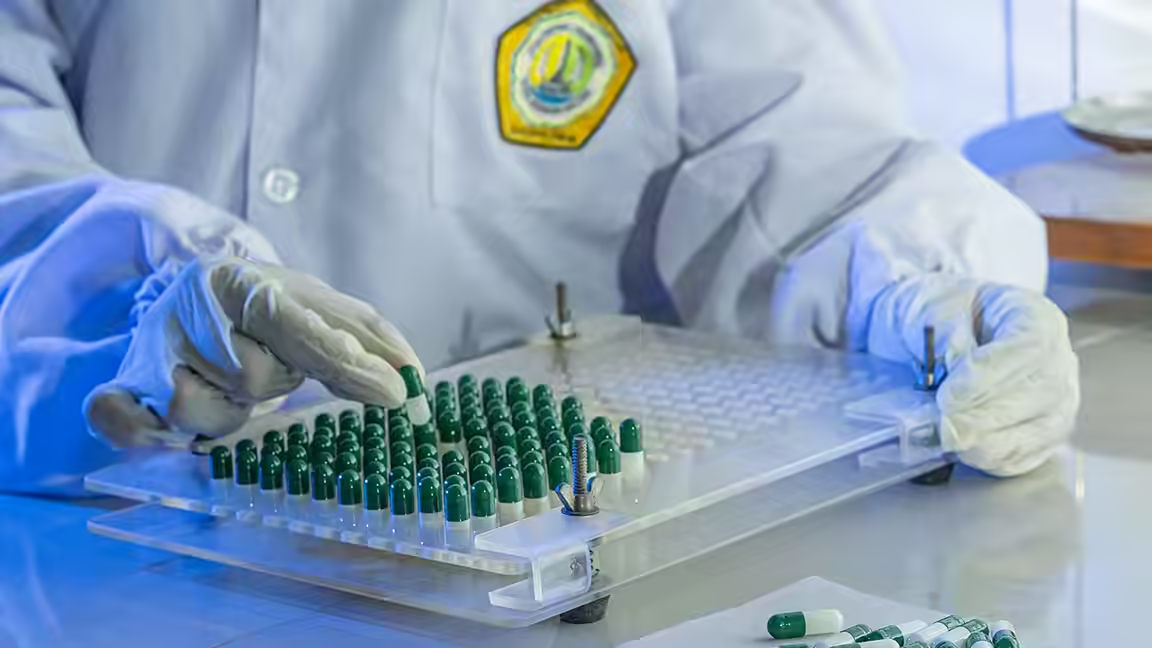
The European Union received 1,400 favipiravir tablets donated by Japan for possible use against hantavirus infections, as authorities sought options in the absence of an approved medicine or vaccine for the disease. The doses were being sent to France, Spain and the Netherlands, according to information supplied by the European Commission.
Favipiravir was not approved as a hantavirus treatment. The European Medicines Agency had identified it as the most plausible candidate for consideration through clinical trials or compassionate-use arrangements. Compassionate use can provide access to an unapproved medicine for patients with serious conditions, but the decision on whether and how to administer the tablets remained with the individual member states.
Fujifilm Pharmaceuticals supplied the donation, while Japanese authorities and the European Union Delegation to Japan helped arrange it. The Commission said it had maintained discussions with EU countries since the outbreak and facilitated the shipment after requests from France, Spain and the Netherlands.
The allocation represented a limited, targeted response rather than general authorization of the drug. France, Spain and the Netherlands could choose to use the tablets in patient care under compassionate-use rules or place them within clinical investigations. The available evidence did not say that favipiravir had been demonstrated to cure hantavirus infection, and the product's experimental status remained central to the deployment.
European Commissioner for Preparedness Hadja Lahbib described solidarity and rapid action as life-saving. Alongside the donated supply, the Commission began emergency procurement procedures intended to obtain more doses if additional cases were confirmed in the following weeks. That step indicated that officials were preparing for the possibility of further demand while leaving treatment decisions to national authorities.
The response also underscored the narrow set of medical tools available for hantavirus. With neither an approved therapeutic medicine nor a vaccine identified in the supplied evidence, officials turned to a candidate selected for controlled or exceptional access rather than routine prescription. The tablets therefore offered authorities a potential intervention to evaluate, not an established standard of care.
The first dispatches were directed only to the three countries that had requested support. The Commission's role included coordinating with member states, Japan and the donor company, while the national governments retained responsibility for the drug's actual use. Emergency purchasing was proceeding separately from the initial 1,400-tablet donation.
Any expansion of the response was expected to depend on whether further infections emerged and on the decisions of the countries receiving the medicine. For the immediate operation, the EU's action combined an international donation, distribution to affected member states and preparations to secure additional supplies.