On 2026-05-30, Maltese citizens began voting in parliamentary elections that were widely expected to return the Labour government for a record fourth term. Opinion polls pointed to a comfortable lead for Prime Minister Robert Abela's party, even as the campaign was shaped by concern over construction, corruption and the strain of living in one of the European Union's smallest and most densely populated states.
Labour entered the contest arguing that it had delivered economic stability in a country where tourism, online gaming and financial services remain central to the economy. That message appears to have resonated with many voters. Malta has one of the lowest unemployment rates in the EU, and the island's economy has expanded while its population has risen by nearly 30 percent over the past decade, largely because of immigration linked to labour demand.
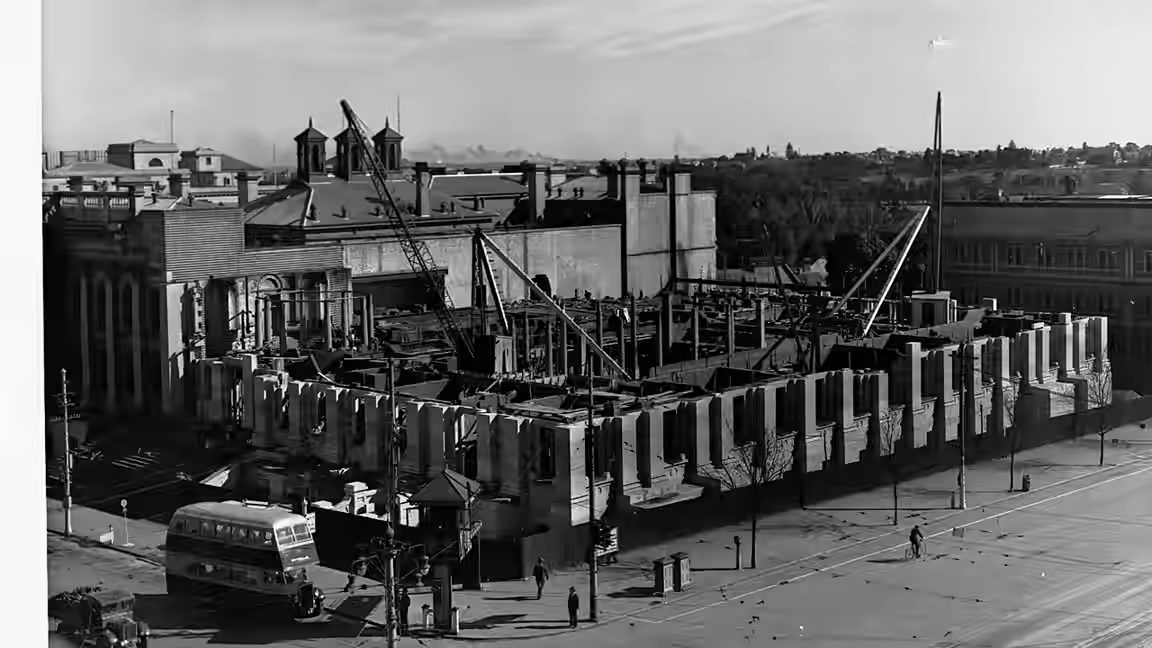
The change has brought visible consequences. Cranes and new developments dominate the skyline, traffic bottlenecks are common, and heritage groups have warned about environmental damage and threats to UNESCO world heritage sites. Yet even with those complaints, the economy remained the dominant issue for many voters. The article source quoted residents who backed Labour because they saw the party as a guarantor of income, pensions and stability rather than as a vehicle for reform.
Abela, who has led Malta since January 2020, campaigned on Labour's record and on promises to shield the import-dependent island from wider geopolitical shocks. That concern has sharpened because Malta imports nearly all of its energy. The government said it had already budgeted €150 million for subsidies in 2026 and had earmarked a further €250 million to soften the impact of fallout from the conflict in the Middle East.
His challenger, Nationalist Party candidate Alex Borg, offered a different pitch. At 30, Borg would become Malta's youngest leader if elected, and he framed the race around public frustration with what he described as chaos in health care, blackouts during hot summers and the broader direction of the country. His profile as a lawyer and former Mr World Malta gave him visibility, but the polling cited in the source suggested Labour still held a strong lead.
The election also unfolded under the shadow of Malta's unresolved corruption questions. A 2025 Council of Europe report said the country remained significantly behind in the fight against corruption. That criticism mattered because Abela took office after his predecessor Joseph Muscat resigned in 2020 following the political crisis triggered by the 2017 assassination of journalist Daphne Caruana Galizia.
Caruana Galizia had exposed corruption at the highest levels of Maltese public life, and a 2021 public inquiry later said the state should bear responsibility for her death and had created a climate of impunity. The source also noted that Muscat and other top officials were charged last year in a separate hospital privatisation scandal, though they reject the allegations. Abela has also questioned aspects of that investigation.
Even so, political analyst Andrew Azzopardi said many voters were likely to think first about their wallets, not the scandals. In a country where many households depend on the government's economic model and subsidy policies, that calculation seemed to favor Labour. Preliminary results were expected on Sunday afternoon.


