Prime Minister Albin Kurti's Vetëvendosje party won the largest share in Kosovo's early parliamentary election on June 7, 2026, preliminary results showed, but its reduced support left open whether the vote would end a prolonged institutional crisis.
With nearly 90% of ballots counted, state election authorities put Vetëvendosje at about 43%. The Democratic Party of Kosovo followed with 21.7%, and the Democratic League of Kosovo received 18%. The final calculation still had to incorporate roughly 100,000 ballots from Kosovars living abroad.
Vetëvendosje's showing was well below the more than 50% it received in the previous early election in December. Turnout also declined to 36.3%, compared with nearly 45% in December. The fall suggested frustration with mainstream parties after repeated failures to establish stable institutions.
The June ballot was Kosovo's third parliamentary election in under 18 months. After the February 2025 ballot produced no resolution, Kosovo spent much of the year without an operative government and returned to the polls in December. Political parties then failed by a March deadline to agree on a successor to former President Vjosa Osmani, prompting another return to voters.
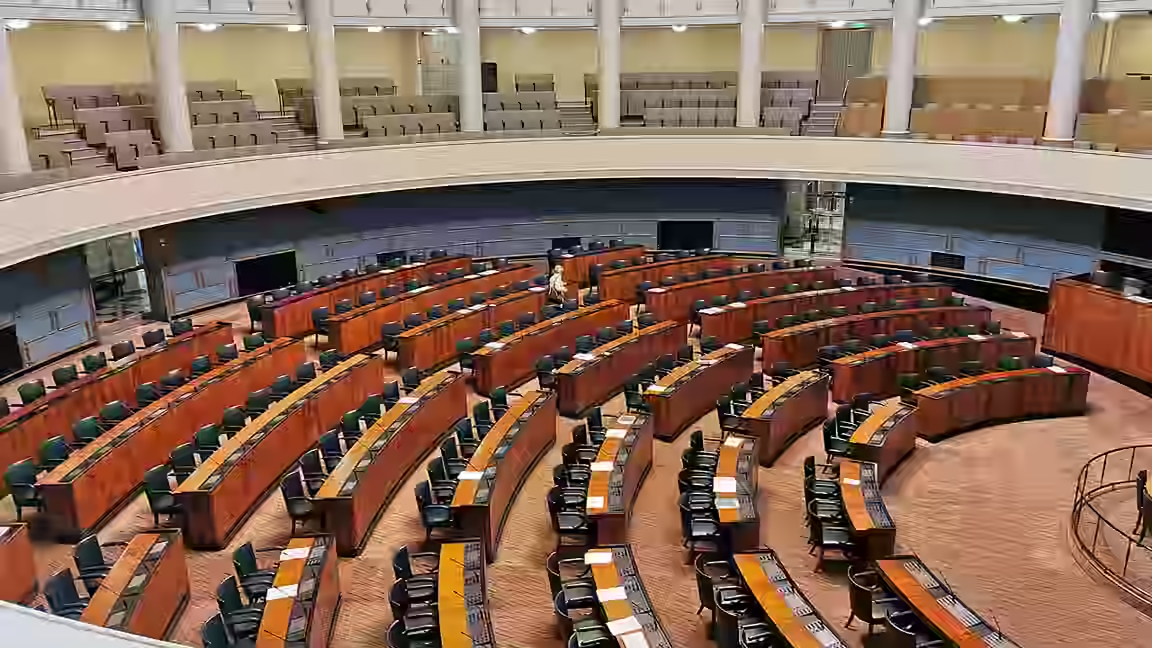
Kosovo's 120-member Assembly elects the president. At least 80 lawmakers must support a candidate, requiring agreement beyond a narrow governing bloc. The newly elected members would inherit that task once the Assembly formed, and the initial party totals did not by themselves demonstrate that the required coalition existed.
Kurti told supporters that the outcome confirmed his party's leading position and promised communication and cooperation with other parties in the public interest. Opposition parties have accused him of seeking control of all state institutions. Osmani joined the LDK after breaking with Kurti over his refusal to support her for another presidential term.
The stalemate has imposed economic costs. Kosovo, home to just under two million people and among Europe's youngest and poorest countries, was already facing rising fuel prices and the wider energy crisis. The absence of a stable government delayed access to European Union and other international funding.
European Council President António Costa urged political leaders during a visit before the vote to resolve the impasse and unite around EU integration. Kosovo declared independence from Serbia in 2008 after the 1998-99 war and NATO intervention. The United States and most EU members recognize it, but Serbia, Russia and China do not.
Both Kosovo and Serbia have been told that normalizing relations is necessary for progress toward EU membership. The preliminary result preserved Vetëvendosje as the dominant electoral force, yet coalition talks and the 80-vote presidential threshold meant the country's governing crisis was not automatically over.


