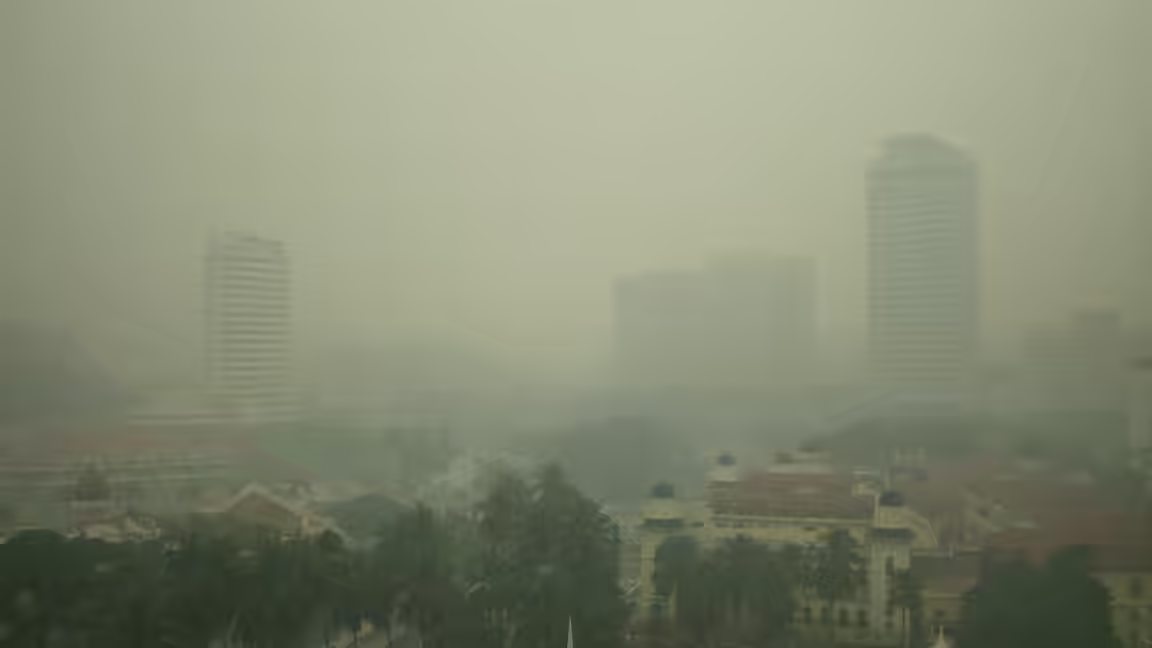
Water levels in the Brazilian Amazon recovered in 2025 after two consecutive years of severe drought, reaching 2.6 percent above the historical average, according to a report from the MapBiomas monitoring network. Increased rainfall compared with 2024 drove the rebound, but researchers cautioned that a single wetter year did not resolve mounting instability in Brazil’s water systems.
MapBiomas tracks changes in land cover and land use through a network of participating organizations. Bruno Ferreira of its Amazon team said extreme weather was becoming more frequent and pointed to signs that the hydrological regime was being affected by both climate change and changes in how land is used.
The Amazon figures matter well beyond the immediate region. Brazil contains about 12 percent of the world’s freshwater, and nearly two-thirds of that total is located in the Amazon. A recovery from drought can ease pressure on ecosystems and communities, but a national picture spanning multiple biomes shows that improvement was uneven.
The Pantanal, a major wetland south of the Amazon Basin, finished 2025 with water levels 56 percent below its historical average. Conditions there were better than in 2024, when the region experienced its most severe drought in decades, yet MapBiomas still identified the Pantanal as Brazil’s most water-stressed ecosystem. The contrast is stark: the Amazon moved above its long-run benchmark while the Pantanal remained far below its own.
The report’s percentages describe water conditions relative to historical averages, not a uniform rise across every river, lake or locality. They are best read as broad indicators of biome-level change. Likewise, recovery in 2025 does not by itself establish a stable trend, especially after two years of exceptional drought.
A further risk came from the return of El Niño, the natural warming pattern in the central and eastern equatorial Pacific. The phenomenon often contributes to drought in parts of the Amazon. The US National Oceanic and Atmospheric Administration said the episode had begun and could become one of the strongest on record by the end of 2026, according to the report.
MapBiomas’s findings therefore present two messages at once. Rainfall delivered a measurable recovery to the Amazon in 2025, reversing the immediate direction of the preceding drought years. At the same time, the Pantanal’s deep deficit, the recurrence of extreme events and the prospect of a strong El Niño leave Brazil’s long-term water outlook unsettled. Continued monitoring will show whether the rebound holds or proves to be a temporary interruption in a more volatile pattern.
The supplied account does not describe the satellite or field methodology behind the percentages, nor does it define the historical comparison period. Those technical details would be necessary for a closer assessment of uncertainty, but they do not alter the reported contrast between the two biomes.