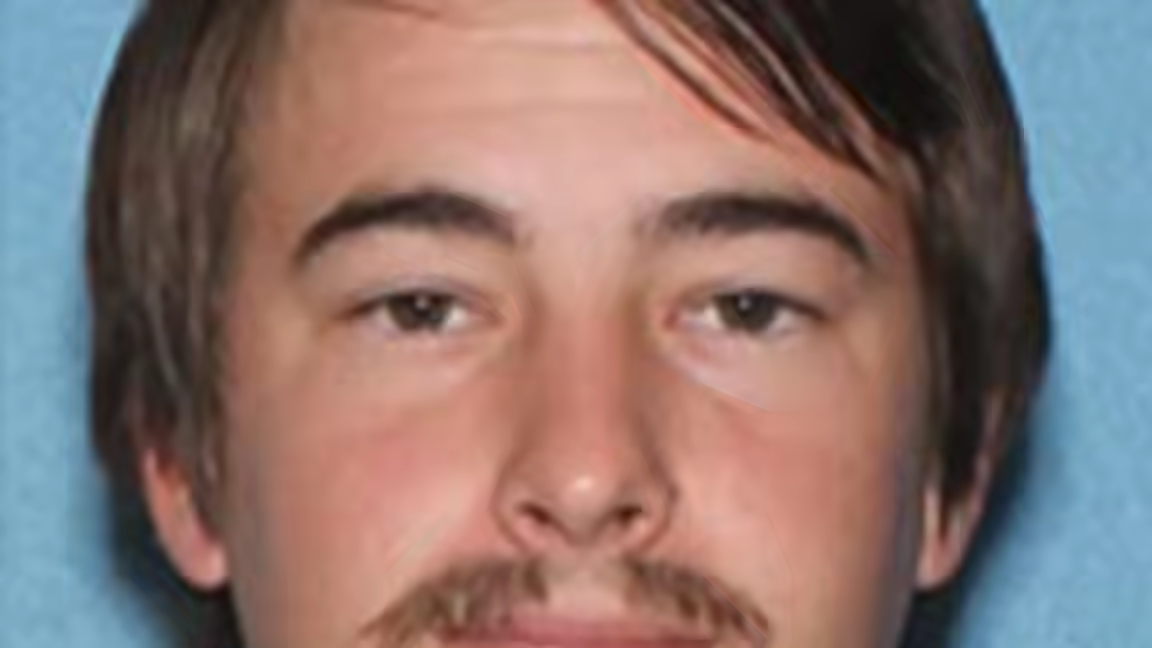
Federal authorities arrested five people accused of conspiring to attack a mixed martial arts event at the White House, after investigators uncovered discussions about flying explosive-laden drones and firing on people trying to escape.
The allegations were set out in court records unsealed after the event. Charges included conspiracy to commit murder. Investigators said encrypted chats involving 19 suspected participants contained maps, photographs, proposed targets and discussion of escape routes. Firearms and large quantities of ammunition were recovered during searches.
FBI Director Kash Patel said authorities learned of the threat four days before the Sunday gathering and conducted a multi-state operation with the Justice Department and other agencies. Secret Service Director Sean Curran said his personnel worked with the FBI while protective and technical teams prepared security around the White House.
Those arrested included Tycen Proper, 19, in Ohio; Daniel Eskridge, 32, in Missouri; Abraham Hermosillo Alvarez; and California residents Bryan Omar Roa and Michael Alan Thomas. Lawyers for several defendants had not responded to requests for comment, and it was unclear from the supplied report whether all had counsel. None had been convicted.
Proper's mother contacted local police because of changes in his behaviour, firearms purchases and online contacts. Deputies found thousands of rounds, an assault-style rifle and another rifle. After emergency hospital admission and FBI contact, Proper allegedly identified usernames used in group chats.
Court papers said Eskridge discussed preparing a garage as a safe house and creating a bunker. Alvarez allegedly shared a target list that investigators interpreted as references to President Trump, Vice President JD Vance, Israeli Prime Minister Benjamin Netanyahu and Elon Musk. Relatives of Roa also told investigators they feared he intended violence.
The UFC programme occurred on the White House South Lawn beneath a 92-foot structure called “The Claw.” Fourteen fighters competed as thousands gathered for an event marking Trump's 80th birthday and the United States' 250th anniversary. Roads were blocked, fences controlled access and hundreds of officers deployed.
The case arrived amid elevated threats toward US officials. Capitol Police recorded nearly 15,000 concerning communications or behaviours involving lawmakers, staff, families or the Capitol during the preceding year, up from more than 9,000 the year before. Those figures provide context but do not prove the allegations against these defendants.
The disrupted event demonstrated how family reports, digital evidence and protective intelligence can converge before an attack. The criminal process must now test whether the chats, weapons and conduct prove an agreement to commit murder and each defendant's knowing participation beyond reasonable doubt.


