The European Union and Group of Seven leaders pledged support for the response to a Bundibugyo Ebola outbreak in the Democratic Republic of the Congo, where the government reported 837 confirmed cases and 196 deaths. Twenty-nine cases were recorded during the latest 24-hour period in the figures released late on June 16.
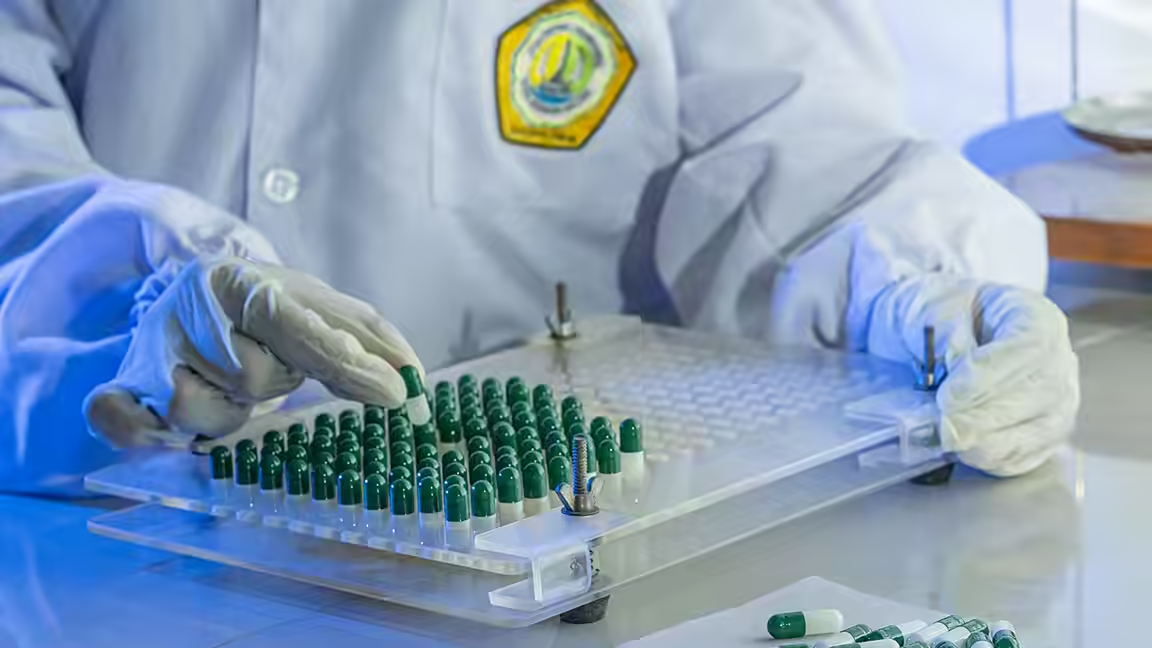
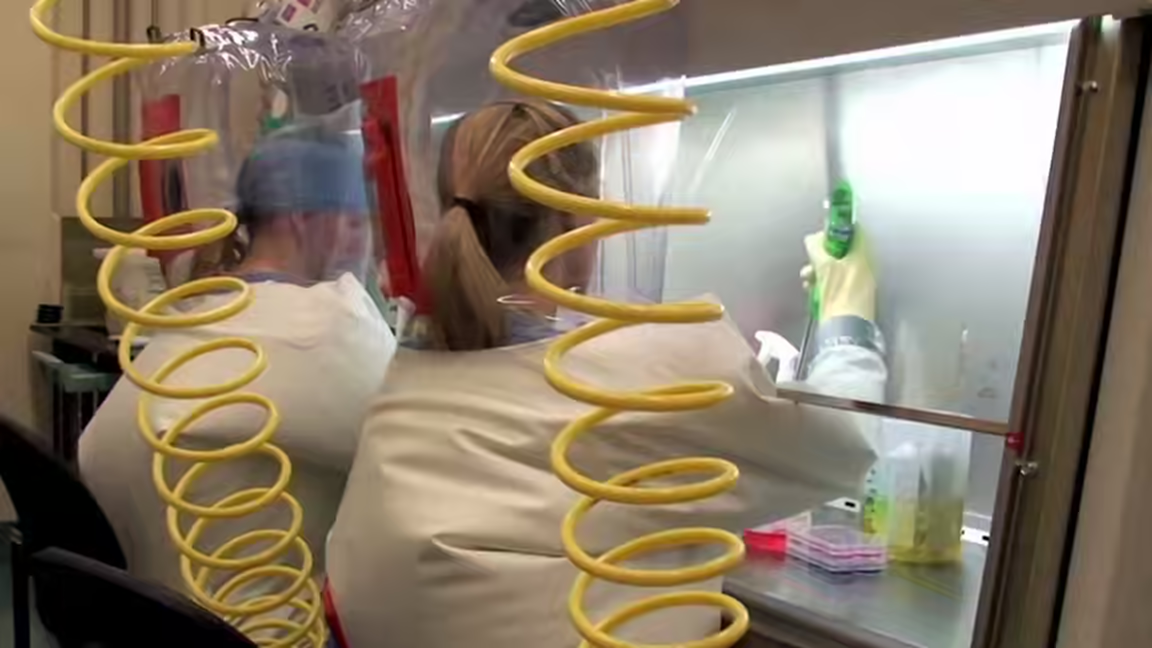
The European Commission said it was building on a programme worth about €493 million, or roughly $580 million. The support combined immediate medical work at the outbreak’s front line with humanitarian assistance in the Great Lakes region and neighbouring Uganda. It also included research on vaccines and treatments and longer-term efforts to strengthen preparedness and health systems.
Leaders meeting at the G7 summit in Évian, France, called for a strong, coordinated international response. Egypt, India, Kenya and South Korea, whose leaders attended as partners, also supported the statement. The World Health Organization had classified the outbreak as a public health emergency of international concern.
The G7 said the outbreak’s centre in an isolated, conflict-affected part of the DRC made containment, treatment and logistics difficult. Most cases were clustered around a gold-mining area in eastern Ituri province near Uganda. Existing vaccines, tests and therapies were not fully effective against the relatively rare Bundibugyo strain, adding to the operational challenge.
European Commission President Ursula von der Leyen framed international action as shared health security. Crisis-management commissioner Hadja Lahbib described the outbreak as a test of solidarity after visiting a treatment centre in Bunia, where health workers and communities were operating under considerable pressure. European health authorities continued to assess the risk to European citizens as low.
The leaders praised existing U.S. and EU programmes and asked governments and partners outside the G7 to contribute resources through methods they considered suitable. The Red Cross warned that the outbreak did not yet appear to have reached its peak.
Uganda had also recorded cases, but its government said they had been imported from the DRC and that transmission inside Uganda was under control. Vice President Jessica Alupo asked countries to remove travel restrictions imposed on Ugandans. No lifting of those restrictions had been reported.
This was identified as the DRC’s 17th Ebola outbreak. The immediate pledges addressed clinical response and humanitarian needs, while the research and health-system components recognized the specific limitations of available tools against Bundibugyo. The rising case count, conflict conditions and uncertain peak provided the basis for the summit’s call to widen international participation.
Ebola spreads principally through direct contact with bodily fluids from symptomatic or deceased patients and can cause severe bleeding and organ failure. The 2018-2020 DRC outbreak killed almost 2,300 people, but the current total of 196 deaths remained well below that mortality level. Strain differences also limit direct comparison between responses.