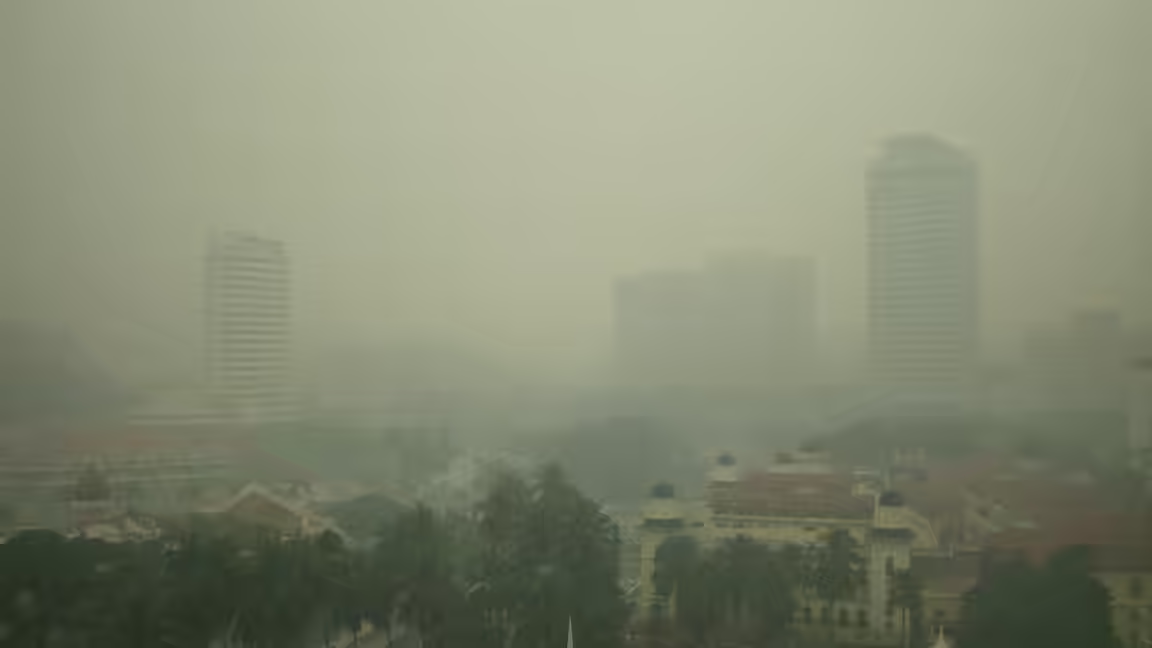
The United Kingdom experienced a provisional June temperature record on the date of 2026-06-26, when BBC News reported that 37.3C was recorded at Santon Downham in Suffolk during a severe heat episode affecting large parts of the country.
The reading was described in the supplied BBC News live coverage as a June record, with England setting a hottest June day record for the third consecutive day. The report said no other UK nation broke its own temperature record that day. Wales reached 35.1C at Hawarden, Scotland reached 29.2C at Eskdalemuir, and Northern Ireland reached 25.6C at Katesbridge.
The heat was accompanied by official weather warnings and wide disruption. A red extreme heat warning remained in force for London and parts of south-east England until 21:00, while yellow thunderstorm warnings covered northern England until 21:00 and Scotland overnight. The BBC report also said an amber heat warning was in place for the south and south-east of England until 21:00 on Saturday, with hot conditions expected to ease by Sunday.
Transport networks were among the services affected. Several UK rail operators warned of delays and cancellations, and National Rail advised passengers to avoid non-essential travel after the Santon Downham temperature was reported. Eurostar cancelled some services between London and Paris, and also reported cancellations between Paris and Brussels, citing exceptional extreme heat on the network.
Education was also disrupted. The BBC report said at least 1,400 schools across England and Wales were fully or partly closed. Health services faced additional pressure, with NHS staff describing difficult hospital conditions and the London Ambulance Service urging England football fans to stay hydrated and pace themselves ahead of a World Cup match against Panama. The ambulance service said it had seen a 50% rise in 999 calls and an increase in alcohol-related assaults after England’s earlier group game against Ghana.
The heatwave affected energy planning as well. The UK energy grid operator Neso issued an Electricity Margin Notice for the evening peak period, described in the BBC report as a routine request for more power to be available as a buffer between supply and demand. Neso said the notice did not mean electricity supplies were at risk and that people should continue normal use.
Wildfire conditions were also reported. The BBC said a Peak District wildfire affected around 200 hectares before being brought under control.
The same coverage placed the UK heat in a wider European context, reporting that Germany and Spain experienced their hottest June days, that France announced alcohol sales bans in Paris, and that the Netherlands issued its first code red extreme heat warning. The BBC also noted that UK June heat has become more frequent, with 30C exceeded in nine of the past ten years, compared with an average of three times per decade from 1960 to 1999.