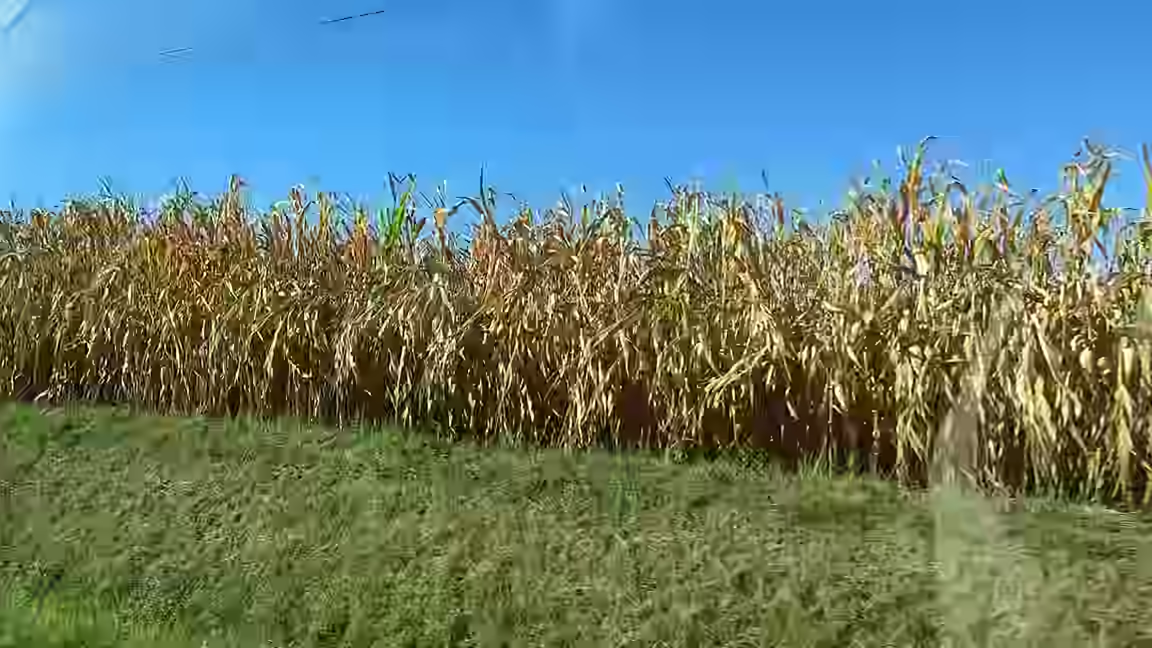
France has announced more than €1 billion in fresh assistance for farmers after a summer of drought and extreme heat damaged crops and put pressure on agricultural businesses. The package combines compensation for weather losses with measures intended to improve cash flow and reduce the risk of farm failures.
Agriculture Minister Annie Genevard presented the plan at a press conference on September 4. She said the government wanted to protect farm liquidity, prevent bankruptcies and help producers resume activity. The announcement comes after exceptional weather affected agricultural regions during the summer, leaving some businesses facing both lost output and continuing operating costs.
A central element is France's National Solidarity Compensation mechanism, known as ISN. The government estimates that claims through the mechanism will cost about €520 million. Genevard pledged to speed up payments so that affected producers do not have to wait as long for relief. The scheme is intended to cover crop damage linked to exceptional weather, while the wider package also includes compensation for certain uninsured losses.
The plan extends beyond direct damage payments. Farms judged to be among the hardest hit may receive tax exemptions, and a new continuity fund is intended to help agricultural businesses keep operating while they recover. The government also plans additional support with social-security contributions, another recurring cost that can become difficult to meet when harvest income falls.
Paris is also accelerating payments under the European Union's Common Agricultural Policy. Officials say that step should release roughly €420 million in liquidity for farmers. Although those payments are part of an existing framework, bringing them forward can provide working capital at a point when producers may need to pay suppliers, service debt or prepare for the next production cycle.
The package includes assistance for fertilizer and agricultural diesel purchases. Both are basic inputs whose costs continue even when yields fall, meaning weather losses can hit farms twice: first through reduced revenue and then through bills required to maintain operations. Targeting those expenses is therefore designed to keep viable farms from cutting activity simply because cash is temporarily scarce.
The announcement establishes the size and main channels of the response, but its effect will depend on how quickly money reaches applicants and how authorities determine eligibility. The government has emphasized accelerated disbursement, suggesting that implementation speed will be a key measure of the program.
For French agriculture, the intervention is both emergency relief and an attempt to preserve future production. The immediate priority is to absorb the financial shock from the summer. The longer-term question is how often increasingly severe heat and drought will require similar support, and whether compensation systems can remain responsive as weather risks grow.