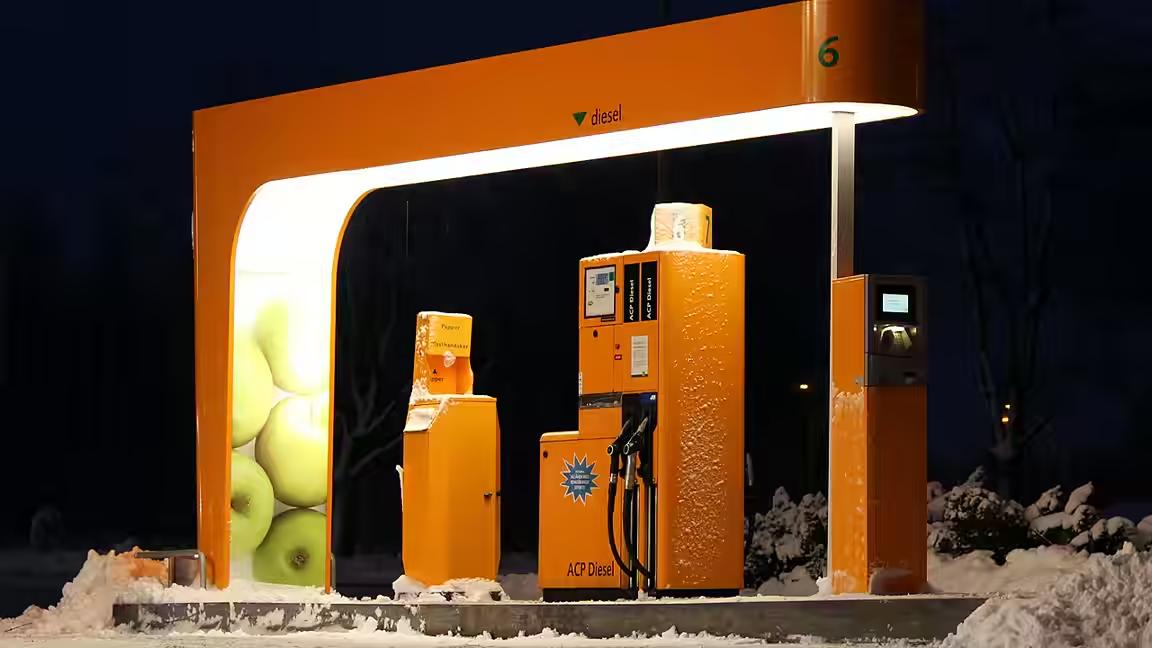
Diesel prices in the United States have climbed to a new record, deepening the economic strain from a war that is now affecting everything from farm equipment to grocery deliveries.
On the event date, the AAA motorists' association said the national average price of diesel had reached $5.85 a gallon, up from $3.71 a year earlier. The report describes diesel as a vital fuel for road hauling, agriculture and construction, which means the increase does not hit consumers only at the pump. It also flows through the broader economy by raising the cost of moving goods, running machinery and bringing food to market.
The latest jump comes during six months of disruption linked to the US war with Iran. The article says prices at the pump rose after US-Israeli strikes on Iran in late February triggered retaliation that included a blockade of the Strait of Hormuz, a crucial route for energy transit. Global oil prices have remained elevated and surged again this week after a fresh escalation in fighting. Even though crude has hovered around $90 a barrel, refined products such as diesel and gasoline have risen more sharply than the underlying oil benchmark.
That distinction matters. Drivers and businesses do not buy crude oil; they buy the fuels refined from it. When those prices move higher, the impact is immediate for truck fleets, farmers, builders and distributors. The article points to farmers as one of the clearest examples. North Carolina farmer Derrick Austin told AFP that higher diesel costs could add about $15,000 to the cost of his fall harvest of soybeans and corn. For a farm operation, that kind of expense is not theoretical. It can alter planting and harvest decisions, reduce margins and make it harder to absorb other inflationary pressures.
The strain reaches beyond agriculture. Diesel powers the trucks that carry food to stores, and the Independent Grocers Alliance estimates that fuel-related costs can account for 15 to 30 percent of the total cost of some food products. That means higher diesel prices can show up later in grocery bills even if the pump price itself is not front of mind for shoppers.
The report also notes that US farmers were already dealing with surging fertilizer and diesel prices during spring planting. Austin said fertilizer costs could stay elevated until next year if the Hormuz blockage continues. His view reflects a broader uncertainty that comes with energy shocks: the problem is not just the current price, but how long supply disruptions will last and what assumptions businesses can safely make about future costs.
The political effects are becoming harder to ignore. The report says Vice President JD Vance blamed Iran when asked about earlier comments from Treasury Secretary Scott Bessent that Americans could possibly see $3 gasoline again by Labor Day, which falls on September 7. Vance said such estimates were inherently unpredictable, and he also criticized Europe for not helping keep markets supplied.
Gasoline has also moved higher, with an average of $4.15 a gallon compared with $3.20 a year earlier. But the diesel record is especially notable because it hits the sectors that underpin physical production and distribution. In that sense, the price spike is not simply a consumer story. It is a signal that war-related energy disruptions are working their way through the backbone of the US economy.
If the record holds, the next test will be whether the price shock fades quickly or becomes another stubborn layer on top of already persistent inflation.