Political dispute intensifies
France's government has accused the far-left France Unbowed party of encouraging unrest as student demonstrations over school conditions spread and clashes led to hundreds of arrests. The allegation has become a major political dispute alongside the protests themselves, with government figures describing outside influence and the party denying that it directed the movement.
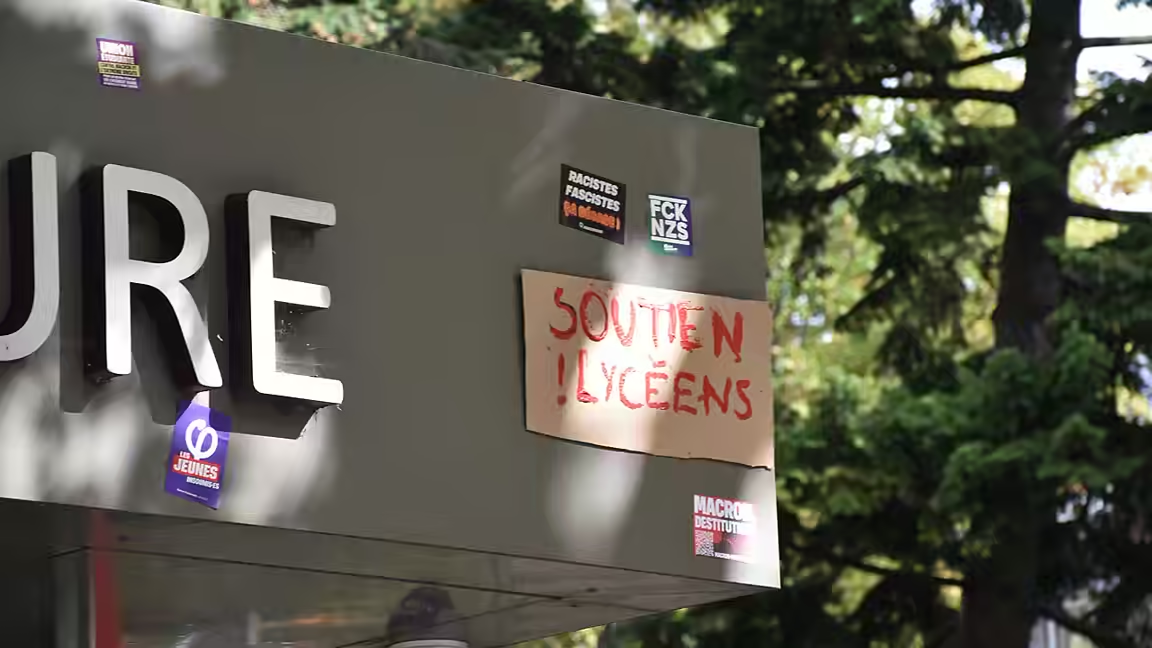
Students have cited teacher shortages, crowded classrooms, poor facilities and school budgets among their concerns. Demonstrations that began around schools developed into street confrontations in some locations, with barricades, fires and tear gas reported. More than 400 people had been arrested according to the supplied report, which also described disruptions at schools across the country.
Education Minister Édouard Geffray said the unrest was being exploited by the far left. President Emmanuel Macron also criticised politicians whom he said were legitimising violence. France Unbowed leader Jean-Luc Mélenchon rejected the government's account and presented the mobilisation as organised by young people responding to conditions in education.
The competing claims require caution. Evidence that party figures publicly supported student demands does not by itself establish that they organised violence. At the same time, scenes around some protests showed vandalism and confrontations distinct from peaceful demands about schools. The supplied reporting does not resolve who was responsible for individual incidents.
School grievances remain central
Students and education workers described practical problems that existed before the unrest. Their complaints included classes with too many pupils, insufficient teachers, ageing buildings and inadequate resources. Those issues help explain why demonstrations gained support beyond any single political organisation.
The government's response has had to address both public order and education policy. Police deployments and arrests can contain immediate disorder, but they do not answer complaints about staffing or infrastructure. Accusations of political manipulation may also deepen mistrust if students believe their concerns are being dismissed.
For France Unbowed, support for the demonstrations offers a way to align itself with younger voters and critics of government spending choices. It also exposes the party to scrutiny over statements that officials say encourage confrontation. The party's denial means those assertions remain contested rather than established fact.
The protests are unfolding in a charged national political environment, increasing pressure on officials to separate verified acts of violence from broader student participation. The clearest common ground in the available evidence is that serious grievances about school conditions helped trigger the mobilisation. Responsibility for subsequent disorder must be assessed incident by incident, rather than assigned to all demonstrators or inferred solely from political rhetoric.