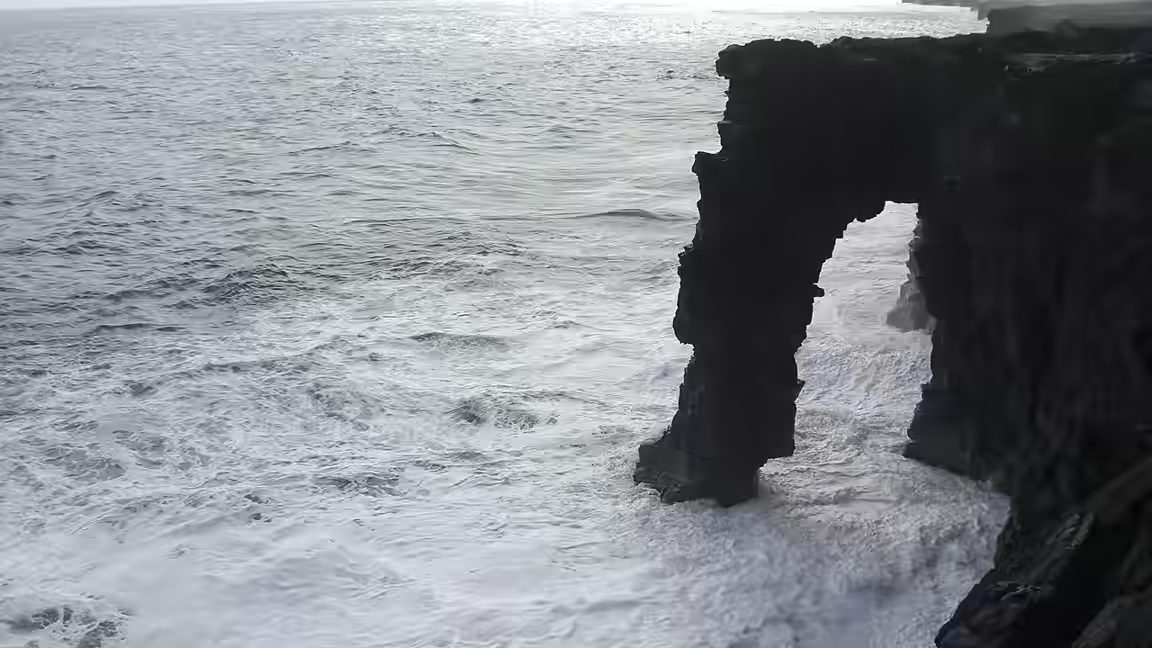
Hōlei Sea Arch, a prominent coastal formation in Hawaiʻi Volcanoes National Park, has collapsed into the Pacific Ocean after centuries of exposure to waves and years of documented instability. The National Park Service confirmed the loss on Friday, marking the end of a landmark that had stood on the Big Island’s southern coastline for roughly 550 years.
The approximately 90-foot arch was formed as ocean waves eroded ancient lava flows at different rates. Water exploited cracks and weaker sections of rock, gradually carving the opening while continuing to wear away the remaining pillar. The US Geological Survey had warned as early as 2014 that the process would eventually destroy the formation.
Park officials could not identify the precise moment of collapse. The arch was still visible on September 23, when the park temporarily closed during Tropical Storm Nolo. It was gone by the night of September 27, narrowing the likely period in which the rock fell into the sea. The disappearance followed rough weather around the islands, although the evidence does not establish a single immediate cause.
Instability around the site had been apparent well before the collapse. Earthquakes associated with the 2018 Kīlauea eruption and summit collapse damaged nearby cliffs. New cracks observed in January 2020 led the park to close the original viewing area; a replacement lookout opened farther from the cliff edge three months later. Later in 2020, large surf generated by Tropical Storm Darby removed part of the arch’s lower section.
Those changes had made Hōlei an especially visible example of the continuing geological reshaping of Hawaii’s volcanic coast. The same interaction between lava rock, fractures and surf that created the arch also ensured that it would be temporary on a geological timescale. Its longevity made that process easy to overlook during an individual visit, but park and geological officials had repeatedly treated the surrounding cliffs as dynamic terrain.
The collapse also follows an unusually active storm period for Hawaii. Residents had already dealt with flooding, damaged roads, fallen trees and power outages from earlier systems before Nolo brought heavy rain and high surf in late September. The supplied evidence does not show that any one storm alone brought down the arch, and officials had expected its eventual failure because erosion and prior damage had accumulated over many years.
For visitors, the safest available view had already been moved away from the unstable cliff. Hōlei’s disappearance now permanently changes a familiar scene along the park’s remote coast, while underscoring why access decisions around sea cliffs must account for ongoing erosion rather than the apparently fixed shape of the landscape.