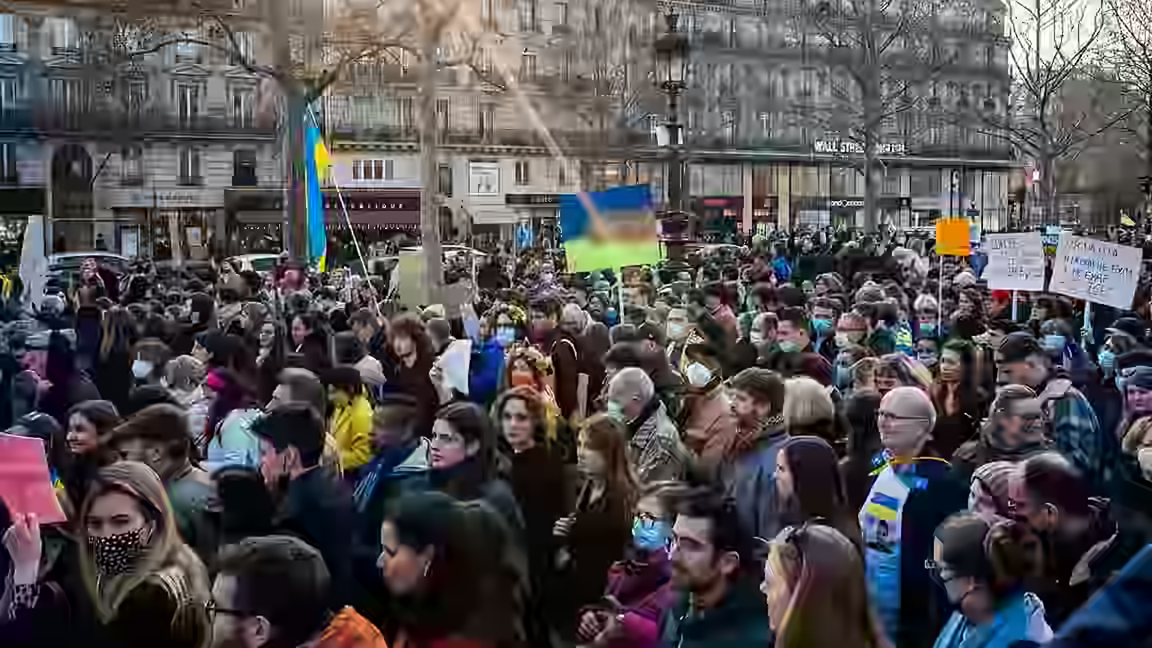
Shops were looted in several major French cities on October 17 as groups broke away from demonstrations over the cost of living and attacked retail premises. Incidents were reported in Paris, Lille, Lyon, Nantes, Marseille, Rennes and other urban centers, while officials stressed that most people taking part in the authorized marches remained peaceful.
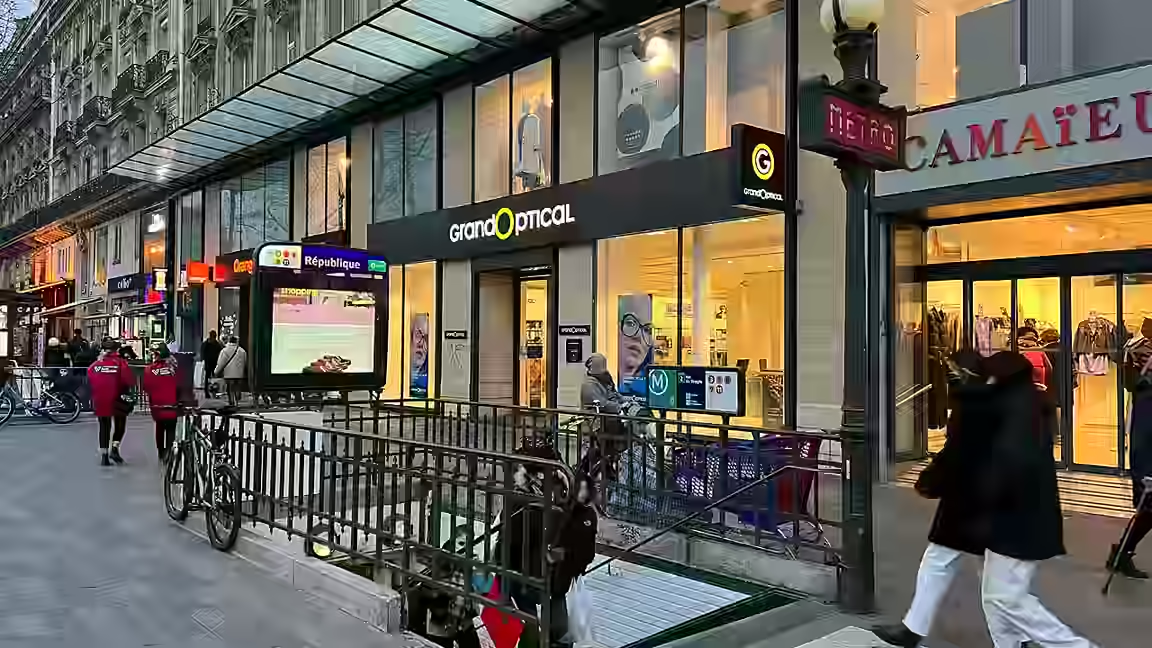
Around Paris's Place de la République, groups smashed windows and removed goods from a Monoprix supermarket, a McDonald's restaurant, an SFR phone shop and an Yves Rocher cosmetics store. A Kawasaki dealership was set on fire. The violence also spread beyond the immediate route of the authorized protest, with looting reported around Les Halles and the Madeleine area later in the afternoon.
Authorities deployed CRS 8, a police unit specialized in urban violence, to reinforce officers in the capital. Paris Mayor Emmanuel Grégoire condemned the property damage while separating those responsible from the majority of demonstrators, who he said had intended to march calmly.
The Interior Ministry reported large protest turnouts in Lyon, Nantes and Rennes and said groups of several hundred black-clad participants had formed on the margins of some marches. It blamed those groups for looting and attempted looting. In Lyon, businesses including H&M, Decathlon and Micromania were reportedly targeted; attacks elsewhere included Decathlon in Nice, Apple stores in Bordeaux and Lille, Swarovski in Rouen and Monoprix in Montpellier.
The incidents left employees and small-business operators confronting immediate damage and fear. A florist in Lyon said people entered the shop from multiple directions after paving stones broke a window. The shop had previously been damaged during the yellow-vest protests, according to her account. Major retail chains had not issued responses by early evening.
The disorder unfolded against a wider protest movement focused on household costs and government policy. Montpellier Mayor Michaël Delafosse acknowledged deep social anger and called for the government to respond to concerns about purchasing power and public services. He nevertheless condemned the looting, arguing that it undermined the peaceful mobilization and should be punished.
The events demonstrate the difficulty authorities and organizers face when mobile groups use a large demonstration as cover to attack sites far from an approved route. Reports available during the evening were still developing, and assessments of damage and arrests were provisional. What was clear was the geographic breadth: the attacks were not confined to one confrontation or one city, and they affected national chains as well as independent businesses.
The distinction between the demonstrations and the crimes around them remained central to official responses. Elected leaders defended the right to protest while denouncing vandalism, and police concentrated specialist resources in areas where attacks continued after marches dispersed.