From street protest to ballot activity
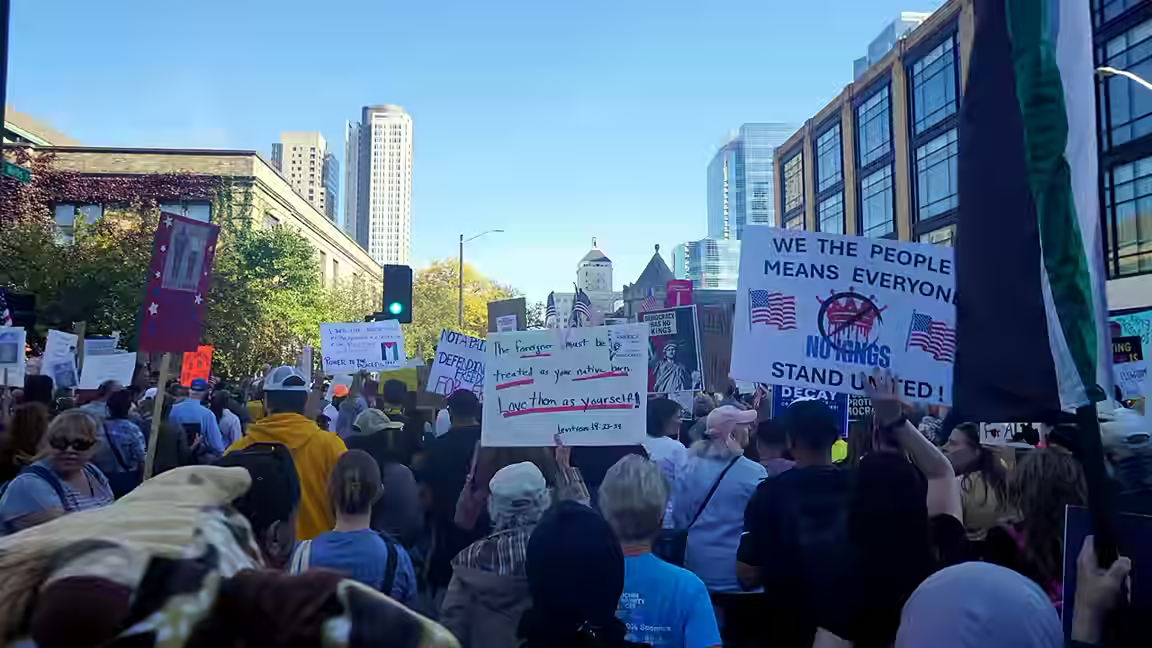
The latest nationwide No Kings mobilization placed early voting at the center of its campaign, with organizers holding more than 3,000 events across the United States on October 17. The actions ranged from marches and rallies to group trips to polling sites, ballot drop boxes and voter-information booths.
The movement's first three rounds focused primarily on opposition to President Donald Trump and his administration. This fourth round retained that political message but aimed to convert participation into early ballots and broader turnout for the midterm elections. Organizers expected individual gatherings to be smaller than the millions-strong crowds claimed for earlier national demonstrations, and said the practical effect would be difficult to measure until states released voting data.
Events took different forms according to local voting rules and community plans. In Phoenix, demonstrators marched to the Maricopa County Tabulation and Election Center to deliver ballots. Atlanta organizers paired food and music with a group trip to vote. Pennsylvania participants planned a tailgate event at a ballot drop box, while protesters in Oregon, Maine, Indiana and Florida used marches, roadside demonstrations and signs to emphasize voting rights and democratic participation.
Some gatherings adopted theatrical themes. Participants in parts of Michigan and Colorado used superhero costumes and decorated bicycles, while demonstrators at Florida's state capitol wore large papier-mache eyeballs to promote vigilance over elections, voting rights and immigration enforcement. The variety reflected a decentralized movement operating in cities, suburbs and small towns rather than a single national march.
Organizers and White House offer competing messages
Public Citizen co-president Lisa Gilbert described voting as the most direct way for participants to counter policies they view as abuses of power. Local organizers likewise urged people to use official ballot locations and vote early where permitted. Several speakers voiced concern about potential efforts to suppress votes or challenge unfavorable election results. Those concerns were political warnings rather than evidence presented in the reporting of a specific current violation.
The White House rejected the movement's characterization of the administration. It argued that organizers' ability to campaign and vote demonstrated that the country did not have a king or authoritarian government. That response underscored the competing narratives surrounding the events: participants cast mass voting as a defense of democratic institutions, while the administration treated the protests themselves as proof those institutions remained open.
The shift gives the movement a more measurable objective than attendance alone. Rally size can demonstrate visibility, but organizers will ultimately look to early-voting totals and overall turnout for evidence that the mobilization reached beyond committed activists. State data will not reveal why each person voted, so any claim about the campaign's effect will remain an inference rather than a direct count.
By connecting demonstrations to official voting channels, the October actions turned a recurring protest brand into a field-organizing effort. Whether that produces historically high participation will be tested through election returns, not the number of signs or events.