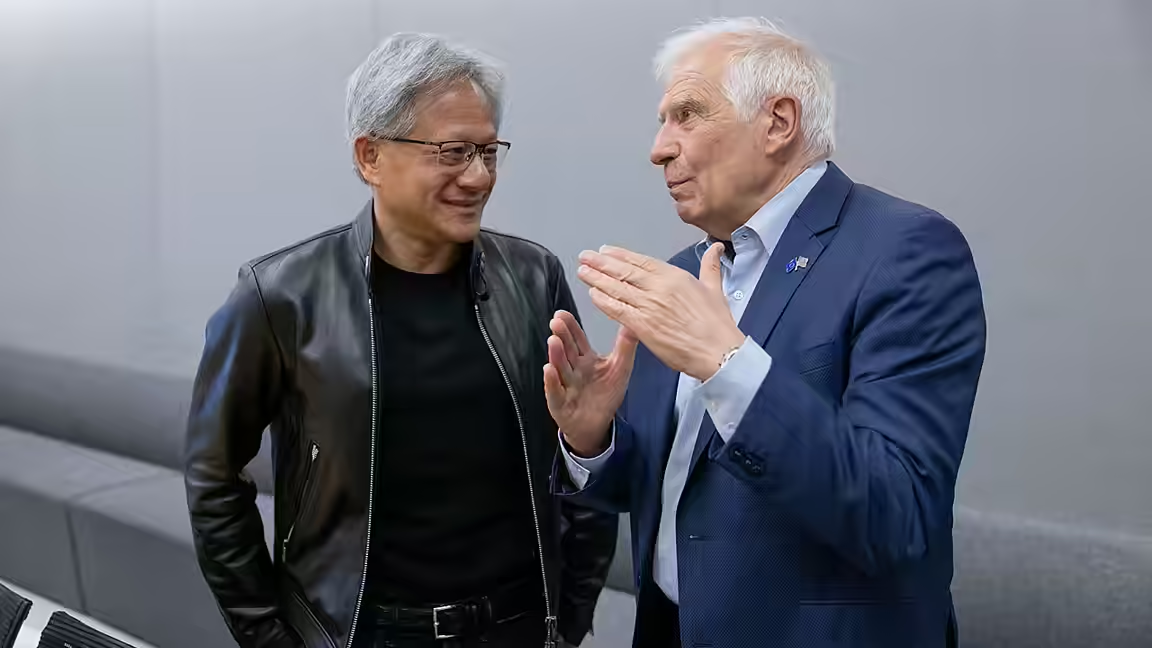
Nvidia’s board reinstated co-founder Jensen Huang as president and chief executive on 23 November, reversing a position it had stated only days earlier and ending an 11-day absence from the company’s top job. The board said Huang was the right leader for the chipmaker and that his return served shareholders, employees, partners and customers.
Huang had resigned following reports about an extramarital affair with a subordinate and a separate relationship with a woman whom US intelligence agencies suspected of links to Chinese espionage. China denied the allegation. The episode drew scrutiny because Nvidia’s advanced processors sit at the centre of US export controls and global competition over artificial intelligence infrastructure.
Board chair Harvey C. Jones said directors received input from senior US government officials before making the decision. Nvidia said that information gave the board confidence that reinstating Huang posed no national-security risk. President Donald Trump publicly welcomed the move and said the US government had no reason to consider Huang’s return a security threat. Trump also said he had spoken directly with Nvidia’s board.
The decision marked an abrupt change. During an earnings call in the previous week, Jones had said Nvidia did not intend to restore Huang as CEO. Huang subsequently signalled that he would return if directors concluded it was in the interests of the company, its workforce, shareholders and the United States. Thousands of Nvidia employees and a group of business leaders had also supported a petition seeking his reinstatement.
In a statement after the announcement, Huang said he was honoured to lead the company again and thanked the board, interim chief executive Colette Kress, employees and shareholders. He co-founded Nvidia in 1993 and built it from a graphics-chip specialist into the leading supplier of accelerators used to train and operate artificial-intelligence systems.
Investors treated his return as material to both Nvidia and the wider technology market. Nvidia shares rose more than 30% after the announcement, while the Nasdaq Composite recovered its early losses following a sharp sell-off on the previous Friday. Analysts quoted by CBS described Huang as unusually difficult to replace because of his central role in the company’s strategy and relatively flat management structure.
The market reaction reflects Nvidia’s reach beyond the sale of chips. The company has become a major force in AI infrastructure, using financing arrangements and commercial partnerships to encourage purchases of its hardware. Its performance is therefore closely watched as a measure of capital spending across the technology sector.
Huang’s restoration resolves the immediate leadership question but leaves governance issues for the board. Directors must explain how their risk assessment changed so quickly and how oversight will work after allegations that were serious enough to prompt a resignation. Government consultation may have answered the board’s national-security concern, but employees and investors will still judge whether Nvidia has established durable standards for executive conduct and succession.