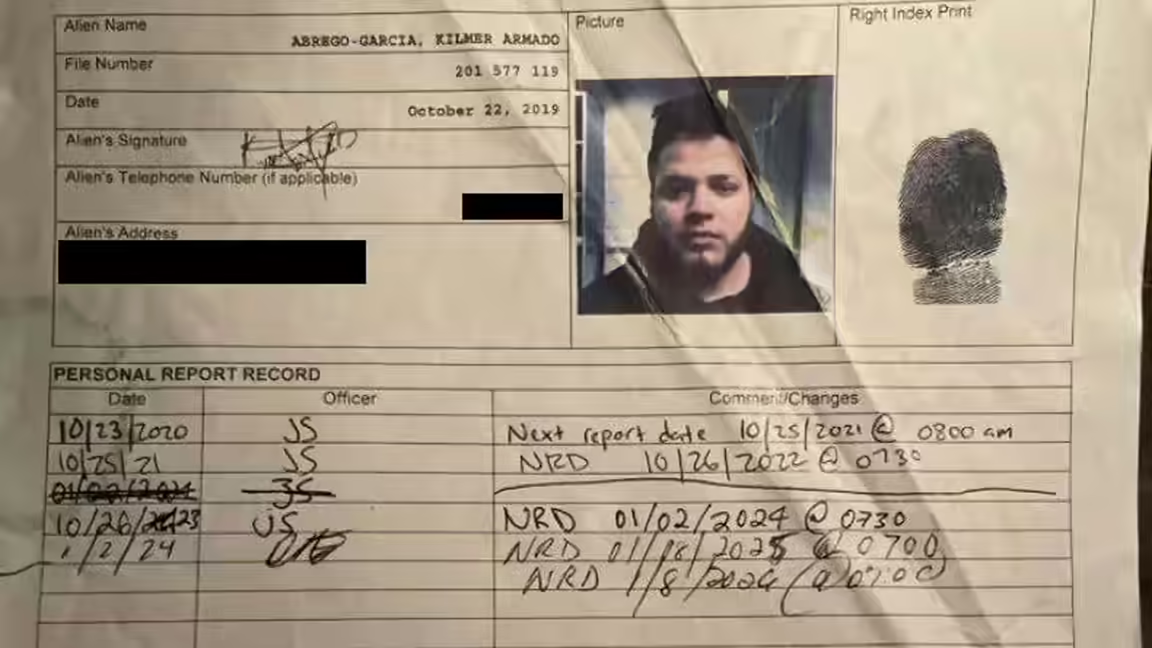
Kilmar Abrego Garcia arrived in Madrid on November 25 after leaving the United States voluntarily, closing the latest phase of a high-profile immigration case that began when US authorities wrongfully deported him to El Salvador in March 2025.
Abrego Garcia travelled on a commercial flight without restraints and entered Spain using his Salvadoran passport under a tourist-equivalent arrangement, according to his lawyer, Simon Sandoval-Moshenberg. The lawyer said the US government had instead wanted to send him to Liberia on an Immigration and Customs Enforcement flight.
Speaking after his arrival, Abrego Garcia celebrated his freedom and said he intended to continue advocating for immigrants facing legal proceedings or injustice. The immigrant-support organisation We Are CASA said he planned international speaking appearances. He said he and his family had not yet chosen a permanent next step.
Homeland Security Secretary Markwayne Mullin described the departure as self-deportation and said he welcomed it. Abrego Garcia's lawyer characterised the trip as a short-term absence and said a future US administration would have to reunite him with his family. Abrego Garcia had lived in Maryland, is married to an American woman and is a father.
His case became a major test of the Trump administration's mass-deportation policy. A judge had granted him protection from removal to El Salvador in 2019 after finding that he could face harm there. Despite that protection, he was sent in March 2025 with more than 200 other people to El Salvador's Center for Terrorism Confinement. Justice Department lawyers later acknowledged that his removal resulted from an administrative error.
Abrego Garcia returned to the United States in June 2025. Authorities detained him again and charged him with human smuggling in Tennessee, but that criminal case was later dismissed. Immigration agents separately sought to remove him to Uganda and then Liberia.
The move to Spain does not erase the legal and political questions raised by the original deportation. His case focused attention on whether migrants can obtain effective review before removal and how the government responds when a court order conflicts with an enforcement action. His free departure to a country of his choosing resolves the immediate custody dispute, but his future residence and the timing of any return to the United States remain unsettled.
For now, Abrego Garcia is outside US immigration detention and able to decide his next steps with his family, while supporters continue to present the case as a warning about procedural safeguards in deportation proceedings.