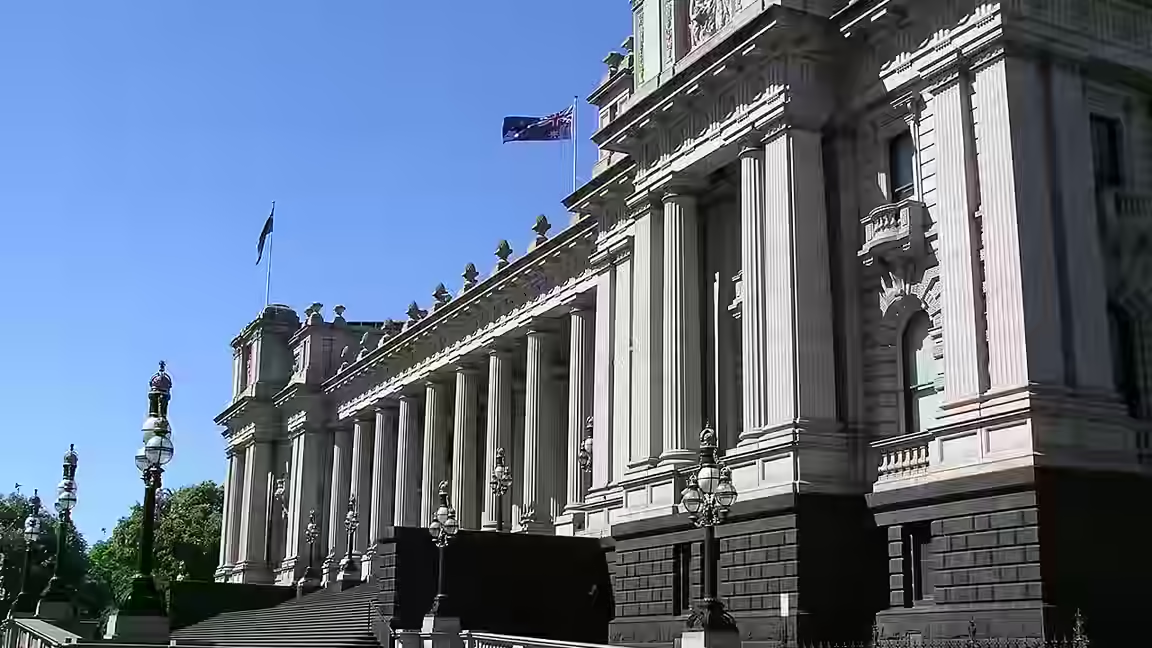
Voters across Victoria went to the polls on Saturday to choose a state government for the next four years, with severe rain closing voting centres and complicating an election expected to produce tight contests and complex preference counts.
Premier Ben Carroll is seeking a fourth consecutive term for Labor after 12 years of Labor government. Liberal opposition leader Jess Wilson is trying to return the Liberal-National Coalition to office. More than 700 candidates are competing for the Victorian Parliament's 88 Legislative Assembly seats, while voters are also choosing representatives for the upper house.
Polls were scheduled to close at 6 p.m. AEDT, when counting would begin. ABC election coverage said the vote could fragment beyond Labor and the Coalition toward the Greens, One Nation, independents and smaller parties. That distribution could make preferences decisive in marginal districts and leave some results unresolved for days.
Weather became an immediate operational issue. The Victorian Electoral Commission closed a voting centre at Keysborough Gardens Primary School because of flooding. A centre on Melbourne Road in Wodonga was also closed after heavy rain in the state's north-east. Volunteers at several locations reported slower morning traffic, while some fundraising sausage sizzles and other election-day activities were cancelled or disrupted.
Long queues still developed in places as conditions eased. In Wilson's electorate of Kew, voters waited as long as 40 minutes at one primary-school booth. Kew has historically been a safe Liberal seat, but Wilson faced an independent challenger as she defended the district while leading the statewide campaign.
Police were also called after reports of men causing trouble outside a voting location in Kew. Victoria Police said officers spoke to six men who then left. ABC Verify identified one person in a submitted photograph as the leader of the National Working Alliance, an ethno-nationalist group. Witnesses reported anti-Muslim chants at voting locations; those accounts were attributed to voters and the broadcaster's reporting.
The contest combines a statewide judgment on a long-serving government with unusually complicated local races. Retirements have opened seats such as Benambra, where voters are selecting a new representative for the first time since 2006. Independent and minor-party campaigns could also alter the traditional two-party contest in several metropolitan districts.
Early counting may indicate which major party has the stronger path to government, but close margins and preference flows mean a definitive outcome may not be immediate. Flood-related closures add another logistical complication, though voters were directed to alternative polling places. The election authority's final counts, rather than election-night projections, will determine control of parliament.