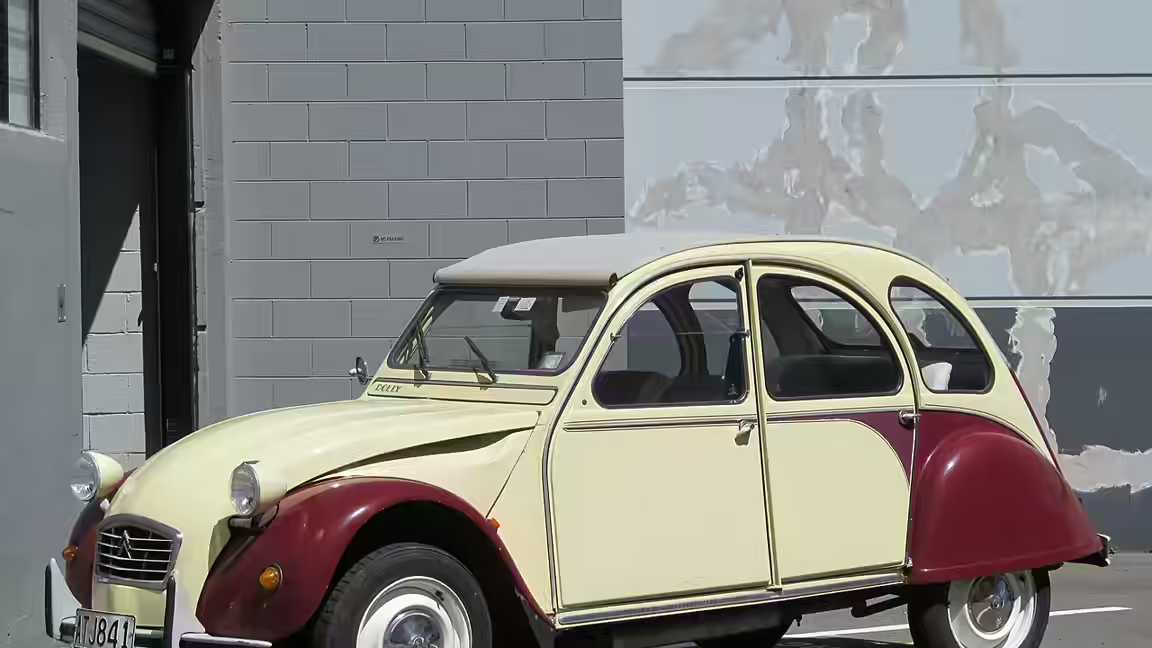
A familiar shape for an electric city car
Citroën has revived the 2CV name for a compact electric concept unveiled at the Paris Motor Show, using one of the company's best-known designs to frame its next small city car. The vehicle is not yet a production model, but Citroën plans to develop a showroom version for 2028, according to the BBC.
The concept carries several immediately recognizable elements from the original car. It has high, flared wheel arches, a tall curved roof and prominent round headlights. Those cues are applied to a modern electric runabout that is expected to cost about £13,000 if the planned production model reaches the market near its current positioning. The design may still change during development.
Citroën is drawing on a model introduced in 1948 to provide simple, inexpensive transport during Europe's postwar recovery. The first 2CV was designed for rough rural roads, with soft suspension, straightforward controls and construction intended to be easy to repair. It remained in production for more than four decades and evolved from an agricultural utility vehicle into a cultural symbol with a devoted following.
That history gives the new project a clear identity in a crowded electric-vehicle market. Chief executive Xavier Chardon presented the concept as a response to future mobility needs, but its commercial pitch depends as much on affordability and simplicity as on nostalgia. For a revived 2CV, recognizable styling alone would not reproduce what made the original important.
European brands return to their archives
Citroën is not alone in applying established names and shapes to electric vehicles. Renault has revived the Renault 5 and Renault 4 and has returned to the Twingo name, while Volkswagen's ID Buzz references its classic transporter. BMW's modern Mini and Fiat's revived 500 established the broader retro strategy before the latest electric push.
The approach gives long-established European manufacturers a way to distinguish their cars from newer competitors. Older buyers may remember the original models, while younger customers can encounter the designs as something distinctive rather than merely familiar. That advantage has become more valuable as Chinese manufacturers expand their range of competitive electric cars in Europe.
Heritage, however, cannot replace the requirements of a modern vehicle. The planned 2CV will still need useful range, practical features, credible quality and a price that matches the original car's accessible spirit. The concept establishes Citroën's intended direction, not a final specification.
By targeting 2028, the company has time to translate a show-car statement into a viable production model. Its challenge is to preserve the simplicity and character associated with the 2CV while meeting present-day expectations for an electric car. If it succeeds, the revived name could become more than a styling exercise in Citroën's response to a rapidly changing European market.