A digital app built around physical mail
A retrospective published on September 26 has offered a detailed look at the production machinery behind Apple’s Cards app, 15 years after the service debuted. Cards arrived in 2011 as an iPhone tool for designing a personalized greeting card, adding a photograph and message, and having the finished item printed and mailed to its recipient. The account says the product was initiated by Steve Jobs during the final year of his life.
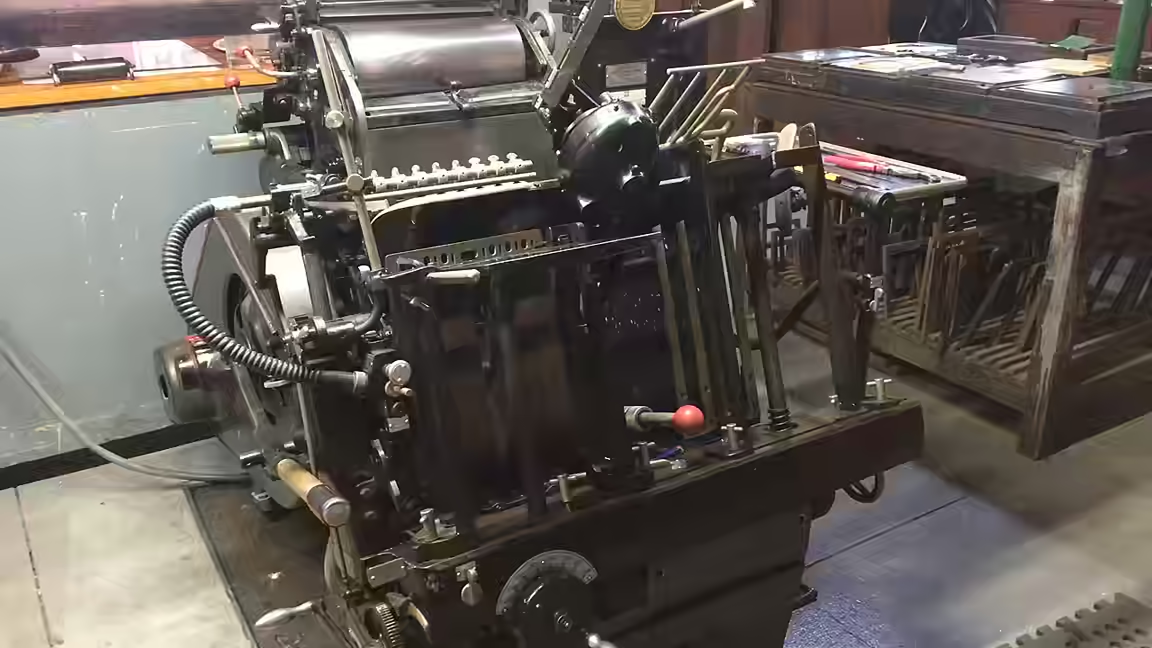
The application depended on far more than software. Apple wanted the cards printed on cotton stock with deeply impressed letterpress designs, while customers’ photographs were added digitally. A former program manager at Apple’s printing and fulfillment partner described the combination as technically difficult: ink did not readily adhere to the chosen paper, and a specialist shop in upstate New York supplied restored Heidelberg presses for the letterpress work.
Apple also wanted the service available in both the United States and Europe. That required new card designs, print templates and production lines, rather than simply reusing designs already offered through iPhoto. The partner had previously managed significant seasonal demand for iPhoto books, calendars and cards, with operations extending to the Czech Republic and Japan. Cards added another tightly scheduled project, internally called Speed Racer, ahead of its October 2011 launch.
Postal details became engineering requirements
The physical envelope was treated as part of the product design. According to the account, Apple did not want visible routing barcodes but still expected progress through the mail system to be tracked. The resulting process used a barcode that could be seen under ultraviolet light. The US Postal Service scanned items at several stages, while the absence of a normal visible code increased the need for manual handling.
Apple also declined to let the printing partner produce postage directly. In the United States, Cards mail used a custom heart-shaped stamp designed for the program. The Czech postal service did not permit the same arrangement, so Apple selected an existing stamp there. Those choices turned apparently minor aesthetic decisions into additional logistics work.
The former program manager said teams rushed to install sorting, barcode and printing equipment before release, with Apple engineers traveling in and some staff sleeping at the workplace. The recollection is one participant’s account rather than an official Apple history, but it illustrates the hidden operational burden behind a simple consumer promise: create a card on a phone and let Apple handle every physical step. Cards’ legacy is therefore less about a lasting app than about the unusually complex print and postal system assembled to make an iPhone interaction end at somebody’s mailbox.