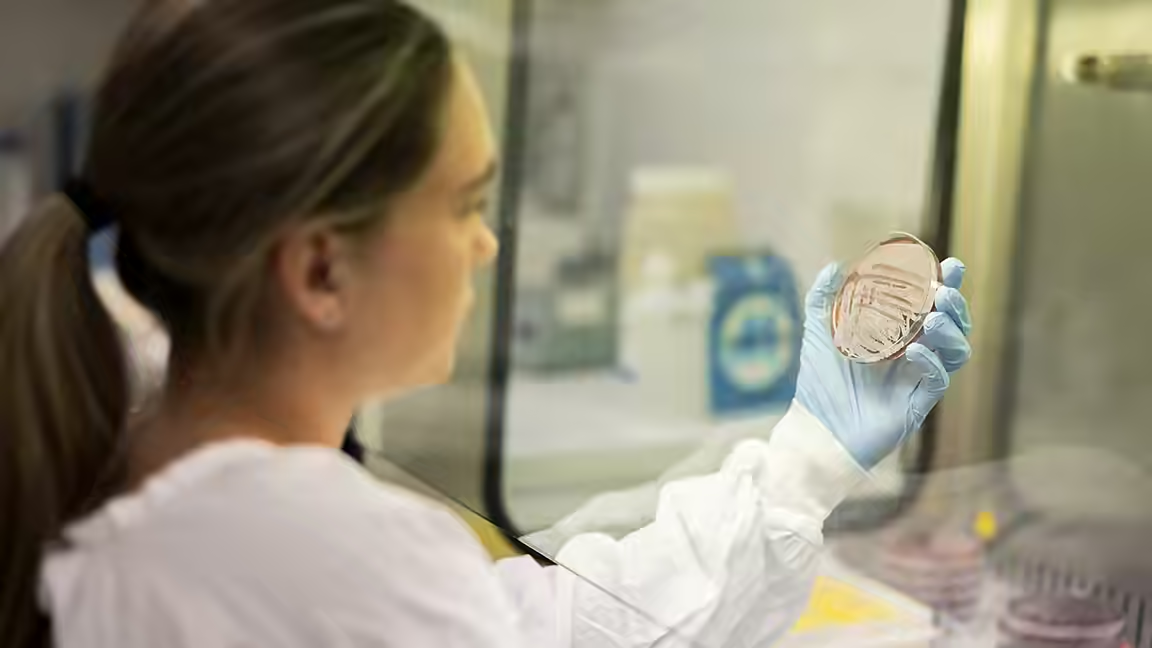
A lemon-and-ginger tea marketed with probiotics raised a basic microbiological question: can living bacteria intended for consumption survive preparation with boiling water? A scientist writing in the Taxa newsletter describes turning that apparent contradiction into a laboratory test, beginning with an attempt to culture organisms directly from a tea bag.
The inquiry rests on the meaning of “probiotic.” In the account, a probiotic is a living microorganism consumed deliberately in hopes of obtaining a beneficial effect. That living status creates tension when the delivery format is hot tea. The author notes that boiling water is substantially hotter than the temperatures used for pasteurization, a process designed to reduce microbial survival in food and drink.
The question arose after the author unknowingly bought Bigelow lemon-ginger tea containing probiotics. After brewing it normally, the drink had an unexpected powdery, alkaline taste. A conversation with the author’s doctoral adviser produced the experimental idea: place material from the tea bag in conditions suitable for growth and observe whether viable bacteria could be recovered. The supplied account introduces that test but does not provide its outcome, so no conclusion about the product’s viability follows from the evidence available here.
The essay places the experiment within a longer history of controlling microorganisms. It recounts how Louis Pasteur demonstrated that fermentation required living organisms rather than arising spontaneously from nonliving material. In his flask experiments, heated nutrient broth remained clear when protected from environmental microbes but became cloudy after exposure. That understanding led to heating wine enough to suppress spoilage organisms without destroying the product’s desired qualities. The process, introduced for wine in 1865, was soon adapted for stored milk.
Modern food and medical systems routinely depend on killing or limiting microbes, from antibiotics and disinfectants to industrial sterilization and pasteurization. Probiotic products reverse the framing by promoting selected bacteria as potentially useful rather than dangerous. The author accepts that some microbes are harmless or beneficial, while questioning the leap from that fact to broad marketing claims that people should consume large quantities through specially priced products.
That distinction is central to the tea investigation. Detecting a named bacterial ingredient on a label is not the same as demonstrating that living organisms remain after storage and brewing, reach the gut, or produce a health benefit. Each proposition requires its own evidence. The proposed culture experiment addresses only the first part: whether anything in the bag can grow under laboratory conditions. Until results and methods are available, the case is best understood as a testable product question rather than proof of efficacy or deception.