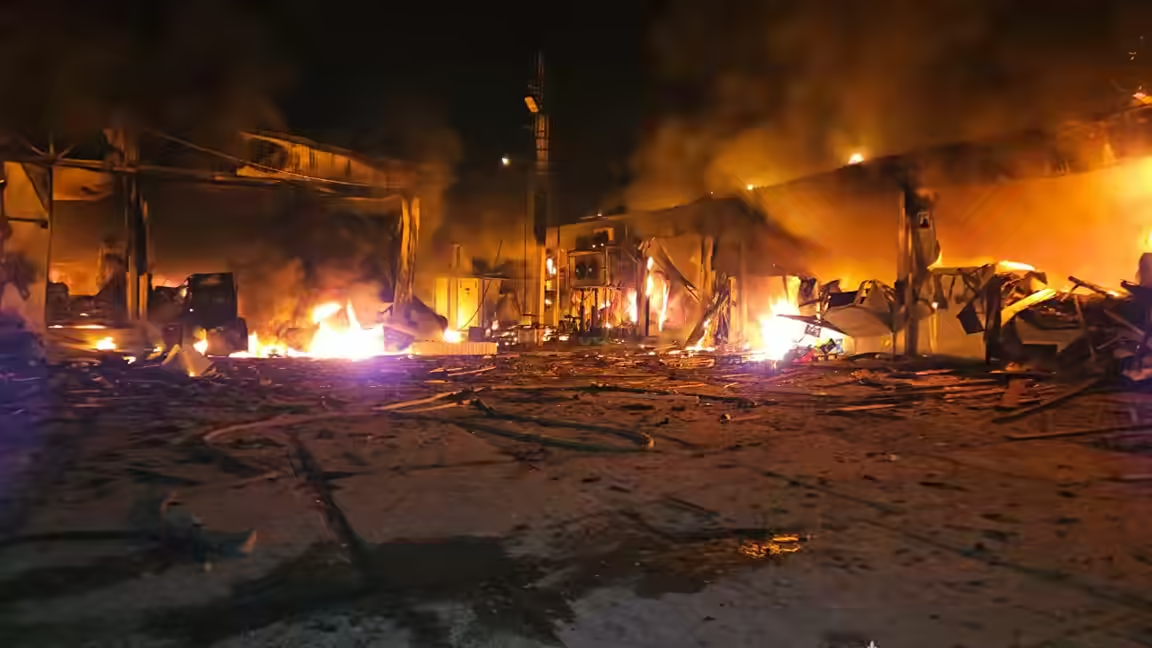
A joint investigation by Earshot and Forensic Architecture alleged that Israeli soldiers fired more than 900 rounds during the March 23, 2025 killing of 15 Palestinian aid workers in southern Gaza, including shots delivered from close range. The Israeli military rejected allegations of executions and referred to an internal inquiry that described the area as a hostile combat zone.
The attack near Tel al-Sultan killed eight Palestine Red Crescent Society workers, six members of Palestinian Civil Defense and one UN relief-agency employee, according to the investigation as reported by Drop Site News. Researchers constructed a minute-by-minute account using video and audio from the scene, satellite imagery, open-source material and interviews with two survivors.
Their analysis documented at least 910 gunshots across three recordings. At least 844 were fired during a period of five minutes and 30 seconds, the report said, with at least five shooters firing simultaneously. The researchers concluded that at least 93% of the shots recorded during the opening minutes were directed toward emergency vehicles and workers. Witnesses estimated that as many as 30 soldiers were present.
The reconstruction placed soldiers on an elevated sandbank with an unobstructed view of the road. It said the emergency vehicles were visibly marked and had their warning lights operating. Researchers alleged that soldiers initially fired from fixed positions, then advanced while shooting and fired at some workers from distances as short as one meter.
The episode began around 4 a.m., after the Red Crescent sent ambulances toward the site of an airstrike. One ambulance came under fire, killing driver Mustafa Khafaja and colleague Ezz El-Din Shaat. A third worker, Munther Abed, survived by lying on the vehicle floor and was later detained, according to the report.
After contact with the first crew was lost, a five-vehicle rescue convoy arrived shortly after 5 a.m. A worker, Refaat Radwan, recorded the approach on his phone. Recovered footage and calls to dispatch became central evidence used to compare witness accounts with the positions and movements of soldiers.
Drop Site reported that the Israeli military did not answer its detailed questions and instead cited its April 20 internal findings. That inquiry said troops faced widespread threats in a dangerous combat area and found no evidence supporting execution claims, which the military characterized as false accusations. The military inquiry recommended no criminal action against the units involved, according to the outlet.
The competing accounts leave a grave factual dispute. The independent reconstruction bases its conclusions on synchronized media, spatial analysis and testimony, while the military denies its central allegation. The supplied evidence does not include the full joint report or the internal inquiry, so the findings and rebuttal remain attributed to their respective authors.

