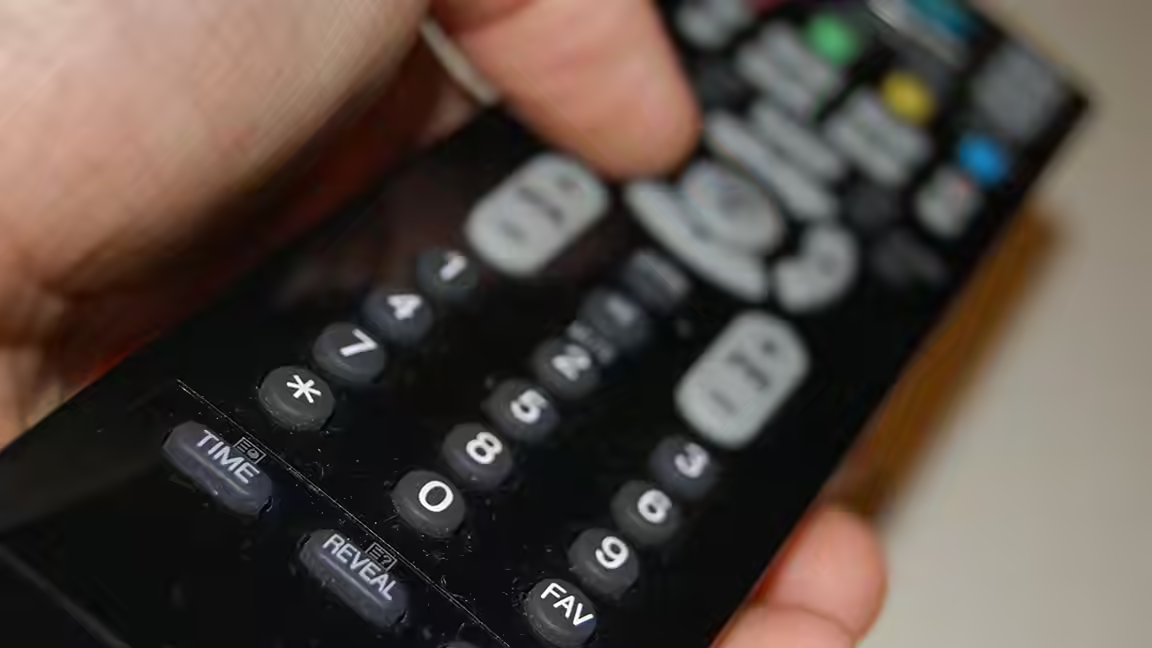
A software developer has turned an internet-free television into a tailored entertainment system by combining its existing remote control with a small infrared bridge and a desktop computer. The project keeps the TV itself offline while using an ESP32-C3 development board to translate remote-button presses into commands for software running on the connected PC.
The setup began with a basic inconvenience. The television was already attached to the computer through HDMI, but watching something from the couch required enabling a second display, opening an application, moving its window, entering full-screen mode and keeping a wireless keyboard nearby. The developer wanted a single button on the familiar TV remote to perform that sequence.
An infrared receiver and transmitter provided the link. With assistance from Anthropic’s Claude Opus 5.5, the developer identified the remote’s RC-5 button codes and created scripts that triggered the necessary desktop actions. The work expanded beyond launching video: colored buttons were assigned to separate modes for console emulation, Steam’s Big Picture interface and long fireplace videos.
The gaming mode brings together several emulators, including DuckStation, PCSX2, Dolphin and Cemu, alongside EmulationStation Desktop Edition. Two Xbox controllers were configured for the emulators. Controller power state became another input to the automation: switching on a controller can enter a gaming mode, while turning off the last active controller returns the system to the fireplace display.
Window placement eventually became unreliable in a conventional dual-monitor desktop. The developer responded by moving to a multiseat arrangement with separate X sessions for the desk display and the television. That separation allows both screens to be used independently, but it also prevents direct control of the television session from the regular desktop.
A custom administration panel filled that gap. It includes a virtual remote, sends commands through the homemade infrared device, exposes virtual gamepad controls and shows a live view of the TV display with mouse interaction. The infrared hardware also monitors volume changes made with the physical remote, allowing the dashboard state to remain aligned with the television.
The complete project took about ten hours, with much of that time spent configuring emulators. The developer credited Claude with accelerating device code and automation, while noting that its suggestions still required supervision: some introduced obvious defects or addressed symptoms instead of underlying causes.
The result is less a universal smart-TV product than a documented example of selective automation. It avoids adding a commercial connected-TV platform, accounts or television software updates. Instead, it gives one existing remote a narrow set of commands matched to the owner’s equipment. The project shows how inexpensive microcontroller hardware and desktop scripting can add convenience without replacing a functioning screen or placing the television itself on the internet.