Researchers have introduced Next-Concept Modeling, or NCM, a text-generation framework designed to combine parallel generation with a coarse-to-fine representation of language. Results reported in the paper show substantial inference-speed gains over diffusion language-model baselines on several benchmarks, while maintaining or improving the measured output quality.
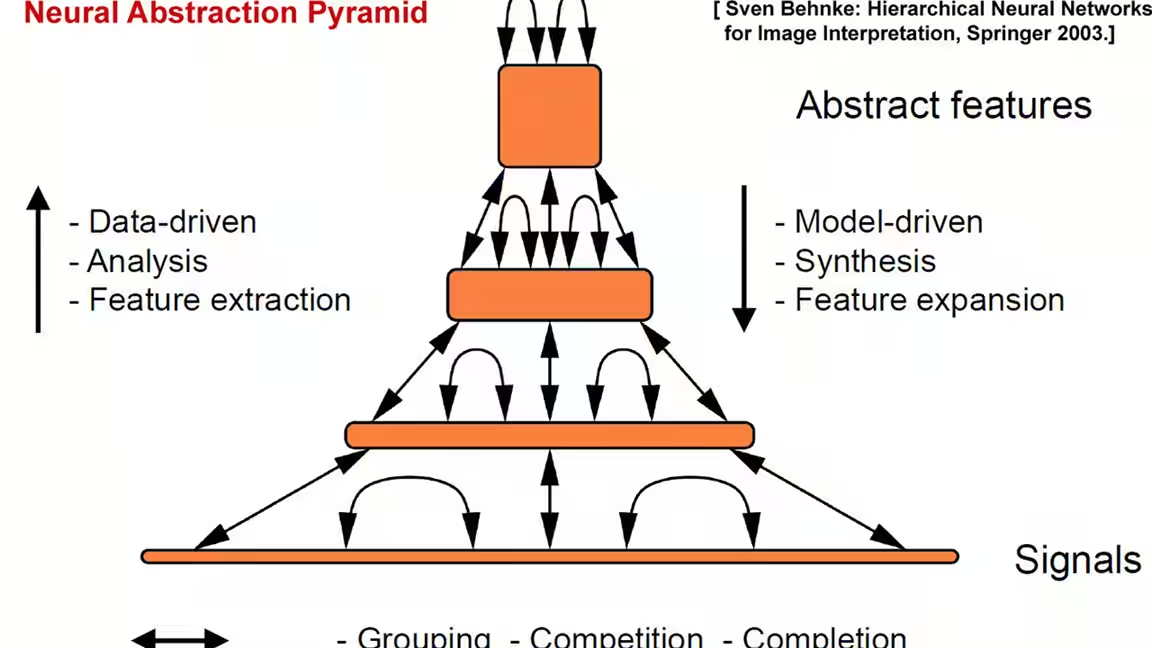
The approach separates text generation into two stages. First, a multiscale residual vector-quantized variational autoencoder converts text into a hierarchy of discrete codes. A transformer then produces the hierarchy one level at a time. Within each level, it predicts all codes in parallel rather than generating every token in a strictly sequential order.
That design addresses limitations the authors identify in diffusion language models. Although diffusion systems can sample in parallel, the paper says their quality declines quickly when the number of sampling steps is reduced. They also process an entire sequence during every step and can require many passes over training data to achieve competitive quality. NCM instead moves from a coarse representation toward progressively finer codes.
On the LM1B language-modeling benchmark, the researchers report that NCM delivered better generative perplexity than the strongest diffusion baseline tested at matched parameter scales while operating 21 times faster. On OpenWebText, the method was described as competitive with the strongest diffusion baseline and 10 times faster.
The study also evaluated summarization and a structured reasoning task. On XSum, NCM matched the strongest diffusion model's ROUGE-L score while running 31 times faster, according to the paper. In Sudoku tests spanning multiple difficulty levels, it outperformed both autoregressive and diffusion baselines while requiring fewer function evaluations.
The claims remain research results presented by the paper's authors, rather than evidence from an independent production deployment. The reported comparisons are also tied to the selected models, matched parameter scales, datasets and evaluation measures. They therefore demonstrate performance under the study's conditions, not a universal speed advantage for every text-generation workload.
Even with that qualification, the work presents a distinct route to reducing the repeated computation associated with diffusion text generation. Its central proposal is that language can be generated as a hierarchy of concepts, with parallel prediction inside each level, rather than solely as a left-to-right token stream or through repeated full-sequence refinement. The published benchmark results indicate that this architecture can preserve task performance while sharply reducing generation time in the evaluated settings. Across the reported experiments, the same framework was tested on language modeling, summarization and Sudoku rather than on a single narrowly defined task.