An open-source project called OpenTrailPaper is offering cyclists a do-it-yourself alternative to commercial bike computers, using firmware designed for LilyGO's T5S3 4.7-inch E-Paper PRO development board. The project combines ride data, navigation and sensor support in a device that can operate without a phone or mobile connection once its files are loaded.
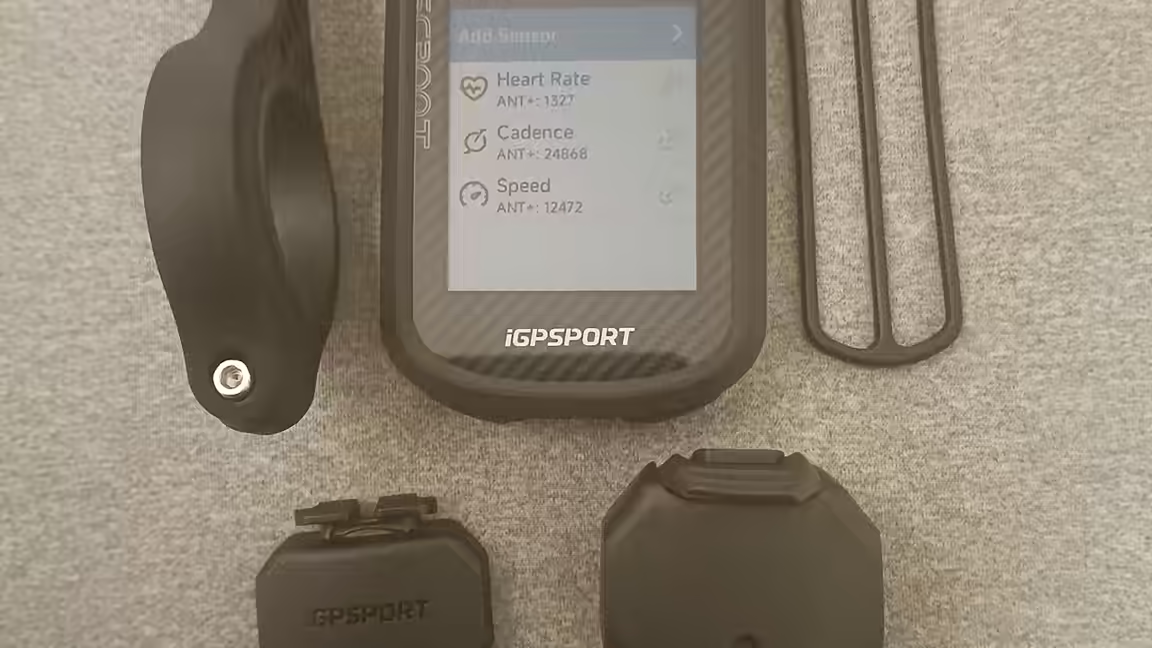
OpenTrailPaper displays speed, distance and a live map, follows GPX routes and records rides as FIT files on an SD card. It can provide turn-by-turn prompts and run structured workouts stored in ERG or MRC formats. Bluetooth 5 support allows the unit to pair with heart-rate, power and cadence sensors, putting several familiar cycling-computer functions onto relatively accessible development hardware.
The supported board uses an ESP32-S3 processor, 16 MB of flash, 8 MB of PSRAM and a 960-by-540 e-paper screen. E-paper is particularly relevant for outdoor use because it remains readable in direct sunlight. The board also includes GPS, capacitive touch, a front light, a battery and USB-C. Firmware can be installed from a desktop Chromium browser over USB.
An optional iPhone application handles setup and file transfers. It can plan routes, create offline-map packages, copy completed rides, adjust settings and install firmware over Bluetooth. The head unit itself does not require the phone during a ride. An Android version is in closed beta, according to the project site. There is no required account or subscription.
The developers are equally explicit about what the current board does not provide. It has no barometric altimeter, so climbing totals are estimated from elevation embedded in map tiles. Its GPS is not a modern multi-band unit, and the absence of a magnetometer means the map cannot determine orientation while the bicycle is stationary. A measured 1,500 mAh configuration delivered about 7.4 usable hours with its front light turned off, though power work remains ongoing.
Physical durability is another constraint. Most interaction uses the touch panel, which may be awkward with winter gloves or rain, and the bare board has no weatherproof enclosure or IP rating. Anyone building the unit must provide a suitable case or otherwise protect it from water.
Those limitations place OpenTrailPaper firmly in the enthusiast and development category rather than the finished-retail market. The project is inviting ports to other boards and says an ideal future target would add a barometric sensor, multi-band GPS, a magnetometer, stronger buttons, a larger battery and a weatherproof case.
Its significance lies in showing how much cycling functionality can be assembled around open firmware and commodity hardware. Riders gain control over software and data, while accepting the practical work and tradeoffs that come with a DIY device.