Tesla's current reservation agreement for its next-generation Roadster says the company cannot promise when a vehicle will be delivered or whether delivery will occur at all, according to a report published on October 18. The terms underscore the uncertainty surrounding a model that remains under development despite years of promotion.
The agreement characterizes a reservation as an approximate place in line if the Roadster enters production, rather than a confirmed production allocation. Tesla is seeking payments of as much as $250,000 upfront for some reservations, the report says. Reservations are non-transferable but fully refundable.
Pricing is also provisional. Because Tesla is still deciding the car's options, features and hardware, any price discussed at the reservation stage is an estimate. The company says final pricing will be available when a customer is invited to configure a vehicle. The same development status means specifications may change before production.
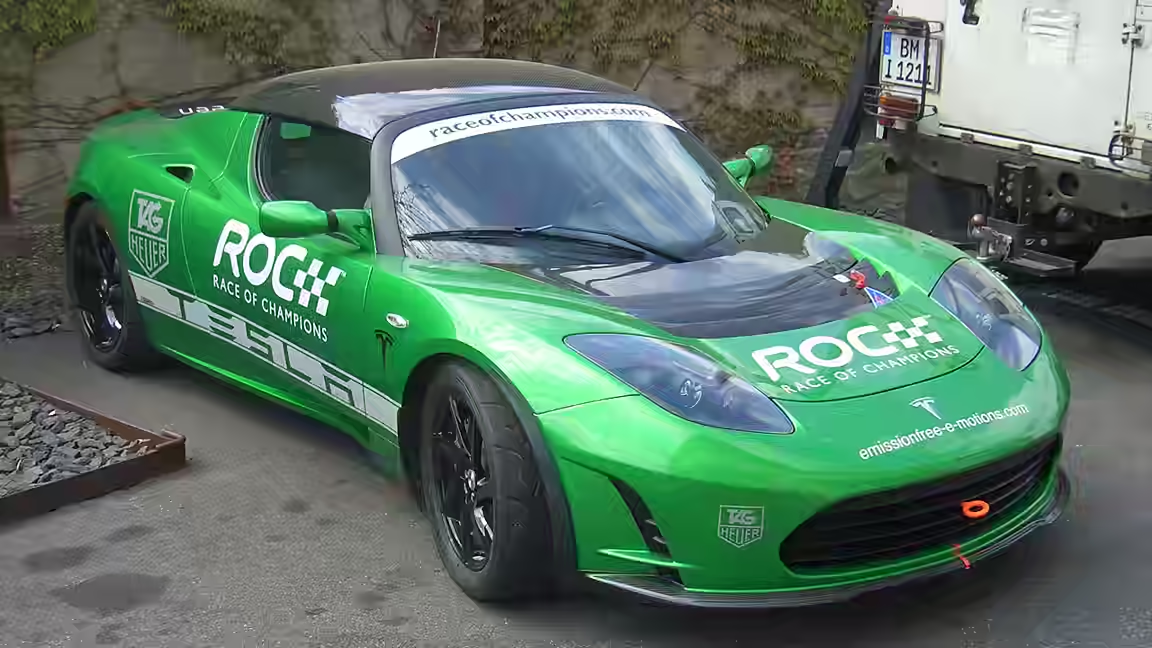
Tesla currently estimates that production will begin in 2028, according to the report. That timetable follows a long series of delays. The company originally presented a second-generation Roadster years earlier and accepted deposits, including payments worth the then-stated full price of a Founders Series version, without bringing that version into production. The latest presentation renews the vehicle program but does not remove the reservation contract's delivery qualification.
The report also distinguishes the Roadster terms from restrictions Tesla has placed on some previous limited launches. The new agreement does not include the no-resale provision used for early Cybertruck Foundation Series and Model S Signature Edition vehicles. That distinction would matter only after delivery; it does not convert a reservation into a guaranteed build slot.
Promoted performance claims remain subject to the same development uncertainty. Tesla chief executive Elon Musk has described acceleration from zero to 60 miles per hour in 0.81 seconds and rocket-thruster technology. The supplied evidence does not establish independent testing of those claims or confirm that the features will appear on a production vehicle.
For prospective customers, the contract is the clearest description of what the payment secures today. It gives a conditional position in a prospective production queue while allowing Tesla to revise timing, price, hardware and specifications. The availability of refunds limits one form of customer exposure, but reservation holders could still commit a large amount of money without certainty about when they can configure or receive a car.
The Roadster may yet enter production on Tesla's estimated schedule. The agreement, however, assigns that possibility no guarantee. Customers evaluating a reservation must therefore separate the company's development ambitions from the narrower contractual commitment documented in its terms.