# The tiny $70 Xteink X3 is the kind of gadget people actually use
*Event date: 2026-09-07*
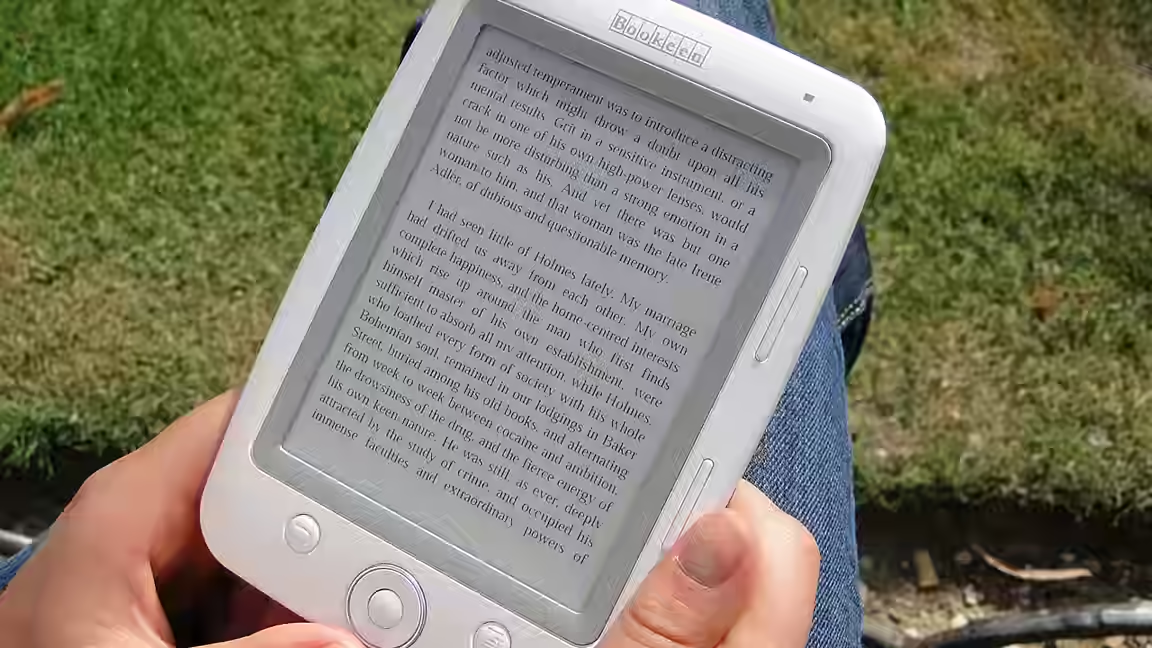
The Xteink X3 looks like the sort of gadget that would disappear into a drawer after a week: a plastic, palm-size e-reader that attaches magnetically to the back of a phone and sells for about $69 on Amazon. Yet The Atlantic’s review says the device has done something most expensive, feature-packed consumer electronics fail to do. It has made reading feel easy enough to become a habit.
The reviewer describes the X3 as the single best piece of technology they have bought in years, not because it is polished, but because it is tiny. The appeal comes from the device’s size rather than in spite of it. It is small enough to ride on the back of an iPhone without adding much bulk, which means it can travel in a pocket and come out during a commute, a museum queue or a stretch of time that would otherwise vanish into scrolling.
That convenience appears to be the product’s real breakthrough. In the two months before getting the Xteink, the reviewer finished only one book. In the month after, they read three without much effort, while daily iPhone screen time fell by 25 minutes. The device’s page turns are so brief that they create a kind of momentum: each paragraph-sized screen makes it easy to keep going, then keep going again.
The hardware itself is not being sold as premium. The review calls it plasticky, flawed and finicky. It has no touch screen, no color display and no backlight, which means it is useless for reading in the dark. The preloaded software is described as dreadful, unable to show book covers properly or format some text cleanly. Even moving books over is less seamless than on a Kindle, and Amazon purchases do not transfer with one click.
And yet the X3 has become a small viral object because users are finding ways around its weaknesses. The review says open-source firmware called Crosspoint unlocks extra features such as reading stats, new fonts and screenshot capture. It also added Libby support, which matters because library borrowing is part of what makes low-cost reading devices useful rather than merely cute.
That hacker energy has spread beyond software. People are mounting the Xteink on kitchen hoods to display recipes, carrying it on trips and even building accessories for it, including 3-D-printed reading lights and a case shaped like a gun. The point is not that this is the most advanced gadget of 2026. It is that, in a market full of larger screens, subscriptions and polished marketing, a cheap and hackable oddity has found a real use case.
The review places the X3 in a broader shift in consumer electronics. Silicon Valley, it argues, has left a hole in the market for simple, customizable devices, and Chinese brands are increasingly filling it with products that feel less like locked appliances and more like tools to be adapted. That is why a device that looks gimmicky on first glance can become a surprisingly serious reading machine.
In that sense, the Xteink X3 is a reminder that novelty still sells when it solves a small, specific problem well. It is not trying to replace a laptop, a tablet or a flagship e-reader. It is trying to make one more page worth turning, and for many readers that is enough.