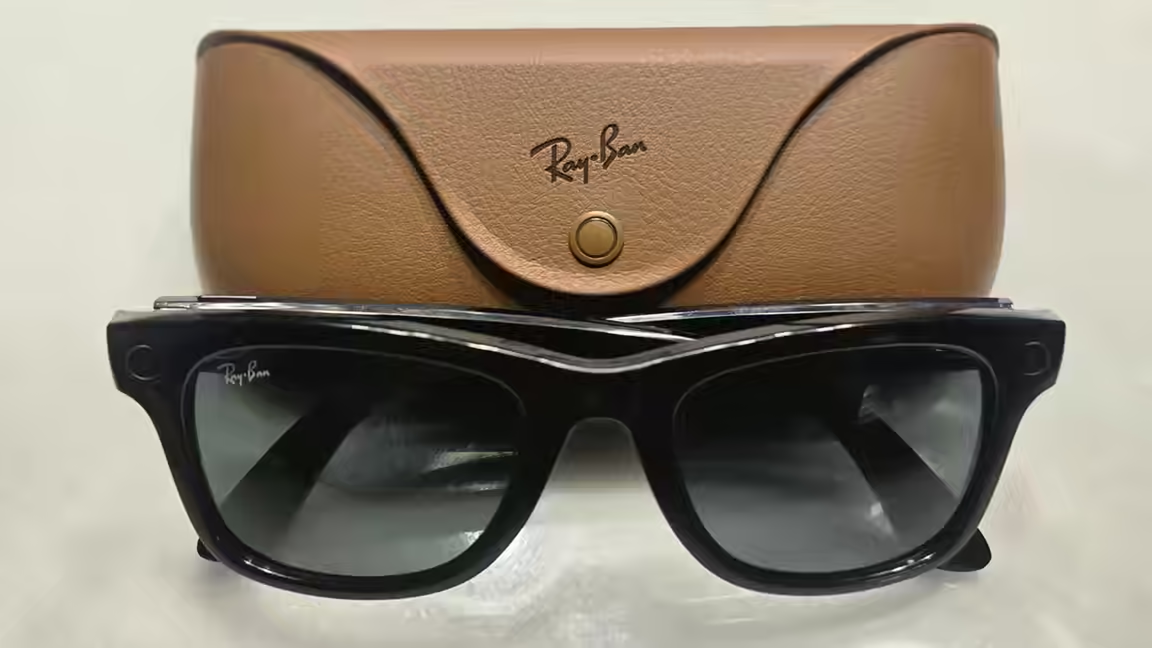
A mobile app is offering phone users an early warning that camera-equipped glasses may be nearby, responding to concerns that discreet wearable cameras can make people difficult to spot when they are being filmed. ZuckOff scans Bluetooth broadcasts and compares them with identifiers associated with supported smart-glasses models, according to a report published on September 21.
Polish developer Pawel Szydlowski built the app after buying several devices and recording the Bluetooth signals they transmit. The resulting fingerprints can identify nearby models including Ray-Ban Meta and Oakley Meta glasses, as well as Snap Spectacles. The software also uses signal strength to provide an approximate indication of proximity. Its core scan runs on the phone, turning radio traffic that is normally invisible to the user into a notice that compatible glasses are in the area.
The warning has important limits. ZuckOff cannot say whether a detected device is actively recording, and it cannot identify the person wearing it. A detection therefore indicates only the presence of a recognized Bluetooth signature, not that surveillance is taking place. The app is best understood as an awareness tool rather than a definitive camera detector.
Szydlowski released a basic scanning feature free on iPhone, while a paid Pro version adds continuous background monitoring, widgets, alerts, a history of sightings and data export. The report said the app received more than 5,000 App Store downloads during its launch month and had reached 1,000 downloads on Google Play when the article was written. Those platform figures describe early adoption rather than a measure of detection accuracy.
Interest in the software reflects a larger design tension around smart glasses. Wearable cameras are intended to remain convenient and unobtrusive, yet people around the wearer need a reliable way to understand when a lens may be pointed at them. Many glasses include a recording indicator, but a visible light is not useful if it is obscured. ZuckOff approaches the problem through the separate Bluetooth signals that devices advertise.
That approach also creates an ongoing maintenance challenge. Detection depends on the app recognizing specific hardware signatures, so new models or changes to radio behavior may require additional fingerprints. Signal strength can vary with distance, walls and other conditions, making proximity only an estimate.
The app does not resolve questions about consent, recording rules or how venues should handle wearable cameras. It instead gives individuals one additional piece of information in environments where the camera itself may blend into ordinary eyewear. For users, the practical takeaway is narrow but clear: an alert can indicate that supported camera glasses are nearby, but it is not evidence that anyone has recorded them.