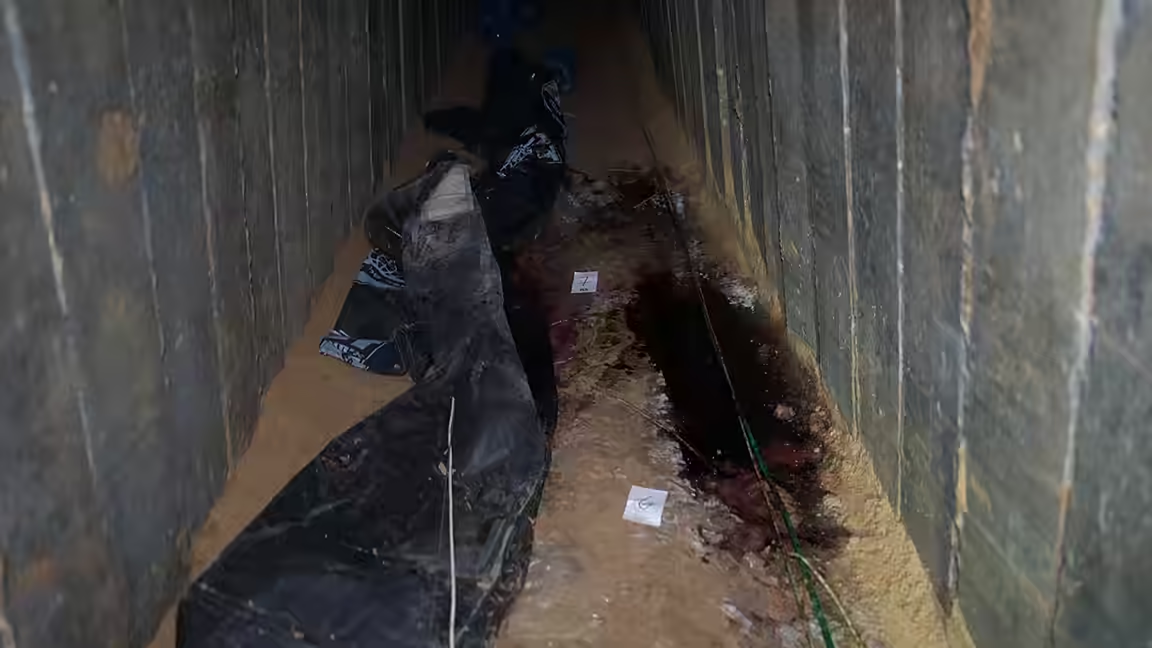
The Israeli military has recovered the bodies of six hostages who were kidnapped by Hamas during the October 7 attack, including Israeli American Hersh Goldberg-Polin, in a tunnel under Rafah in Gaza, NBC News reported.
The finding brought a new shock to a conflict already defined by hostage diplomacy and mounting pressure on Israeli leaders. President Joe Biden said the bodies were recovered in a tunnel under Rafah, while the Israel Defense Forces identified the six dead as Goldberg-Polin, Carmel Gat, Eden Yerushalmi, Alexander Lobanov, Almog Sarusi and Master Sgt. Ori Danino.
According to the report, Rear Adm. Daniel Hagari said Hamas killed the six shortly before Israeli forces reached them. A spokesperson for Israel's Health Ministry said they were likely killed sometime Thursday or Friday. The bodies were found less than a mile from a tunnel where hostage Qaid Farhan Alkadi had been rescued earlier, underscoring how close Israeli forces were operating to holding sites in the Rafah area.
The death of Goldberg-Polin was especially prominent because of his family and public profile. He was 23 and had been taken from the Supernova music festival. His parents had become visible advocates for the hostages, including an emotional appeal at the Democratic National Convention and repeated calls for a deal to bring captives home. Their son's death turned a personal tragedy into a broader political moment.
The other victims also reflected the breadth of the October 7 hostage crisis. Gat, a 40-year-old occupational therapist from Tel Aviv, had been taken from her parents' home in kibbutz Be'eri. Yerushalmi, 24, was taken while working at the Nova festival. Lobanov, 33, and Sarusi, 27, were both seized from the same event, while Danino, 25, was also kidnapped at the festival after helping others escape, according to the Israeli Embassy in the U.S.
The discovery prompted intense public anger in Israel. The Hostages and Missing Families Forum said Netanyahu had "abandoned the abductees" and called for the country to prepare for disruption. The next day, protesters in Tel Aviv and elsewhere demanded that the government secure the release of the remaining hostages, with the forum estimating turnout at 300,000, though NBC said it could not verify that number.
Biden said he was devastated and outraged, and Vice President Kamala Harris condemned Hamas, calling it an evil terrorist organization. Secretary of State Antony Blinken also expressed grief for the families. Those reactions show that the hostages' deaths reverberated far beyond Israel, carrying diplomatic weight in Washington as well as political weight in Jerusalem.
The report suggests the event could sharpen pressure for a cease-fire and hostage deal, but it also shows the limits of that pressure. Even after weeks of calls for negotiation, six people taken on October 7 were brought home dead rather than alive. That reality makes the remaining hostage question more urgent and more painful for both families and policymakers.
For Israel, the recovery of the bodies was both a military discovery and a national trauma. It marked the end of one search, but it also intensified the demand to save the captives who were still missing.


