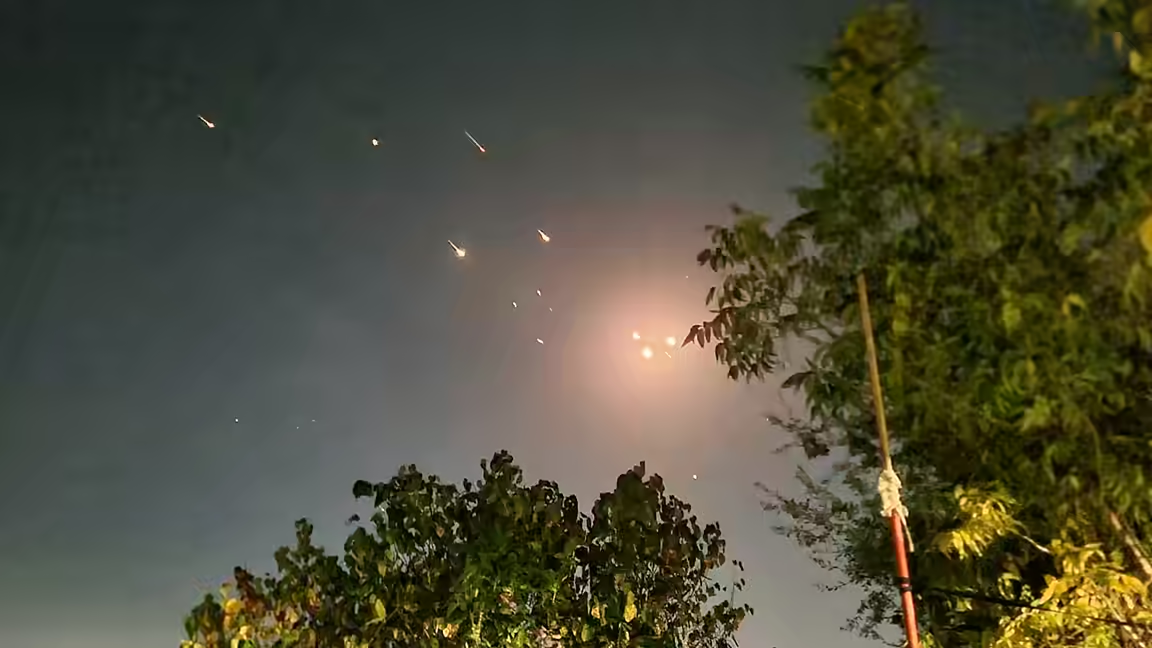
Iran launched a large ballistic-missile attack toward Israel, sending people into shelters as sirens and explosions sounded over Tel Aviv, Jerusalem and other areas. Israeli and US officials said nearly 200 missiles were fired in an assault that sharply intensified fears of a wider regional war.
The Israel Defense Forces said its systems detected approximately 180 missiles. Rear Admiral Daniel Hagari, an Israeli military spokesperson, said air defenses carried out many interceptions, although some missiles landed in central and southern Israel. US National Security Adviser Jake Sullivan said American Navy destroyers also fired interceptors at incoming weapons, and Defense Secretary Lloyd Austin confirmed that US forces in the region intercepted multiple missiles.
About 45 minutes after the barrage began, the Israeli military told residents they could leave shelters. Hagari said the military had not identified further aerial threats and was not aware of casualties in Israel at that stage, while assessments of the impact sites continued. Authorities in the occupied West Bank reported that one man was killed. Early accounts emphasized that the full extent of damage was still unclear, with images showing craters in central and southern Israel.
Iran acknowledged the operation and presented it as retaliation for Israeli actions against Iranian personnel and interests. Iran's mission to the United Nations called the launch a lawful response to what it described as attacks on Iranian nationals, interests and sovereignty. Iran also said the action responded to the killing of Hezbollah leader Hassan Nasrallah and others. Tehran's foreign minister, Abbas Araghchi, later said Iran regarded its action as concluded unless Israel chose to retaliate.
Israeli leaders rejected that justification and promised a response. Prime Minister Benjamin Netanyahu told his security cabinet that Iran had made a serious mistake and would pay for the attack. Hagari likewise said the launch would have consequences and that Israel remained on high alert. Neither official specified an immediate timetable or form for a response in the initial statements.
The United States described the defense as effective. Sullivan said President Joe Biden and Vice President Kamala Harris monitored the attack and response from the White House Situation Room. Austin characterized the launch as an act of aggression after speaking with Israeli Defense Minister Yoav Gallant. The US assessment did not mean every missile had been stopped: Israeli officials said several impacts were identified and damage was still being evaluated.
The assault followed warnings earlier that day that Iran was preparing to strike. A senior White House official said the United States had indications of an imminent ballistic-missile attack, and Israeli officials said that warning was shared with them. The launch also came one day after Israel announced limited ground raids in Lebanon against Hezbollah, amid weeks of intensifying cross-border fighting.
It was Iran's second direct missile attack on Israel in 2024. In April, Iran launched more than 300 missiles and drones after a strike on its consulate compound in Damascus killed senior Iranian military commanders. Israeli officials said almost all of those weapons were intercepted, though a child was severely wounded by shrapnel and a military base sustained minor damage.
The October attack unfolded against a much more volatile backdrop. Israel had expanded operations against Hezbollah in Lebanon, Iran-backed groups remained active across the region, and both Tehran and Israeli leaders were publicly warning of retaliation. The missile barrage ended without reported deaths inside Israel in the initial assessments, but the Palestinian fatality in the West Bank and the threat of another exchange underscored how quickly the confrontation could spread beyond its existing fronts.


