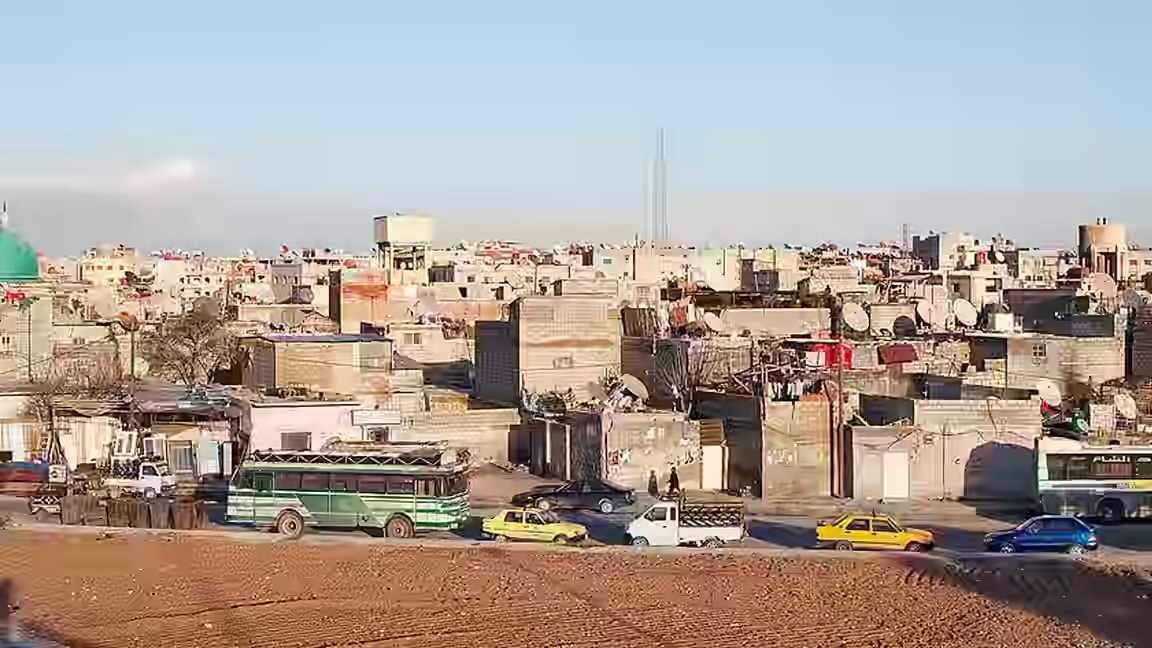
Three civilians were killed and nine others injured in a reported overnight airstrike on Damascus, Syrian state media reported, citing a military source. The same account said Syrian air defenses intercepted what it described as hostile targets over the capital on three occasions as explosions were heard across the city.
The report attributed the attack to Israel. The Israeli military did not confirm or deny responsibility, telling the Jerusalem Post that it does not comment on reports in foreign media. With no primary Syrian statement or independent on-the-ground account included in the supplied evidence, the casualty figures, attribution and sequence of interceptions remain claims reported through Syrian state media rather than independently established facts.
Syrian television separately said that one of its presenters had been killed in a strike on Damascus. It was unclear from the available reporting whether the presenter was one of the three civilians included in the military source's death toll. State media also reported significant damage to private property but did not provide a detailed public inventory of the buildings or neighborhoods affected in the excerpt available for review.
The reports emerged during a day of rapidly intensifying regional conflict. Al Jazeera's October 1 live coverage tracked Iran's missile attack on Israel alongside the continuing wars in Gaza and Lebanon. That broader context is important, but the supplied Al Jazeera excerpt does not independently confirm the reported Damascus casualties or identify the weapons that reached the Syrian capital.
The Jerusalem Post report described repeated air-defense engagements around Damascus, followed by explosions. It did not provide sufficient evidence to determine whether each explosion resulted from an incoming weapon, an interception, falling debris or another cause. For that reason, the available material does not support a precise account of the number or type of missiles or drones involved.
Nor does the evidence establish which specific sites were targeted. The Syrian military source characterized the incident as an Israeli airstrike, but the Israeli military offered no operational account. Without imagery, weapons remnants, geolocated video, a detailed primary statement or reporting from a second source with direct knowledge of the incident, any firmer description of the intended targets would be speculative.
Israel had conducted strikes in Syria for years against targets it said were connected to Iran and allied armed groups, and the Jerusalem Post reported that the pace of those operations had increased after the Hamas-led attack on Israel on October 7, 2023. That history provides context for the Syrian attribution, but it does not by itself prove responsibility for this particular event.
The distinction matters because reports from active conflict zones often develop in stages. Air-defense announcements may appear first, followed by preliminary casualty counts, claims of responsibility or attribution, and later assessments of what was hit. Early reports can combine observations from different locations or incidents, especially during a night with several rounds of explosions. A careful account therefore separates what was observed, what officials alleged and what remains unresolved.
What the supplied reporting supports is limited but consequential: Syrian state media announced three civilian deaths and nine injuries; it said air defenses responded repeatedly over the Damascus area; it reported private-property damage; and it identified one Syrian television presenter as a victim. The reporting also records that Israel declined to comment on the allegation.
The event unfolded against an expanding cycle of direct and indirect confrontation involving Israel, Iran and armed groups across several countries. On the same event date, international attention centered on Iran's missile launch toward Israel and Israel's military operations in Gaza and Lebanon, as reflected in Al Jazeera's contemporaneous live coverage. The Damascus report was therefore part of a wider regional security picture, even though the evidence supplied here does not show a direct operational link between the separate events.
For residents of Damascus, the immediate effect described by state media was civilian loss and damage amid another night of air-defense activity. For outside observers, the gaps in the record were equally significant. There was no Israeli confirmation, no independent casualty verification in the supplied packets and no detailed assessment of the strike sites.
Those limits do not erase the reported deaths; they define the level of confidence that can responsibly be attached to the account. As of the event date, the clearest formulation is that Syrian authorities reported three people killed and nine wounded in an airstrike they attributed to Israel, while Israel declined to address the report. Further claims about the weapons, targets or responsibility would require evidence beyond the two supplied sources.


