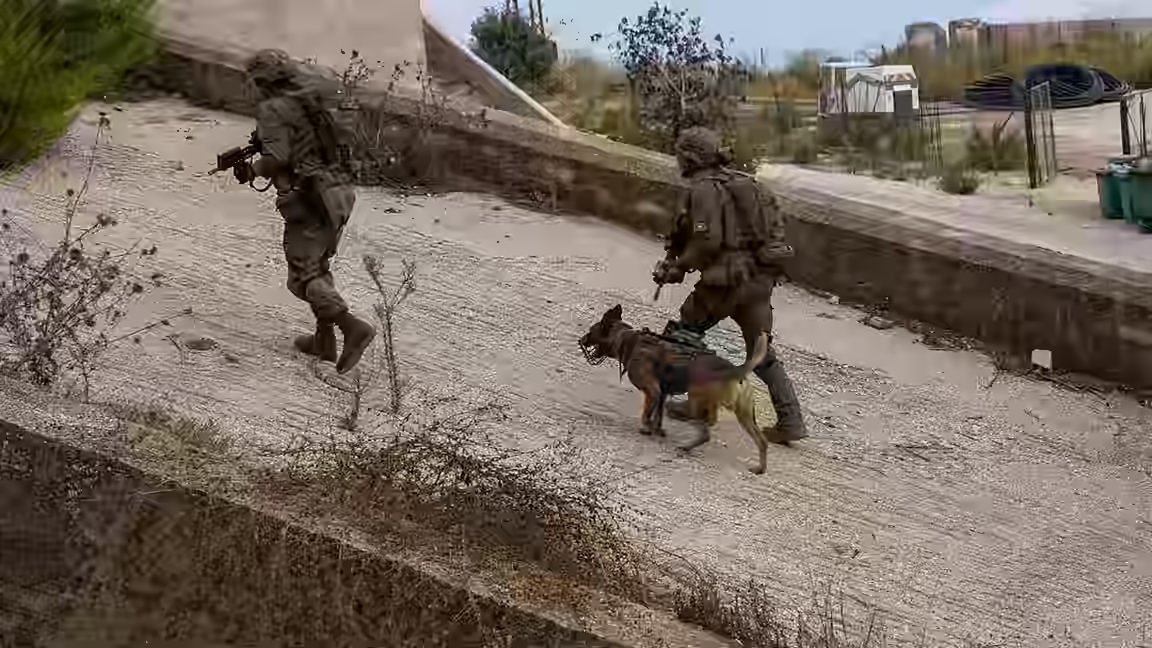
Israel expanded ground operations in Lebanon on October 8, 2024, opening a wider front in its confrontation with Hezbollah as the regional war deepened.
According to DW’s live reporting, the IDF said it had expanded ground operations while Hezbollah said it targeted Haifa with rockets. The same update reported that Israeli Prime Minister Benjamin Netanyahu warned the Lebanese people in a video address that their country could face “destruction like Gaza” if they did not break with Hezbollah.
The Israeli leader’s message was aimed directly at Lebanese civilians as well as Hezbollah. He said Lebanon had once been a “pearl of the Middle East” but had been turned into a place of chaos and war by what he described as a gang of tyrants and terrorists. He also claimed that Hezbollah was weaker than it had been for many years because of Israeli strikes on its leadership.
Those claims were paired with battlefield assertions. Netanyahu said Israel had taken out Hezbollah’s leader Hassan Nasrallah and what he described as Nasrallah’s replacement and the replacement of the replacement. Earlier in the same DW update, Israeli Defense Minister Yoav Gallant had suggested that Hashem Safieddine, widely discussed as a potential successor, was probably eliminated. The report also said the Israeli military claimed to have killed Suhail Husseini, a senior commander responsible for logistics, budgets and management.
Hezbollah had not confirmed or denied those claims in the evidence supplied here. Acting leader Sheikh Naim Kassem, however, insisted in a video statement that the group’s military capabilities remained intact. That divergence matters because the sides are each trying to shape the narrative of the campaign: Israel presenting cumulative strategic success, Hezbollah insisting it still has the capacity to fight.
The broader regional context is one of escalating violence. The Lebanese health ministry said 36 people were killed and 150 wounded in Israeli airstrikes across the country on Monday, while southern Beirut suffered major damage. Meanwhile, the U.S. and Israel were also dealing with the fallout from Iran’s missile attack last week, and U.S. defense officials said Gallant had postponed a trip to Washington.
The supplied evidence also noted that the European Union’s foreign policy chief said the situation in Lebanon was worsening by the day and that a ceasefire was necessary. UN humanitarian officials warned that the methods of warfare seen in Gaza were being repeated in Lebanon and could trigger the same spiral of destruction.
The main story, though, is the opening of the Lebanese front and the increasingly direct effort by Israel to pressure Hezbollah politically and militarily at the same time. The evidence does not confirm final battlefield outcomes, but it does show an expanded campaign, heavy civilian harm, and an information war centered on whether Hezbollah’s command structure has been broken. The ground offensive and the rhetoric around it together suggest Israel wanted both military pressure and psychological pressure in the same move.
The report’s mention of heavy civilian harm in Lebanon is what gives the ground operation its immediate political weight. If the military pressure is accompanied by destruction and displacement, the campaign becomes part of a wider regional pattern that outside officials are already warning could mirror Gaza. That is why ceasefire calls keep surfacing alongside battlefield claims.


