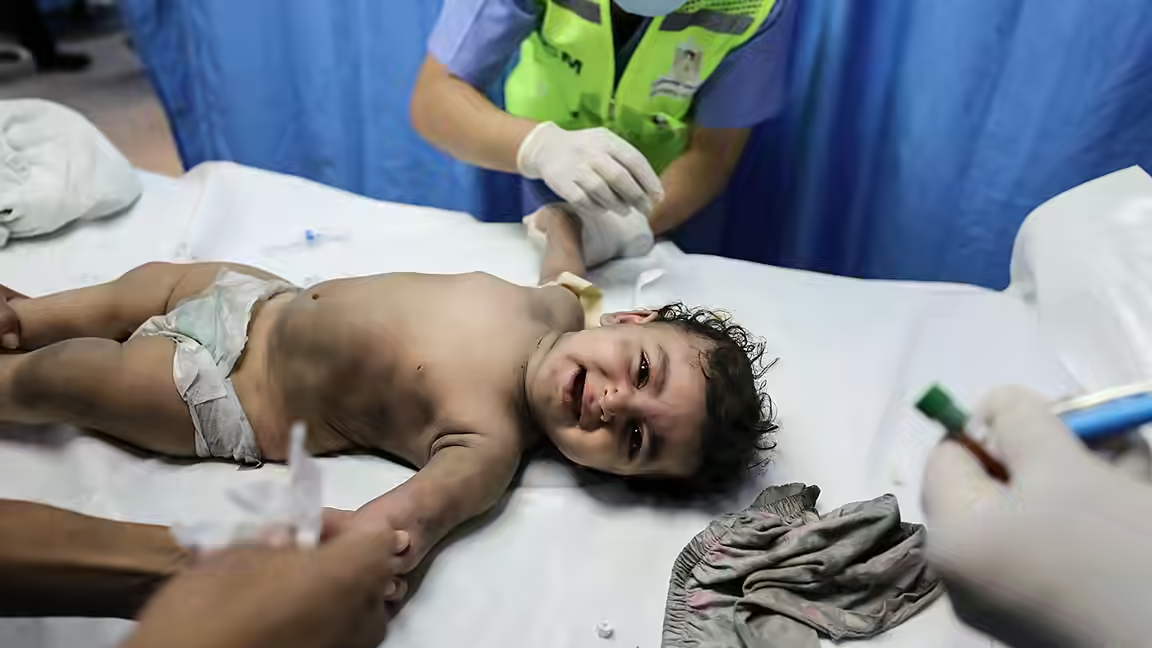
An Israeli airstrike hit a house in Aalmat, a village about 40 kilometers north of Beirut, and left women, children and older people among the dead, Lebanese officials said. The Health Ministry put the death toll at at least 23, including seven children, and said six people were wounded. A Civil Defense official gave a slightly higher count, saying 24 were killed and eight injured, underscoring the confusion that often follows strikes before rescue work is complete.
The scene described by residents and legislators suggested the building was being used by displaced civilians, not by armed fighters. Legislator Raed Berro denied that any Hezbollah personnel or assets were in the house. Hassan Ghaddaf, who lived next door and was slightly wounded, said he had recently seen displaced people there and believed they had been living peacefully in the building. He said clothing and belongings found in the rubble appeared to belong to people connected to the state, not to a weapons store.
Israel's military said it hit a Hezbollah site used to store weapons and said the strike was under review. The attack drew attention because Aalmat sits well outside the areas in eastern and southern Lebanon where Hezbollah has its strongest presence. There had been no Israeli evacuation warning before the strike, according to the AP report, a detail that will fuel questions about how the target was selected and whether civilians were adequately warned.
The strike came amid a broader escalation in Lebanon after Israel killed Hezbollah leader Hassan Nasrallah and most of his top commanders in September. Hezbollah has since broadened rocket fire into central Israel, while Israeli forces have kept up intensive airstrikes deeper inside Lebanon. Lebanon's Health Ministry said the fighting has killed more than 3,100 people in the country and more than 70 in Israel. Aalmat showed how the conflict's civilian cost can spread far from the front line even when the military argues it is aiming at militant infrastructure.
The lack of an evacuation warning will intensify scrutiny of how Israel selected the target. The AP report said the military described the building as a Hezbollah weapons site, but local lawmakers and residents said the dead were civilians and displaced people. In the first hours after an airstrike, those competing accounts often move faster than confirmed details, and the gap between them becomes part of the story.
The strike also landed inside a wider war that has been edging farther into Lebanon since Israel killed Hezbollah leader Hassan Nasrallah in September. Hezbollah has widened rocket fire into central Israel, and Israel has kept up deep strikes in Lebanese territory. With Lebanon's death toll already above 3,100, the Aalmat attack was another reminder that the conflict is no longer confined to border areas or military sites.
The village attack will almost certainly deepen scrutiny of Israel's targeting claims because the strike landed in a place where locals said displaced civilians were sheltering. When the military says a house held weapons and witnesses say it held families, the damage extends beyond the rubble. It also affects the politics of every later strike, since each new explanation has to clear a higher bar of credibility than the last. The village now joins a growing list of Lebanese places where rescue teams and grief have become part of the war's daily rhythm, and the fight over what was inside the house is likely to matter as much as the military explanation that followed. That scrutiny is likely to sharpen further as more details emerge.


