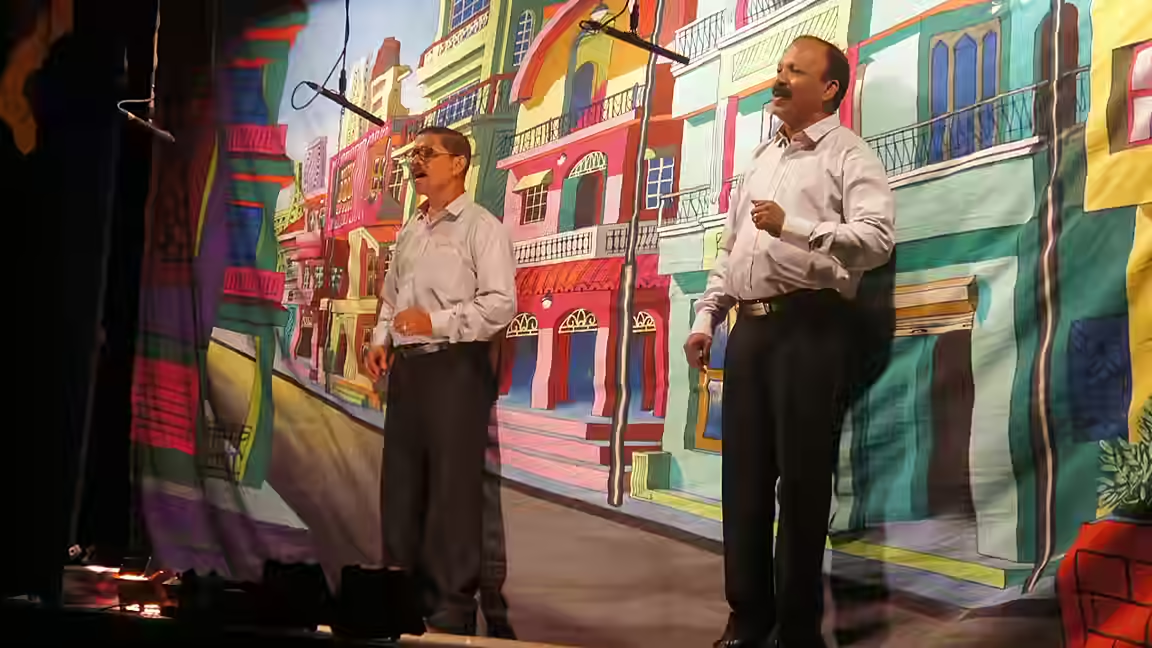
On November 14, 2024, Juan Luis Guerra y 4.40 were the biggest winners at the 25th annual Latin Grammy Awards, leaving the ceremony in Miami with four trophies and another reminder of how deeply his music still runs through the region’s mainstream. His haul included album of the year for Radio Güira and record of the year for “Mambo 23,” plus best merengue and/or bachata album and best tropical song.
Radio Güira, released in November 2023, is a six-song EP built around mambo, bachata and merengue rhythms. Its format is playful and deliberately old-school, presenting the songs as if they were being aired from a radio station, complete with listener calls and even a cooking recipe. That concept fit Guerra’s long career, which has always balanced musical precision with a sense of warmth, humor and devotional feeling.
Guerra’s acceptance speech was framed by gratitude. He told the audience that after 40 years in the business he felt joyful to be there, and he credited Jesus with the idea behind the album. The reaction underlined why his music remains such a force in the Latin academy: it is rooted in tradition, but it also carries a personal voice strong enough to be recognized across generations and genres.
The awards night was not a one-person sweep, even if Guerra finished at the top of the list. At the Latin Grammy Premiere, Edgar Barrera and Nathy Peluso won three trophies each. Barrera repeated as songwriter of the year and also took producer of the year and best regional Mexican song for “El Amor de su Vida,” while Peluso won for best long-form video, best alternative song and best rap/hip-hop song for work from Grasa.
The rest of the ceremony showed how broad the field was. Karol G won best urban music album for Mañana Será Bonito (Bichota Season), Jorge Drexler took song of the year and best singer-songwriter song for “Derrumbe,” and Bizarrap and Shakira won a new electronic category for “Bzrp Music Sessions, Vol. 53 (Tiësto Remix).” The first prize of the night went to Carín León, and the event also marked the Latin Grammys’ 25th anniversary with a new electronic music field.
Taken together, the results showed a ceremony that spread recognition across veteran stars and newer category favorites, but still left Guerra as the evening’s central figure. For an artist already known across the Spanish-speaking world, the four-win night confirmed that his catalog still holds a rare kind of authority inside Latin music’s biggest voting body.
The rest of the night reinforced how broad the Latin Grammy field has become. Miami once again served as a hub for the industry’s biggest celebration, and the show mixed veteran names with newer category winners in a way that reflected the current shape of Latin music. Guerra’s four wins mattered not only because of the raw total, but because they came across the album, song and genre categories that reward both craft and identity. That combination is what makes his result stand out: it was a sweep built on a project that reached back to genre roots while still sounding current.
![Titre uniforme : Charpentier, Marc Antoine (1643-1704). Compositeur. [Les arts florissants. H 487] Divertissement en 5 scènes. - Date de composition : 1685-1686. - Parties des…](/media/articles/commons-b1096973dc25.avif)