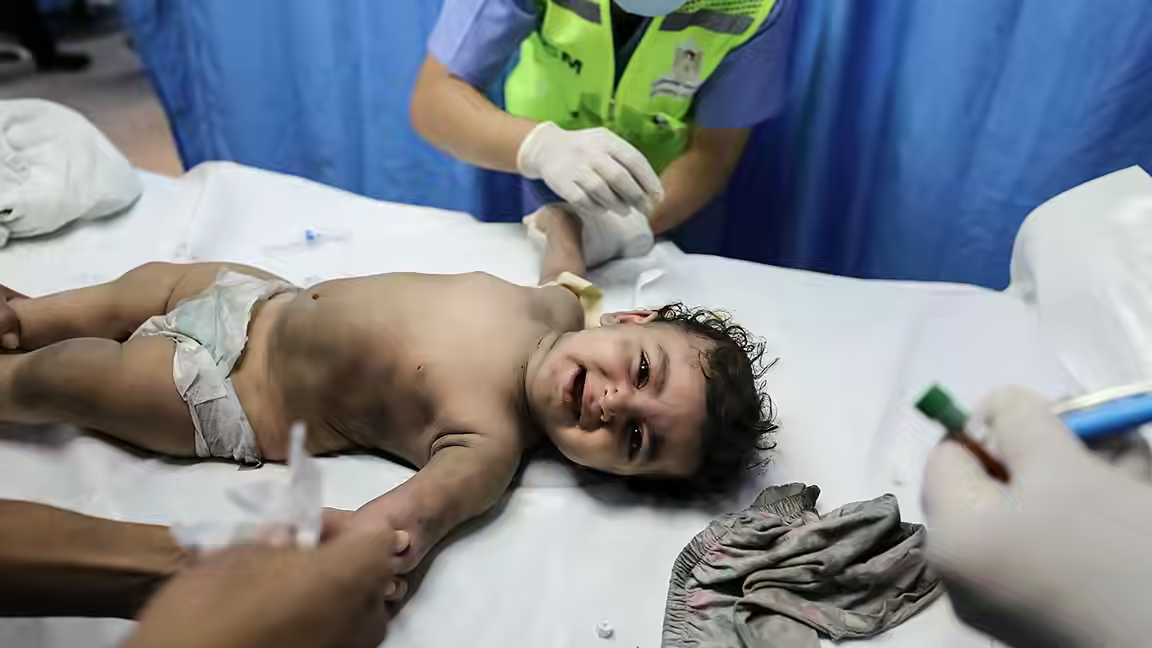
The event date was February 1, 2025, when a group of 50 sick and wounded Palestinian children began crossing Gaza’s Rafah border into Egypt for medical treatment.
The opening marked the first time the crossing had been used since Israel captured it nearly nine months earlier. By Saturday evening, the Gaza Health Ministry said 37 of the children had crossed. About 60 family members were accompanying them. The footage described in the source packet showed injured children being carried on gurneys or moved into ambulances on the Egyptian side before being rushed to hospitals in el-Arish and elsewhere. One of the children shown had already had a foot amputated.
Rafah matters because it is Gaza’s only crossing that does not enter Israel. Its reopening was presented as a significant breakthrough that bolstered the ceasefire deal Israel and Hamas reached the month before. Israel agreed to reopen the crossing after Hamas released the last living female hostages in Gaza. For families whose children needed treatment unavailable inside the territory, the border opening was not just a diplomatic signal but a life-saving route out of an overwhelmed health system.
The health need remained far larger than the first convoy. The source packet says Gaza’s Health Ministry believed more than 6,000 patients were ready to be evacuated abroad and more than 12,000 were in urgent need of treatment. World Health Organization Director-General Tedros Adhanom Ghebreyesus said on social media that thousands of lives depended on faster medical evacuations. Those numbers highlight how small the first opening was compared with the scale of the crisis.
The war had already crippled Gaza’s health sector. The AP report says more than 110,000 Palestinians had been wounded by Israeli bombardment and ground offensives over the past 15 months, and that most hospitals were out of operation or unable to carry out major surgery. Before the war, Palestinians routinely applied for permission to leave for treatments such as chemotherapy. The blockade and the destruction that followed the war both made that system harder to sustain.
The border arrangement itself remained politically delicate. Israeli troops still remained at Rafah and along the Philadelphia Corridor. Israel refused to let Hamas resume management of the crossing and also would not let the Palestinian Authority officially run it. Instead, the crossing was to be staffed by Palestinians from Gaza who had previously served as border officers with the PA but would not wear official insignia, with EU monitors present as they had been before 2007. Negotiations on the next phase of the deal, including a permanent ceasefire and full Israeli withdrawal, were due to begin two days later. The reopening of Rafah therefore served as both relief and warning: relief for families who could finally move, and warning that the political architecture around Gaza still had a long way to go.


