# Russia rejects NATO peacekeepers in any Ukraine deal
*Event date: 2025-02-18*
Russia has said it will not accept peacekeeping forces from NATO member states in Ukraine under any peace agreement, drawing a clear red line as the United States and Russia opened talks on ending the war.
The position was laid out by Russian Foreign Minister Sergei Lavrov after a meeting in Riyadh with US Secretary of State Marco Rubio, the first high-level face-to-face talks between the two countries since Russia's full-scale invasion of Ukraine. Lavrov said any force arriving under a different flag would still be unacceptable if the personnel came from NATO countries.
The talks in Saudi Arabia were presented by Washington as a first step in what Rubio called a long and difficult journey. Rubio said there would need to be concessions from all sides and that no final terms were being predetermined. He also said the European Union would eventually need to be at the table because sanctions imposed on Russia would matter in any settlement.
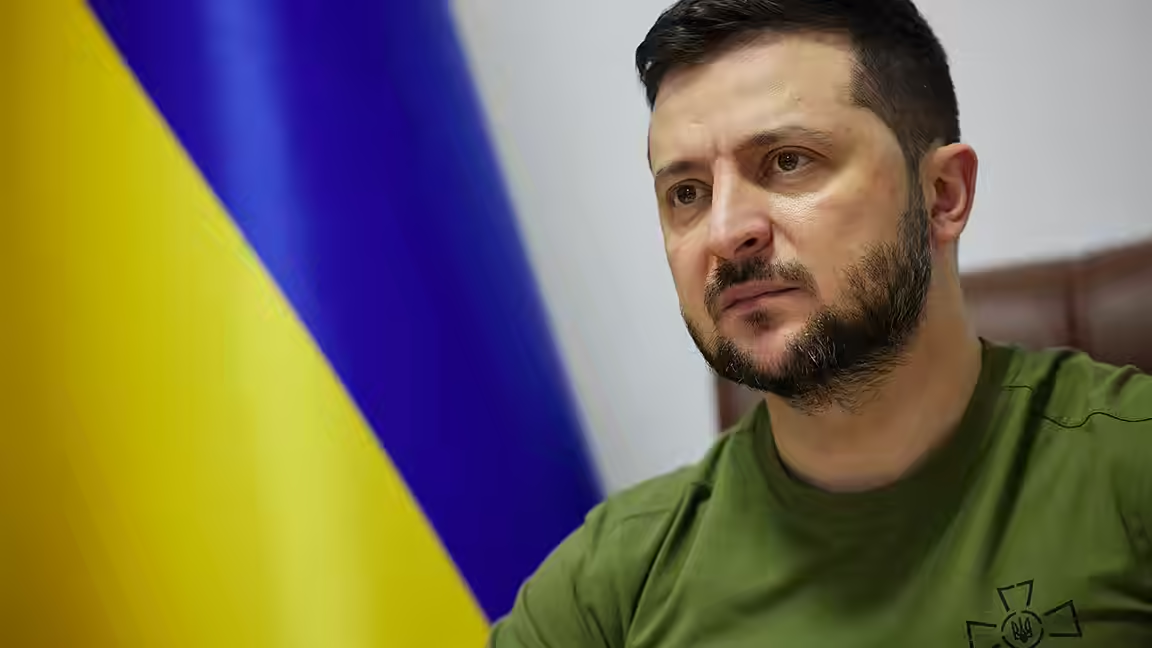
The BBC report said the Trump administration's approach has sidelined both Ukraine and many European NATO members, who remain committed to supporting Kyiv. That exclusion has prompted visible frustration in Europe, especially after Trump said Ukraine should have reached a deal earlier and suggested it had been responsible for not securing one sooner. Ukrainian President Volodymyr Zelensky responded that decisions about ending the war could not be made without Ukraine.
Lavrov used the Riyadh meeting to repeat several long-standing Russian positions. He said NATO expansion, including any move by Ukraine to join the alliance, would amount to a direct threat to Russia. He also said Moscow wanted to restore cooperation in full and move quickly to exchange ambassadors. At the same time, he ruled out a peacekeeping deployment from NATO states, which would be one of the main security guarantees European leaders have discussed.
The US side, meanwhile, signalled that it saw room for a broader diplomatic process. Trump said he was more confident after the meeting and described Russia as wanting to stop what he called savage barbarianism. He also said European countries could send troops to Ukraine if they wanted to, although he added that the US would not need to because it was far away.
For Ukraine and its European backers, the message from Moscow was blunt. Any postwar arrangement that depends on NATO troops on the ground is, for now, off the table. That leaves the core question unresolved: what kind of security guarantee could possibly be strong enough for Kyiv, acceptable to Moscow and credible to Washington at the same time?


