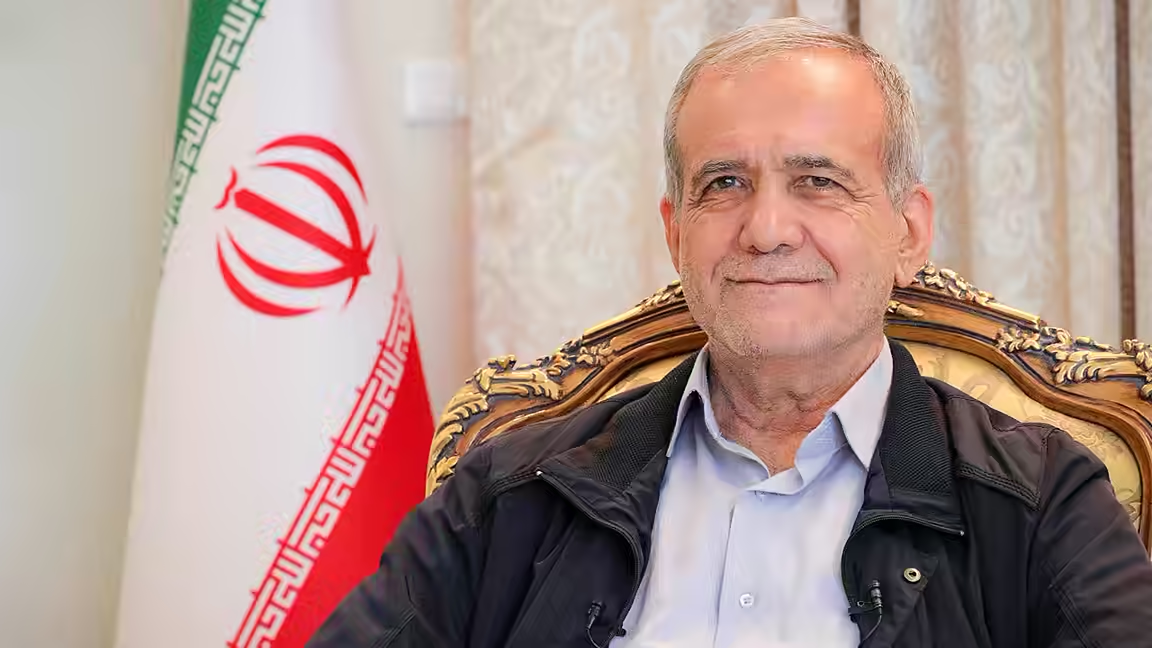
Iranian President Masoud Pezeshkian has ruled out direct negotiations with the Trump administration over Iran's nuclear program, but he says Tehran remains open to indirect talks. The comments, reported by Al Jazeera, came as Washington sharpened its rhetoric and threatened further pressure if no agreement is reached.
Pezeshkian said Iran had responded to a letter from the U.S. president through Oman and had rejected direct talks. At the same time, he said Iran was not against negotiations in principle and would consider indirect channels. That distinction is important because it leaves diplomacy alive, but only through a process that is designed to preserve distance and avoid a political concession to Washington.
The Iranian president said the United States would need to correct what he called its past misconduct and rebuild trust before a deal could be possible. In other words, Tehran is setting a precondition rather than simply saying no. The country's message is that talks are possible only if the other side changes how it approaches the file.
Trump's rhetoric, as reported by Al Jazeera, was much harder. He told NBC that if Iran did not make a deal there would be bombing, and he also threatened secondary tariffs. That combination of military and economic pressure raises the stakes quickly. It also explains why the gap between the two sides remains so wide even when both are still talking about diplomacy.
The use of Oman as a channel matters as well. It suggests the communication line is indirect and mediated, not a direct negotiation table. For a nuclear dispute that has survived multiple administrations, that kind of channel is familiar. It can keep a conversation alive when relations are too strained for leaders to meet face to face.
The source does not provide the text of the letter or any substantive concession from either side. What it does show is that both capitals are choosing language that keeps the door open while warning the other side that the price of failure will be high. That is a classic pre-crisis posture: enough diplomacy to avoid immediate collapse, enough threat to show the talks are serious.
For now, the headline is not that a deal is near. It is that direct talks remain off the table while indirect ones continue to be discussed. That leaves the nuclear file in a familiar but dangerous place, with pressure rising faster than trust.


