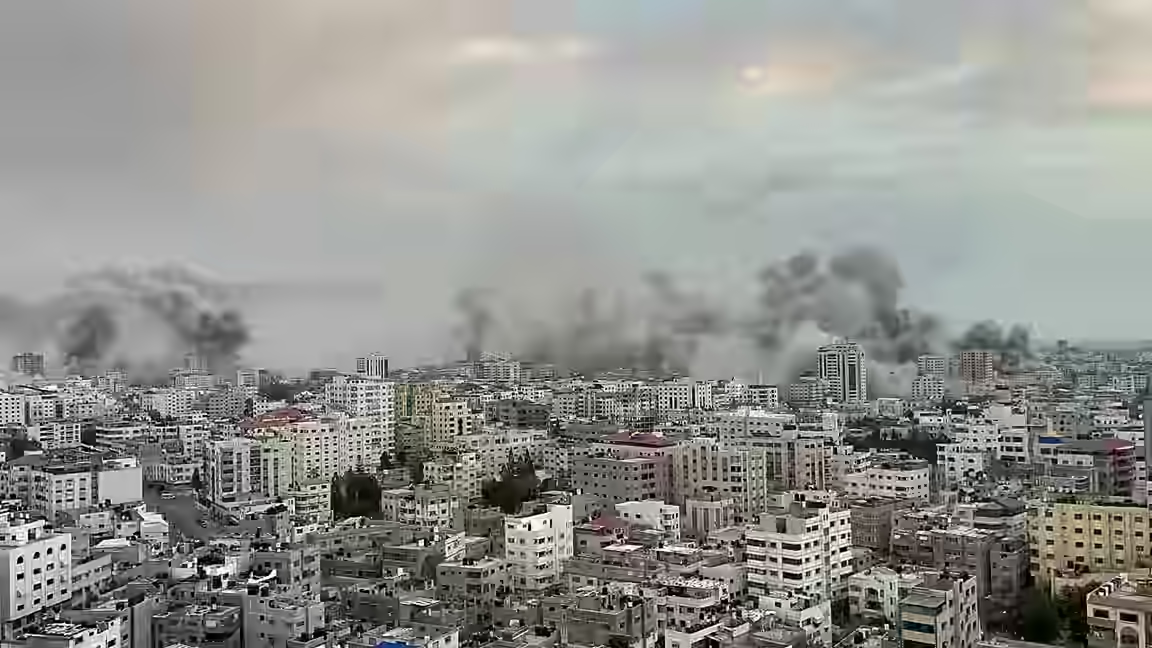
GAZA STRIP — Israeli strikes killed at least 37 Palestinians in Gaza on April 17, 2025, most of them in tented areas sheltering displaced families in al-Mawasi near Khan Younis, according to the Hamas-run civil defence agency.
The deadliest strike hit an encampment where people had been told to gather after leaving other parts of Gaza. Civil defence spokesman Mahmoud Bassal said two missiles hit tents in the coastal al-Mawasi area on Wednesday night, killing at least 16 people there alone, most of them women and children, and wounding 23 others. Witnesses told the BBC that tents were engulfed in flames after a powerful explosion, with survivors describing children burning and families trapped as fire spread from one shelter to another.
The scene was described in raw and distressing terms by people who were there. One man said he woke to screaming and panic and tried to help put out the blaze by throwing sand on the tents, but the fire was too intense. Another said he saw the tent next to his own go up in flames and watched women run out desperately trying to escape. A displaced woman from Khan Younis said 10 members of one family were killed while they slept. The BBC also verified video showing charred remains, belongings scattered across the ground and survivors staring at the wreckage.
The Israeli military said on Friday that it had struck a Hamas terrorist in the area and that the incident was under review. The IDF said it had taken steps to mitigate harm to civilians. The evidence packet does not resolve the dispute over the exact target, but it does show that the military acknowledged the civilian harm claim and that the strike was being formally reviewed.
The al-Mawasi deaths were not the only fatalities reported that day. Civil defence said further strikes killed seven people in Beit Lahia, two near al-Mawasi and 10 in Jabalia, including seven members of one family in one attack and three people in a school building used as a shelter in another. That pattern shows how widespread the damage was and how often civilian spaces in Gaza have become temporary shelters that are still vulnerable to bombardment.
The strikes came amid an already collapsing humanitarian environment. Israel had put Gaza under a complete blockade on March 1 and resumed the war on March 18, and the evidence packet says around half a million Palestinians had been displaced by renewed evacuation orders. Major aid groups warned that the humanitarian system was facing total collapse. Hamas, meanwhile, formally rejected Israel’s latest ceasefire proposal and said it was ready to negotiate a deal involving the release of all 59 hostages it still held in exchange for an end to the war.
What happened in al-Mawasi therefore sits at the intersection of battlefield violence and humanitarian catastrophe. The immediate facts are cruelly specific: tents burned, families died, children were among the victims and the survivors were left with little more than damaged shelters and unbearable loss. The broader context is that displaced civilians in Gaza were still being pushed into makeshift camps that offered no real safety when the next strike came.
The evidence packet does not allow a final judgment on military intent, but it does make one thing clear. In Gaza, places meant to protect civilians were hit again, and the people inside them had nowhere else to go.


