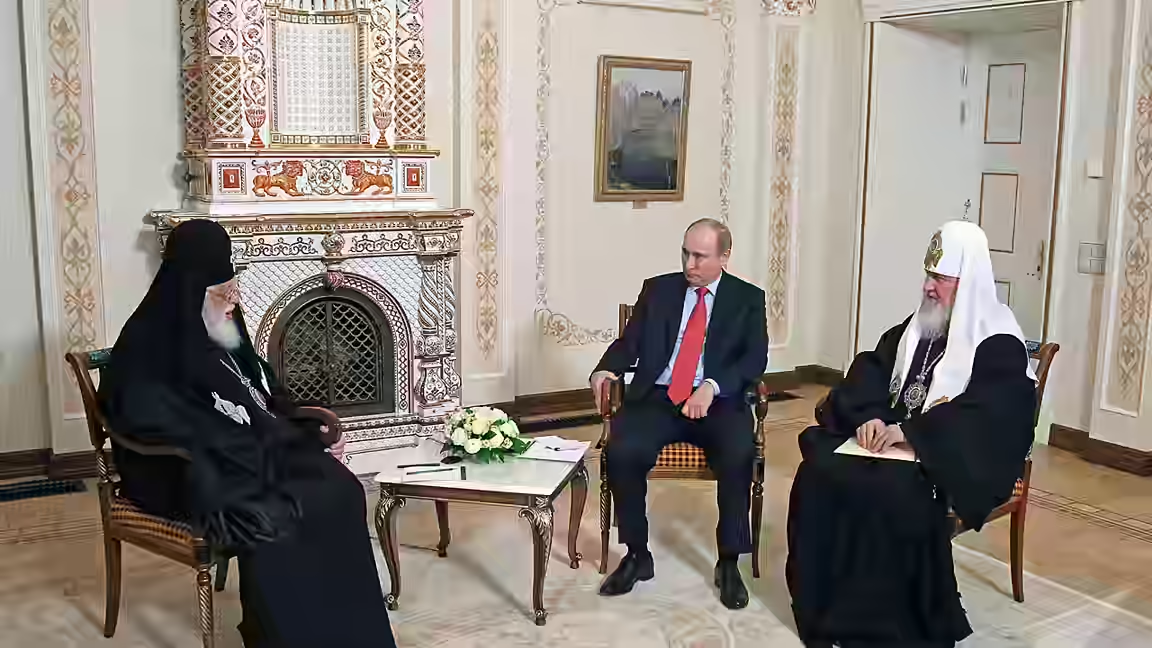
Russian President Vladimir Putin declared a unilateral 72-hour ceasefire in Ukraine on April 28, 2025, saying the pause in fighting would mark Victory Day in the Second World War, according to CTV News.
The ceasefire was set to begin next week and run for three days, covering the period around Russia’s annual commemoration of the defeat of Nazi Germany. The announcement came while the United States was pressing for a deal to end the war, adding another diplomatic layer to a conflict that had already dragged on for more than three years.
CTV News reported that Kyiv rejected the move as insufficient, insisting instead on a longer and immediate truce. That response is important because it shows the core divide between the two sides: Moscow was proposing a time-limited holiday ceasefire, while Ukraine was calling for something broader and sooner.
The announcement itself did not settle the wider battlefield or negotiating picture. It was a unilateral declaration, not a jointly agreed pause, and the report made clear that Ukraine was not treating it as a meaningful step toward peace on its own. That distinction matters because temporary ceasefires in the war have often been framed as humanitarian or symbolic, yet remain vulnerable to distrust on both sides.
The timing also reflected the importance Russia places on Victory Day, one of the country’s most significant state events. By linking the ceasefire to the anniversary, Putin placed the war in Ukraine alongside the memory politics of the Second World War, rather than presenting it solely as a diplomatic concession.
For Ukraine, the issue was not the symbolism but the duration and credibility of the pause. A 72-hour ceasefire leaves little room for confidence-building unless it is accompanied by a more durable framework. CTV News reported no agreement from Kyiv, only its demand for a longer and immediate truce.
The report also showed how military and diplomatic pressure were moving at the same time. Washington was still trying to push the parties toward a settlement, but the announcement underscored how far apart the sides remained over the shape of any stoppage in fighting. A short holiday ceasefire may lower violence briefly, but it does not address the larger dispute over territory, security guarantees or the terms of any eventual end to the war.
What was verified on April 28 was straightforward: Putin announced a three-day ceasefire for Victory Day, and Ukraine responded by saying the offer did not go far enough. The broader conflict remained unresolved, and the ceasefire plan appeared to be as much a political signal as a military one.


