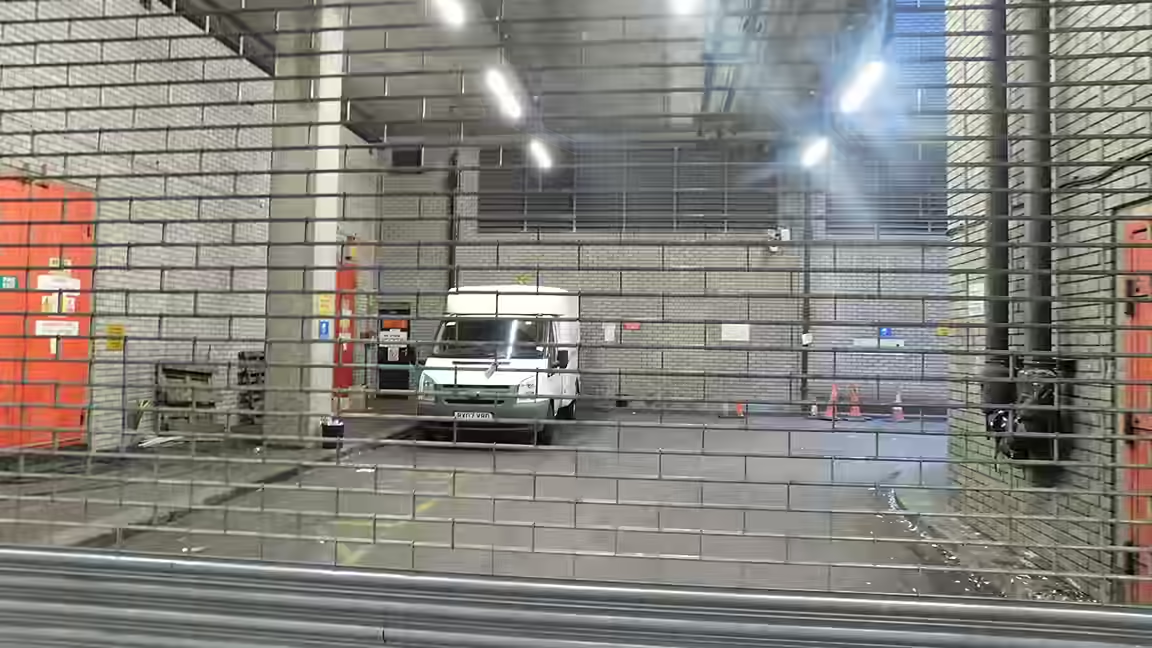
On the event date, May 21, 2025, a blast targeted a school bus in Khuzdar district in Pakistan's southwestern Balochistan province, killing six people and wounding at least 38 others, officials said. Balochistan chief minister Sarfraz Bugti said four children, the bus driver and his assistant died in the attack, which hit an Army Public School bus as it was picking children in the morning.
The initial assessment described the blast as a vehicle-borne improvised explosive device, but Bugti said it was still premature to confirm the exact nature of the attack and that investigations were continuing. He told reporters that 46 students were on the bus. The government official in Khuzdar, Yasir Iqbal Dashti, said the wounded were being rushed to hospitals, and several critically injured children were airlifted to Quetta. The death toll, officials warned, could rise.
The attack hit a province already marked by long-running conflict. Balochistan is rich in minerals and natural resources, but it has also been the scene of a decades-old separatist insurgency and repeated assaults by armed groups. Many attacks in the province are claimed by the Balochistan Liberation Army, which Pakistan says is backed by India. In this case, no group had claimed responsibility when the report was published, but Pakistan's military immediately blamed Indian terror proxies, and Prime Minister Shehbaz Sharif echoed that accusation. India rejected the charge as baseless and said Pakistan was trying to deflect attention from its own failures.
The violence prompted swift condemnation. UNICEF called the attack horrific and said going to school should never be dangerous for children. The United States embassy in Islamabad called it brutal and unconscionable, saying the murder of innocent children was beyond comprehension. Those reactions reflected how a school bus attack resonates far beyond a single province: it looks like an assault on civilians who had no role in the conflict and on the idea that classrooms should be protected.
The episode also sits within a wider cycle of cross-border tension. Al Jazeera noted that Pakistan and India have repeatedly traded blame for violence, especially since conflict flared in May and both countries accused each other of backing attacks in the region. The Khuzdar bombing followed another car blast in Balochistan days earlier and came after the BLA had promised more attacks on the Pakistani army and its collaborators. For parents in the region, the immediate result is not diplomatic rhetoric but a grim calculation about whether sending children to school has become too dangerous.
Pakistan has lived through this before. In December 2014, the Tehreek-e-Taliban Pakistan killed more than 140 children at the Army Public School in Peshawar, a massacre that still shapes how people view school security. The Khuzdar blast, though smaller in scale, will be read in the same moral register: an attack on children and a test of whether the state can protect them.
For Balochistan, the attack will probably intensify fears that even children cannot be insulated from the province's long insurgency. The fact that the bus belonged to an Army Public School also made the blast symbolically sharp, because it linked a local separatist conflict to a national security story that parents across Pakistan still remember from Peshawar.


